THE ADVENTURE COLLECTIVE® · Independent discovery and booking for outdoor travel

Walk the Glienicke Bridge and surrounding parks with a private guide to trace Cold War exchanges, neoclassical architecture, and river-born landscapes. This two-hour walking tour links Berlin and Potsdam history with practical local insight.
Walk the Glienicke Bridge and surrounding parks with a private guide to trace Cold War exchanges, neoclassical architecture, and river-born landscapes. This two-hour walking tour links Berlin and Potsdam history with practical local insight.
Morning light cuts across the Havel as you step onto Glienicke Brücke — the bridge that once brokered Cold War exchanges and now frames quiet views between Berlin and Potsdam. A local guide leads a private two-hour route that moves deliberately: from the bridge’s ironwork and river-facing parapets to park pathways and the neoclassical lines of Glienicke Palace.
Verified experiences and guided adventures in the surrounding area.
Operated by Opatrip.com Germany · Potsdam, Brandenburg
Morning light cuts across the Havel as you step onto Glienicke Brücke — the bridge that once brokered Cold War exchanges and now frames quiet views between Berlin and Potsdam. A local guide leads a private two-hour route that moves deliberately: from the bridge’s ironwork and river-facing parapets to park pathways and the neoclassical lines of Glienicke Palace.
The area reads like layered history. Saxon and Prussian landscaping shaped the parks, while 20th‑century geopolitics transformed the bridge into a stage for spy swaps. The earth here is low-lying river plain; old channels and park ponds trace the Havel's slow, patient carving. Architecturally, Große Neugierde and the palace facade reveal 19th-century taste for classicism and landscaped leisure favored by the Prussian elite.
Culturally, locals treat the park as a weekday refuge and weekend promenade — expect joggers, dog walkers and students from nearby Potsdam. Wildlife is urban-but-verdant: kingfishers flash on river bends and reed beds harbor small waterfowl.
Practical guidance: wear comfortable walking shoes for paved and compacted dirt paths, and bring a light layer — winds over the river can be sharp even on fair days. The tour is suitable for most fitness levels and runs about two hours; public transport connects easily from Potsdam and Berlin S‑bahn lines. If you plan to enter Glienicke Palace after the tour, book tickets in advance. Hydrate, time your visit for golden-hour views, and let your guide place each landmark in the sweep of local history — the bridge’s ironwork and the park’s quiet trees do most of the storytelling.
easy.
2 hours.
Suitable for most activity levels; light walking and short standing periods.
The private tour runs approximately two hours and covers the bridge, adjacent parks, and palace exterior.
The tour includes the palace exterior; interior entry is possible only if you purchase tickets separately and visit after the tour concludes.
Paths are mostly paved or compacted dirt; some sections may be uneven — contact the operator in advance to confirm accessibility options.
A professional local guide is included; language availability depends on booking — confirm when you reserve.
Glienicke Bridge became internationally known during the Cold War as the site of prisoner exchanges between East and West; the parks and palace reflect earlier Prussian landscaping and 19th-century neoclassical tastes.
Parks are managed for both public access and habitat protection; follow paths to protect reed beds and avoid feeding wildlife to reduce human impact.
Opatrip.com Germany operates guided outdoor trips and adventures with an emphasis on safety, stewardship, and memorable experiences.

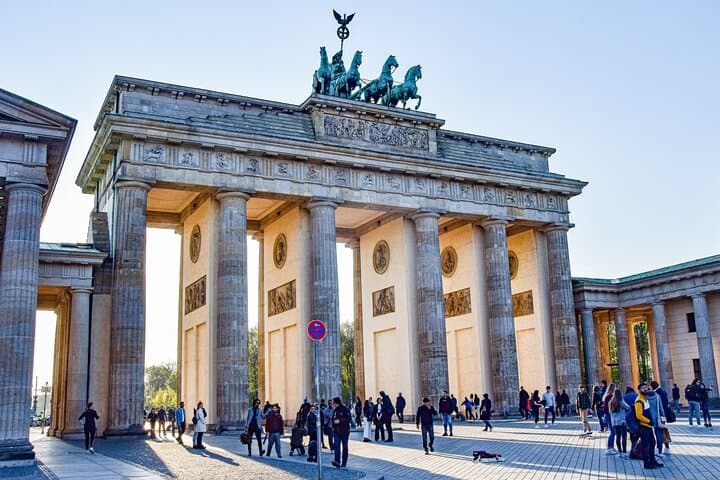


Morning light cuts across the Havel as you step onto Glienicke Brücke — the bridge that once brokered Cold War exchanges and now frames quiet views between Berlin and Potsdam. A local guide leads a private two-hour route that moves deliberately: from the bridge’s ironwork and river-facing parapets to park pathways and the neoclassical lines of Glienicke Palace.
Morning light cuts across the Havel as you step onto Glienicke Brücke — the bridge that once brokered Cold War exchanges and now frames quiet views between Berlin and Potsdam. A local guide leads a private two-hour route that moves deliberately: from the bridge’s ironwork and river-facing parapets to park pathways and the neoclassical lines of Glienicke Palace.
The area reads like layered history. Saxon and Prussian landscaping shaped the parks, while 20th‑century geopolitics transformed the bridge into a stage for spy swaps. The earth here is low-lying river plain; old channels and park ponds trace the Havel's slow, patient carving. Architecturally, Große Neugierde and the palace facade reveal 19th-century taste for classicism and landscaped leisure favored by the Prussian elite.
Culturally, locals treat the park as a weekday refuge and weekend promenade — expect joggers, dog walkers and students from nearby Potsdam. Wildlife is urban-but-verdant: kingfishers flash on river bends and reed beds harbor small waterfowl.
Practical guidance: wear comfortable walking shoes for paved and compacted dirt paths, and bring a light layer — winds over the river can be sharp even on fair days. The tour is suitable for most fitness levels and runs about two hours; public transport connects easily from Potsdam and Berlin S‑bahn lines. If you plan to enter Glienicke Palace after the tour, book tickets in advance. Hydrate, time your visit for golden-hour views, and let your guide place each landmark in the sweep of local history — the bridge’s ironwork and the park’s quiet trees do most of the storytelling.