THE ADVENTURE COLLECTIVE® · Independent discovery and booking for outdoor travel

Climb into a two-seat glider at Sânpetru and trade engine noise for a hushed glide over Brasov and the Carpathians. This short, winch-launched flight offers dramatic panoramas and a compact, low-barrier way to taste soaring.
Climb into a two-seat glider at Sânpetru and trade engine noise for a hushed glide over Brasov and the Carpathians. This short, winch-launched flight offers dramatic panoramas and a compact, low-barrier way to taste soaring.
The runway at Sânpetru hums with the low, purposeful bustle of a small airfield while the Carpathians sit like a slow-moving crowd beyond the fields. Participants move through a short safety briefing, clip into a parachute, and watch the winch cable begin to bite at the glider—then the world tilts and Brasov shrinks beneath a hush.
Verified experiences and guided adventures in the surrounding area.
Operated by Holiday to Romania · Brașov, Brașov County
The runway at Sânpetru hums with the low, purposeful bustle of a small airfield while the Carpathians sit like a slow-moving crowd beyond the fields. Participants move through a short safety briefing, clip into a parachute, and watch the winch cable begin to bite at the glider—then the world tilts and Brasov shrinks beneath a hush.
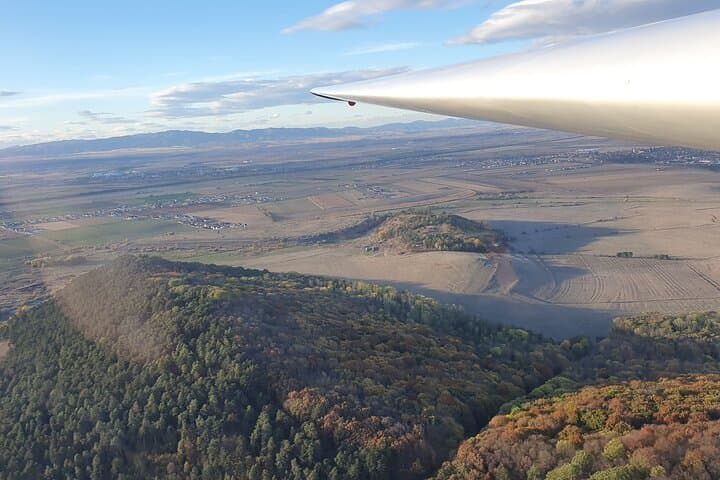
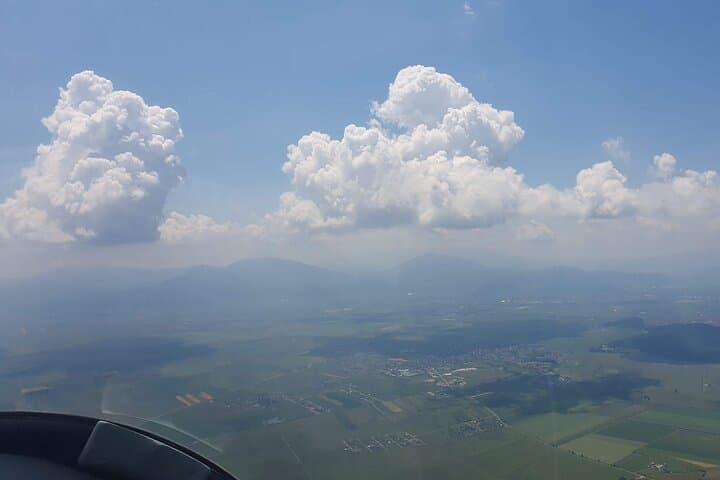
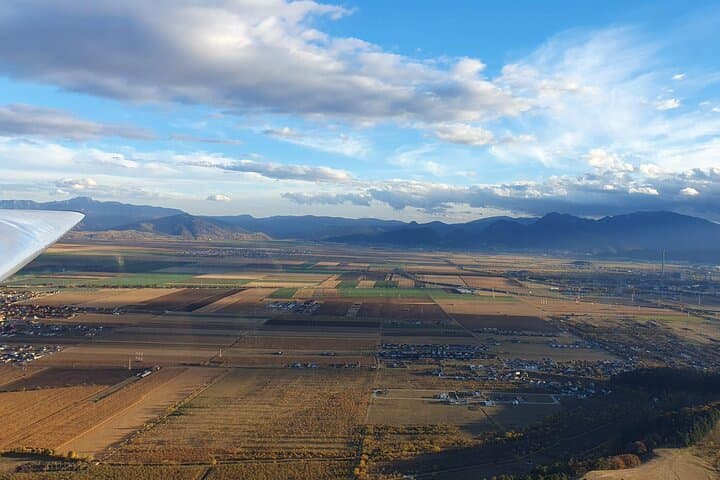
This six-minute airborne vignette delivers a panoramic readout of Transylvania: patchwork farmland, belts of spruce and beech, the compact red roofs of Brasov and the blunt ridge of Tampa Mountain. Gliding here ties modern sport to a region shaped by volcanic and tectonic forces—folded ranges with karst outcrops—and a layered history from Saxon settlers to Austro-Hungarian airfields.
Locals treat the airfield as a quiet training ground; pilots and instructors are often lifetime aviators who can translate thermals and mountain winds into a safe ride. Culturally, the view is a reminder that Brasov was once a fortified trading hub, its medieval grid still readable from above.
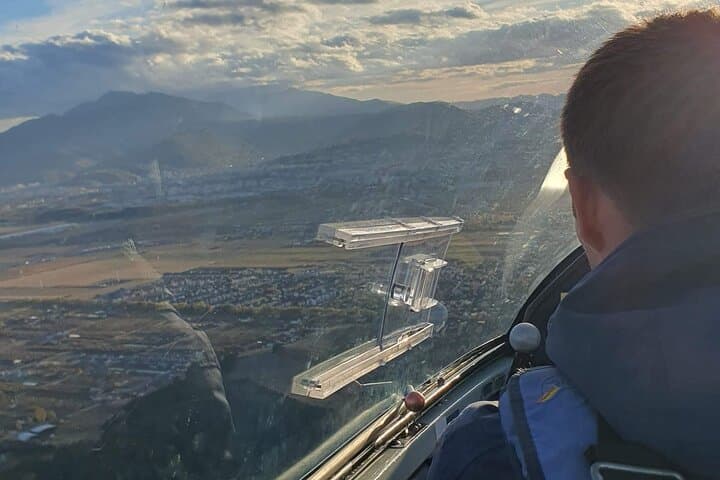
Practicalities: arrive early for paperwork and weight checks, wear layers—the cockpit cools quickly—and secure a small camera with a wrist strap. Expect a brief but intense experience: tow-launch by winch to roughly 300 m followed by a serene glide and gentle landing at Sânpetru. Flights are weather dependent; mornings often offer more stable air. For first-timers the sensation of silence punctuated only by breath and radio is the highlight—no piloting skills required, just an appetite for perspective.
easy.
30–60 minutes.
No special fitness required beyond the ability to sit and transfer into the glider; brief weight and size limits apply.
The airborne portion is about six minutes, though the full visit including briefing and pre-flight checks is typically 30–60 minutes.
Yes—maximum weight is 110 kg (243 lbs) and maximum height is about 195 cm (6.4 ft); the operator will verify during booking and check-in.
Not recommended for pregnant travelers or those with serious heart conditions; disclose health concerns when booking and on arrival.
Flights are canceled in unsafe conditions; the operator advises canceling at least 24 hours in advance for a full refund if needed and will reschedule when possible.
Brasov grew as a medieval Saxon trading town; the nearby airfield has long served general aviation and gliding training in the region.
Gliding has a low in-flight footprint, but visitors should respect agricultural land access, follow operator guidance, and avoid disturbing wildlife near landing areas.
Holiday to Romania operates guided outdoor trips and adventures with an emphasis on safety, stewardship, and memorable experiences.
The runway at Sânpetru hums with the low, purposeful bustle of a small airfield while the Carpathians sit like a slow-moving crowd beyond the fields. Participants move through a short safety briefing, clip into a parachute, and watch the winch cable begin to bite at the glider—then the world tilts and Brasov shrinks beneath a hush.
The runway at Sânpetru hums with the low, purposeful bustle of a small airfield while the Carpathians sit like a slow-moving crowd beyond the fields. Participants move through a short safety briefing, clip into a parachute, and watch the winch cable begin to bite at the glider—then the world tilts and Brasov shrinks beneath a hush.
This six-minute airborne vignette delivers a panoramic readout of Transylvania: patchwork farmland, belts of spruce and beech, the compact red roofs of Brasov and the blunt ridge of Tampa Mountain. Gliding here ties modern sport to a region shaped by volcanic and tectonic forces—folded ranges with karst outcrops—and a layered history from Saxon settlers to Austro-Hungarian airfields.
Locals treat the airfield as a quiet training ground; pilots and instructors are often lifetime aviators who can translate thermals and mountain winds into a safe ride. Culturally, the view is a reminder that Brasov was once a fortified trading hub, its medieval grid still readable from above.
Practicalities: arrive early for paperwork and weight checks, wear layers—the cockpit cools quickly—and secure a small camera with a wrist strap. Expect a brief but intense experience: tow-launch by winch to roughly 300 m followed by a serene glide and gentle landing at Sânpetru. Flights are weather dependent; mornings often offer more stable air. For first-timers the sensation of silence punctuated only by breath and radio is the highlight—no piloting skills required, just an appetite for perspective.