THE ADVENTURE COLLECTIVE® · Independent discovery and booking for outdoor travel

Board a covered boat from Puno and spend three hours exploring the Uros floating islands on Lake Titicaca. Learn how families build and maintain totora reed islands while enjoying panoramic lake views and cultural demonstrations.
Board a covered boat from Puno and spend three hours exploring the Uros floating islands on Lake Titicaca. Learn how families build and maintain totora reed islands while enjoying panoramic lake views and cultural demonstrations.
The boat slips off Puno’s pier and Lake Titicaca opens—wide, cool, and daring you to look farther than the shoreline. A covered tourist boat rides the slow chop, wind pushing across the water and reeds bobbing like small, stubborn islands. In the half-light of morning or the flat glare of noon the reed platforms of the Uros come into view: geometric mats of totora, stacked and repaired by hand.
Verified experiences and guided adventures in the surrounding area.
Operated by Puno Tours · Puno, Puno
The boat slips off Puno’s pier and Lake Titicaca opens—wide, cool, and daring you to look farther than the shoreline. A covered tourist boat rides the slow chop, wind pushing across the water and reeds bobbing like small, stubborn islands. In the half-light of morning or the flat glare of noon the reed platforms of the Uros come into view: geometric mats of totora, stacked and repaired by hand.
These islands are living craftwork. Built over centuries by Uros families, the floating islets use layers of buoyant totora reeds harvested from the lake—an engineering system older than the modern state of Peru and adapted to life at 3,812 meters. The lake’s geology, a high Andean basin carved by tectonics and glacial action, creates a sluggish, oxygen-thin environment where certain water birds and endemic amphibians have specialized to survive.
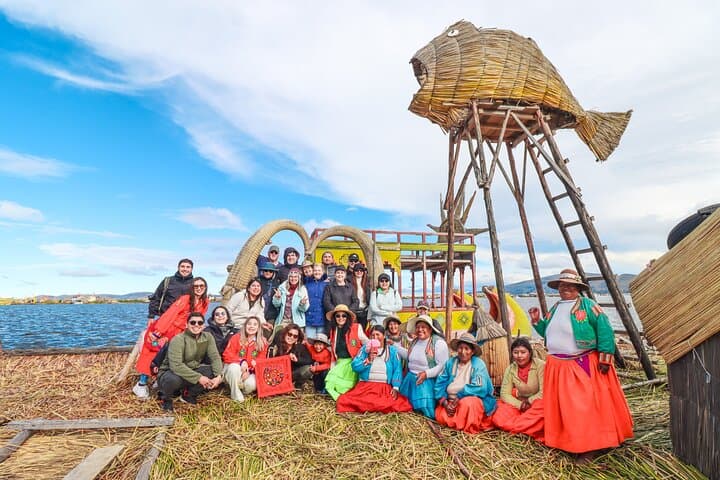
Culturally the Uros embody a hybrid economy: fishing, reed-cutting, and tourism. Guides explain reed construction, show traditional crafts, and often offer short rides in a totora canoe for an added fee. You’ll also notice the modest observation tower on a neighboring island used for panoramic views and drying fish.
Practical guidance: bring layers for sun and wind, carry cash for small purchases and optional canoe rides, and plan for light walking on flexible, sometimes slick surfaces. Tours run roughly three hours with hotel transfers included; choose a morning slot for softer light and fewer visitors. Respect local protocols: ask before photographing people, avoid stepping on reed edges, and leave no trace—these islands are sustained by continuous maintenance and community stewardship.
easy.
3 hours.
Suitable for most fitness levels; requires short, easy walks and stable balance on flexible surfaces
The tour lasts about three hours and typically includes hotel transfer, a guided boat ride, entrance to Uros islands, and a bilingual guide; optional canoe rides may cost extra.
Yes—infants can ride in strollers and on laps, and the tour is considered physically easy, but parents should supervise children on uneven island surfaces.
Morning, noon and afternoon departures are offered; mornings provide softer light and fewer crowds, while sunset colors are dramatic for later departures.
The equipped tourist boat includes a restroom on board; facilities on the islands are basic or not available, so plan accordingly.
The Uros predate the Inca and created floating reed islands as a strategy for fishing, mobility, and protection; their totora methods are handed down through generations.
Totora is a renewable resource when harvested responsibly; visitors should avoid trampling reed beds and support local initiatives that fund reed regrowth and waste management.
Puno Tours operates guided outdoor trips and adventures with an emphasis on safety, stewardship, and memorable experiences.
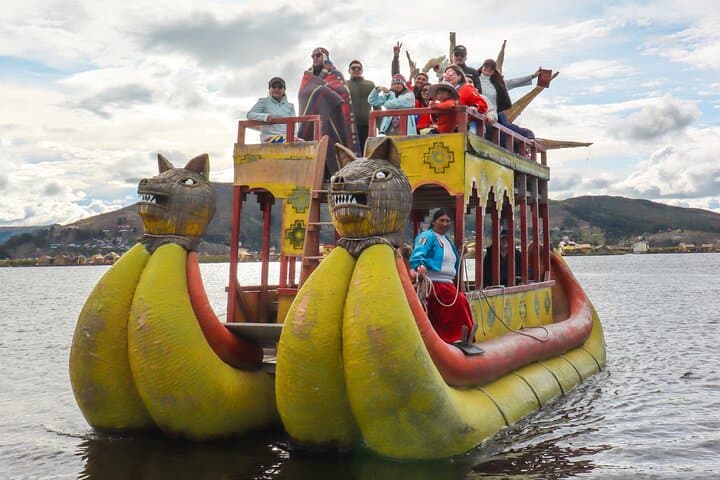
The boat slips off Puno’s pier and Lake Titicaca opens—wide, cool, and daring you to look farther than the shoreline. A covered tourist boat rides the slow chop, wind pushing across the water and reeds bobbing like small, stubborn islands. In the half-light of morning or the flat glare of noon the reed platforms of the Uros come into view: geometric mats of totora, stacked and repaired by hand.
The boat slips off Puno’s pier and Lake Titicaca opens—wide, cool, and daring you to look farther than the shoreline. A covered tourist boat rides the slow chop, wind pushing across the water and reeds bobbing like small, stubborn islands. In the half-light of morning or the flat glare of noon the reed platforms of the Uros come into view: geometric mats of totora, stacked and repaired by hand.
These islands are living craftwork. Built over centuries by Uros families, the floating islets use layers of buoyant totora reeds harvested from the lake—an engineering system older than the modern state of Peru and adapted to life at 3,812 meters. The lake’s geology, a high Andean basin carved by tectonics and glacial action, creates a sluggish, oxygen-thin environment where certain water birds and endemic amphibians have specialized to survive.
Culturally the Uros embody a hybrid economy: fishing, reed-cutting, and tourism. Guides explain reed construction, show traditional crafts, and often offer short rides in a totora canoe for an added fee. You’ll also notice the modest observation tower on a neighboring island used for panoramic views and drying fish.
Practical guidance: bring layers for sun and wind, carry cash for small purchases and optional canoe rides, and plan for light walking on flexible, sometimes slick surfaces. Tours run roughly three hours with hotel transfers included; choose a morning slot for softer light and fewer visitors. Respect local protocols: ask before photographing people, avoid stepping on reed edges, and leave no trace—these islands are sustained by continuous maintenance and community stewardship.