THE ADVENTURE COLLECTIVE® · Independent discovery and booking for outdoor travel

See Rome’s landmarks from an electric golf cart that weaves ancient ruins and Baroque piazzas into a relaxed 2–3 hour loop. Ideal for limited walkers, this private tour pairs historical context with easy mobility.
See Rome’s landmarks from an electric golf cart that weaves ancient ruins and Baroque piazzas into a relaxed 2–3 hour loop. Ideal for limited walkers, this private tour pairs historical context with easy mobility.
You slip into a low-slung electric cart and the city unfolds at eye level—ancient stone facades, baroque fountains, and cobblestones that remember emperors. The cart hums away from the Colosseum and the driver-guide steers you through narrow lanes, stopping at vantage points where the scale of Rome’s layers becomes readable: a triumphal arch here, a compact temple there, a fountain that has been arguing with pigeons for centuries.
Verified experiences and guided adventures in the surrounding area.
Operated by Rome guided tours · Rome, Lazio
You slip into a low-slung electric cart and the city unfolds at eye level—ancient stone facades, baroque fountains, and cobblestones that remember emperors. The cart hums away from the Colosseum and the driver-guide steers you through narrow lanes, stopping at vantage points where the scale of Rome’s layers becomes readable: a triumphal arch here, a compact temple there, a fountain that has been arguing with pigeons for centuries.
This route stitches together Roman history and urban geology. You pass the Circus Maximus’s flat field—once a packed chariot stadium—then the Pantheon’s concrete dome, an engineering leap that still amazes modern builders. The city’s medieval and Baroque chapters arrive in piazzas like Piazza Navona and Piazza di Spagna, where sculptors and popes shaped the civic stage.
Local culture plays out in aromas: espresso from a corner bar, fresh pastries from a morning vendor, and quick conversations in Italian about la passeggiata. The Tiber offers a quieter counterpoint, its current nudging the city’s edge while bridges keep human traffic crossing.
Practical edge: the tour minimizes walking and is a good option for travelers who want comprehensive sightseeing without long strolls. Expect frequent short stops (5–15 minutes) for photos and orientation. Bring a small daypack, comfortable shoes for short dismounts, and a light layer for coastal wind along the river.
Timing matters—early morning or late afternoon light gives the best photos and thinner crowds. The guide handles route choices and local access; keep your camera ready and your questions sharper.
easy.
2–3 hours.
Suitable for most fitness levels; limited standing and short walks expected during stops.
Yes—short rides and minimal walking make it family-friendly, though it's noted as not suitable for babies; check age restrictions before booking.
This tour offers external stops and viewpoints; admission to interior sites is typically not included but your guide can advise on timed-entry options.
Most private golf cart tours in Rome use low-emission electric carts to navigate narrow streets while minimizing noise and pollution.
Full refunds are usually available if you cancel at least 24 hours before departure; verify the operator’s specific policy at booking.
The itinerary threads sites from imperial Rome (Colosseum, Trajan’s Forum) through Baroque reworking (Piazza Navona, Trevi) showing continuous urban reuse.
Electric carts lower foot traffic and emissions compared with larger vehicles; visitors should stay on allowed paths to protect fragile archaeological zones.
Rome guided tours operates guided outdoor trips and adventures with an emphasis on safety, stewardship, and memorable experiences.
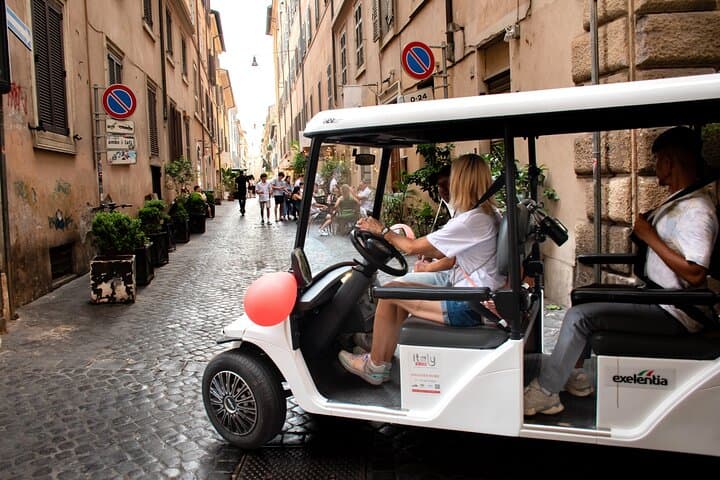
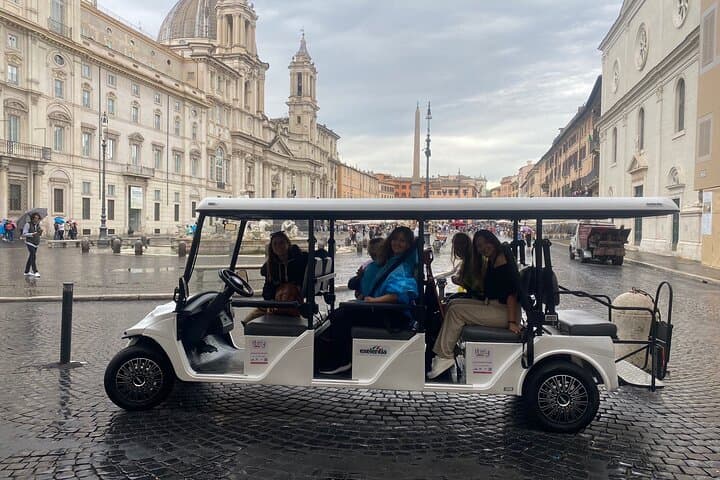
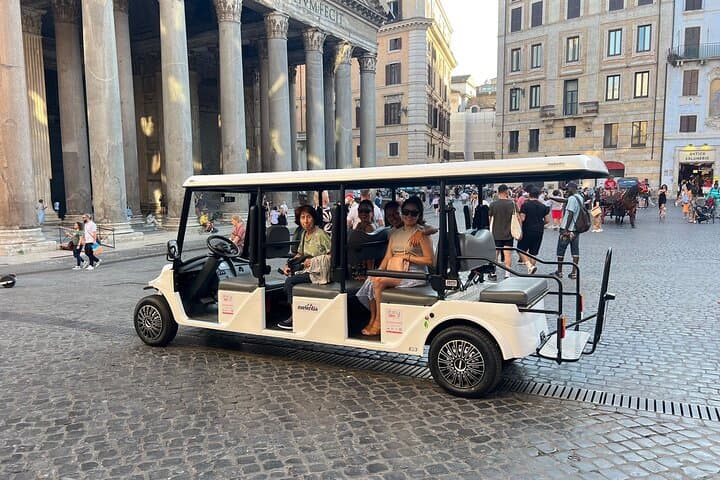
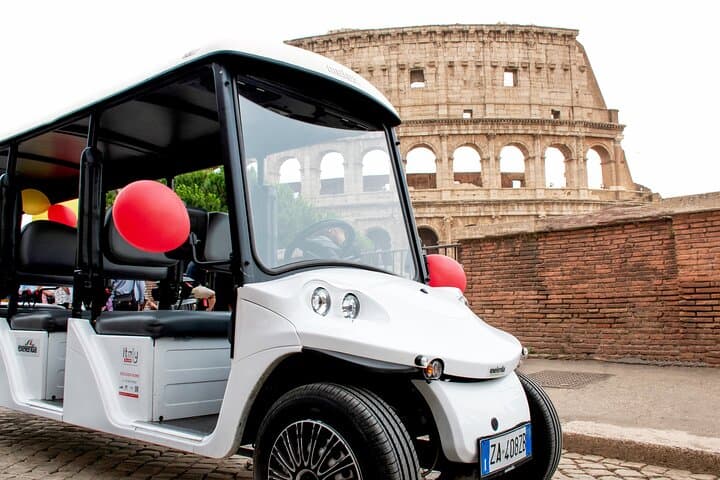
You slip into a low-slung electric cart and the city unfolds at eye level—ancient stone facades, baroque fountains, and cobblestones that remember emperors. The cart hums away from the Colosseum and the driver-guide steers you through narrow lanes, stopping at vantage points where the scale of Rome’s layers becomes readable: a triumphal arch here, a compact temple there, a fountain that has been arguing with pigeons for centuries.
You slip into a low-slung electric cart and the city unfolds at eye level—ancient stone facades, baroque fountains, and cobblestones that remember emperors. The cart hums away from the Colosseum and the driver-guide steers you through narrow lanes, stopping at vantage points where the scale of Rome’s layers becomes readable: a triumphal arch here, a compact temple there, a fountain that has been arguing with pigeons for centuries.
This route stitches together Roman history and urban geology. You pass the Circus Maximus’s flat field—once a packed chariot stadium—then the Pantheon’s concrete dome, an engineering leap that still amazes modern builders. The city’s medieval and Baroque chapters arrive in piazzas like Piazza Navona and Piazza di Spagna, where sculptors and popes shaped the civic stage.
Local culture plays out in aromas: espresso from a corner bar, fresh pastries from a morning vendor, and quick conversations in Italian about la passeggiata. The Tiber offers a quieter counterpoint, its current nudging the city’s edge while bridges keep human traffic crossing.
Practical edge: the tour minimizes walking and is a good option for travelers who want comprehensive sightseeing without long strolls. Expect frequent short stops (5–15 minutes) for photos and orientation. Bring a small daypack, comfortable shoes for short dismounts, and a light layer for coastal wind along the river.
Timing matters—early morning or late afternoon light gives the best photos and thinner crowds. The guide handles route choices and local access; keep your camera ready and your questions sharper.