THE ADVENTURE COLLECTIVE® · Independent discovery and booking for outdoor travel

Try a beginner-friendly self-balancing mobility ride through an active timber yard in Okayama. Short lessons, instructor support, and a unique forestry setting make this an ideal family outdoor activity.
Try a beginner-friendly self-balancing mobility ride through an active timber yard in Okayama. Short lessons, instructor support, and a unique forestry setting make this an ideal family outdoor activity.
You step onto the compact, electric platform and the timber yard opens around you: stacks of freshly cut logs, the smell of cedar in the air, and a flat expanse that dares you to push the device a little faster. Instructors give a clear, hands-on briefing, then you find your balance and roll—gentle acceleration, tight turns between storage racks, and a short photo stop that captures the strange joy of moving through a working forestry site.
Verified experiences and guided adventures in the surrounding area.
Operated by Local Treasures · Okayama, Okayama Prefecture
You step onto the compact, electric platform and the timber yard opens around you: stacks of freshly cut logs, the smell of cedar in the air, and a flat expanse that dares you to push the device a little faster. Instructors give a clear, hands-on briefing, then you find your balance and roll—gentle acceleration, tight turns between storage racks, and a short photo stop that captures the strange joy of moving through a working forestry site.
The experience sits at the intersection of modern mobility and Japan’s long forestry tradition. Okayama Prefecture’s rural valleys have supported small-scale timber harvesting for centuries; yards like Awakura are pragmatic places where lumber is measured, sorted, and readied for carpentry. Nearby Kageishidani Park channels the shinrin-yoku (forest-bathing) ethos—quiet trails and layered pines that reflect the region’s geology of rolling low mountains and red-soil valleys.
Practically, the ride is beginner-friendly: choose 30 or 60 minutes, wear closed-toe shoes and comfortable clothing, and expect a short safety lesson in Japanese with basic English support. Helmets and protective gear are provided; instructors pace the session to match ability and keep routes on flat, well-graded surfaces. Weather can change quickly in the hills—book mornings for still air, avoid heavy rain days, and bring a small dry bag for phones. Families will find it accessible for kids with supervision, and photographers will appreciate the interplay of timber textures and light.
This is less about speed and more about movement—an accessible way to feel the rhythm of working woodland while learning a new way to travel across land.
easy.
30–60 minutes.
Minimal fitness required—ability to stand and shift weight for balance; suitable for most ages with guidance
No—brief hands-on instruction is provided and the course is designed for beginners.
Yes, helmets and basic protective gear are included in the booking price.
Yes; the activity is family-friendly but children should be able to follow safety instructions and are supervised by staff.
The operator cancels in heavy rain and offers a full refund if you cancel at least 24 hours before the scheduled time.
Small timber yards like Awakura reflect a long local tradition of selective logging and carpentry that supported rural communities across Okayama Prefecture.
Stay on designated riding areas and avoid disturbing cut timber piles; operators emphasize low-impact use and treat the yard as a working site, not a playground.
Local Treasures operates guided outdoor trips and adventures with an emphasis on safety, stewardship, and memorable experiences.
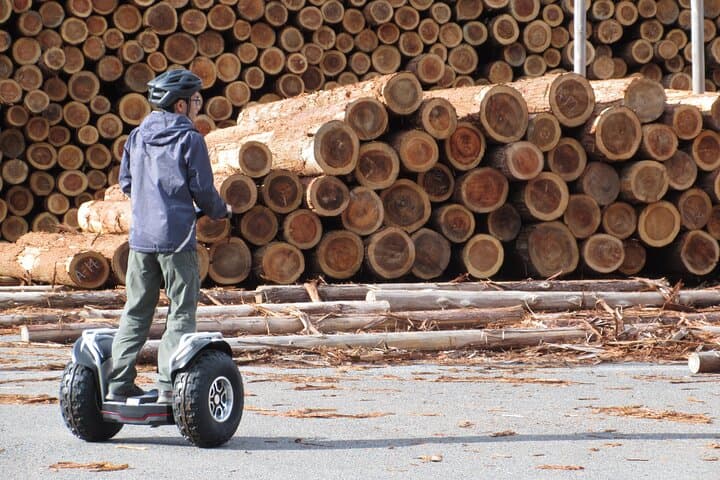
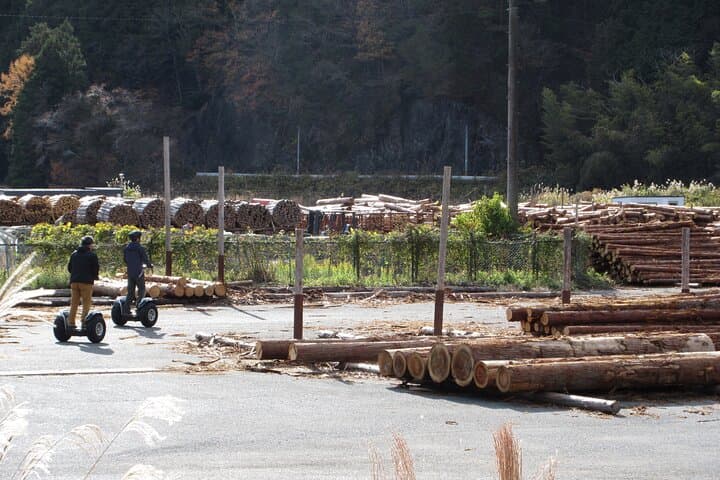
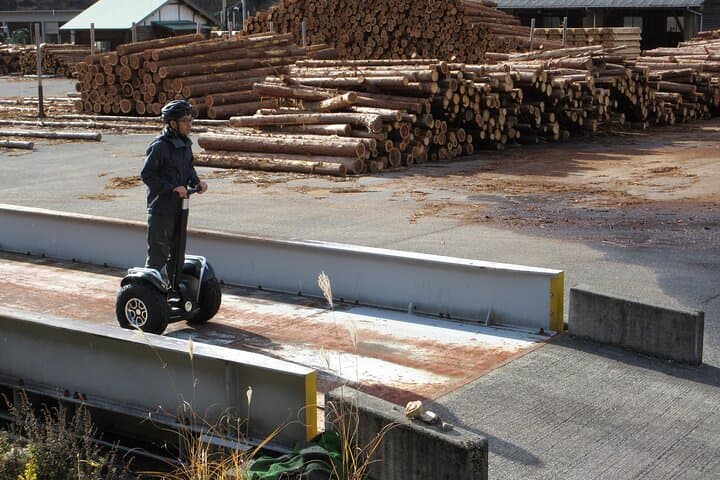
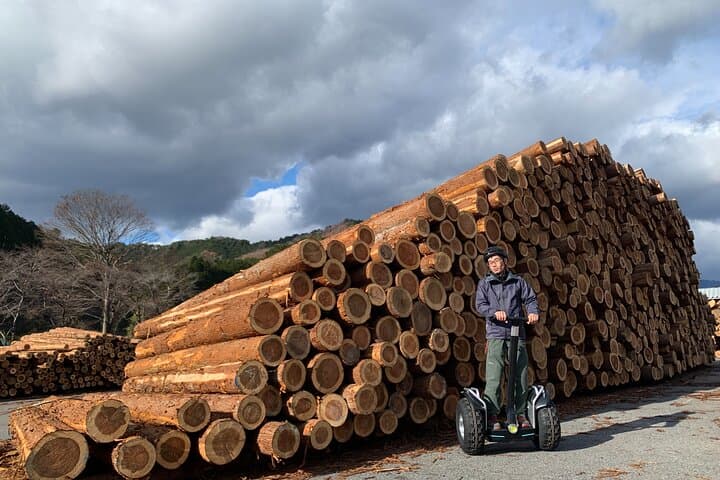
You step onto the compact, electric platform and the timber yard opens around you: stacks of freshly cut logs, the smell of cedar in the air, and a flat expanse that dares you to push the device a little faster. Instructors give a clear, hands-on briefing, then you find your balance and roll—gentle acceleration, tight turns between storage racks, and a short photo stop that captures the strange joy of moving through a working forestry site.
You step onto the compact, electric platform and the timber yard opens around you: stacks of freshly cut logs, the smell of cedar in the air, and a flat expanse that dares you to push the device a little faster. Instructors give a clear, hands-on briefing, then you find your balance and roll—gentle acceleration, tight turns between storage racks, and a short photo stop that captures the strange joy of moving through a working forestry site.
The experience sits at the intersection of modern mobility and Japan’s long forestry tradition. Okayama Prefecture’s rural valleys have supported small-scale timber harvesting for centuries; yards like Awakura are pragmatic places where lumber is measured, sorted, and readied for carpentry. Nearby Kageishidani Park channels the shinrin-yoku (forest-bathing) ethos—quiet trails and layered pines that reflect the region’s geology of rolling low mountains and red-soil valleys.
Practically, the ride is beginner-friendly: choose 30 or 60 minutes, wear closed-toe shoes and comfortable clothing, and expect a short safety lesson in Japanese with basic English support. Helmets and protective gear are provided; instructors pace the session to match ability and keep routes on flat, well-graded surfaces. Weather can change quickly in the hills—book mornings for still air, avoid heavy rain days, and bring a small dry bag for phones. Families will find it accessible for kids with supervision, and photographers will appreciate the interplay of timber textures and light.
This is less about speed and more about movement—an accessible way to feel the rhythm of working woodland while learning a new way to travel across land.