THE ADVENTURE COLLECTIVE® · Independent discovery and booking for outdoor travel

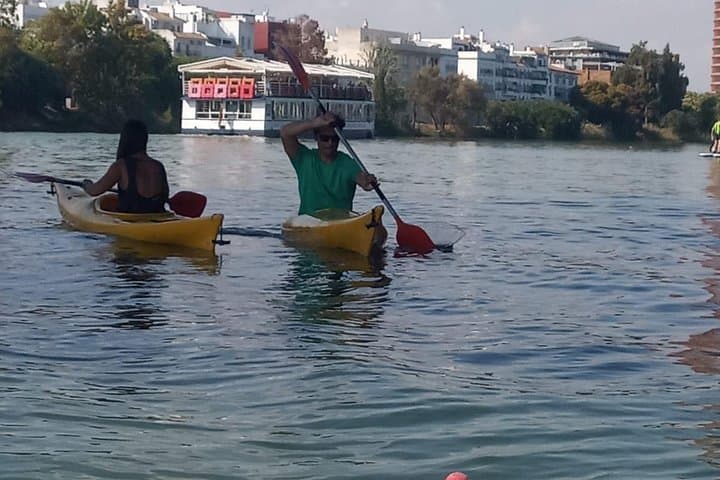
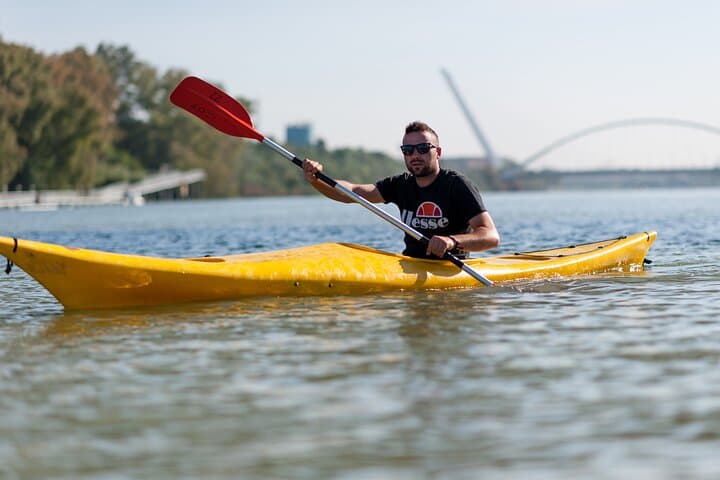
Paddle the Guadalquivir through Seville for two hours of low‑effort sightseeing that places the city’s landmarks at water level. Guides teach basic paddling and stop for short breaks while you glide past Torre del Oro, Triana, La Cartuja and Isabel II Bridge.
Paddle the Guadalquivir through Seville for two hours of low‑effort sightseeing that places the city’s landmarks at water level. Guides teach basic paddling and stop for short breaks while you glide past Torre del Oro, Triana, La Cartuja and Isabel II Bridge.
Morning light slices across the Guadalquivir as you push a bright kayak from the quay and the city unfolds at water level: the golden face of Torre del Oro, the arch of Isabel II Bridge, narrow houses of Triana reflected in the current.
Verified experiences and guided adventures in the surrounding area.
Operated by CLUB DEPORTIVO TRIANA TURISMO · Seville, Andalusia
Morning light slices across the Guadalquivir as you push a bright kayak from the quay and the city unfolds at water level: the golden face of Torre del Oro, the arch of Isabel II Bridge, narrow houses of Triana reflected in the current.
The river has shaped Seville’s story for centuries — a slow, navigable artery that supported trade during the Age of Exploration and fed the orange groves of the Guadalquivir basin. Geologically the channel runs across an alluvial plain, which makes for placid paddling and wide sightlines through the city; culturally, the river has always been civic stage and working waterfront, from ceramic workshops in Triana to the modern terraces of La Cartuja island.
On this guided two-hour route you stop to take in landmarks and hear local context: why the Torre del Oro once guarded the port, how Isabel II Bridge connected neighborhoods, and how Expo ’92 reshaped island La Cartuja. Guides provide a brief paddling lesson and safety talk, so no prior experience is required; expect gentle currents, occasional river traffic, and stretches that encourage steady, low-effort paddling.
Practical edge: wear shoes that can get wet, bring a change of clothes and sun protection, and carry a small dry bag or waterproof phone case. Tours typically launch from the riverbank near Triana or central Seville and are reachable by public transport. For comfort, pick morning or late-afternoon slots to avoid the hottest sun and enjoy cooler currents and better light for photos.
easy.
2 hours.
Minimal fitness required; suitable for people comfortable with light upper‑body activity and basic balance in a stable kayak.
No — guides provide basic paddling and safety instruction; the route is designed for beginners and low physical effort.
Full refund is typically available if you cancel at least 24 hours before the scheduled start; bad weather may also cause cancellations with refund options.
Launch points are usually on the Guadalquivir between Triana and central Seville and are accessible by bus, tram or a short taxi from the main city center; confirm the exact meeting point on your booking voucher.
Bring water, sun protection, a hat, water-friendly footwear, and a waterproof case for your phone; guides supply kayaks, paddles and lifejackets.
The Guadalquivir made Seville Spain’s principal Atlantic port in the 16th century; defensive structures like Torre del Oro controlled access to the city.
Stick to marked launch points, avoid disturbing riverside nesting birds, and pack out all waste — the urban river benefits from low-impact recreation to protect local wildlife and water quality.
CLUB DEPORTIVO TRIANA TURISMO operates guided outdoor trips and adventures with an emphasis on safety, stewardship, and memorable experiences.
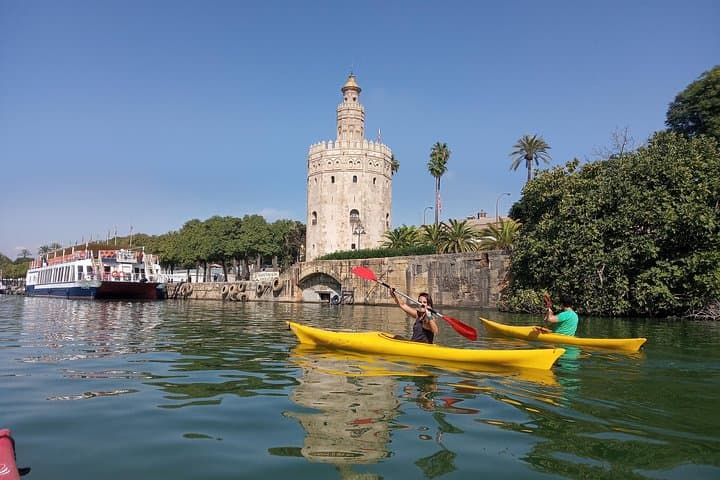
Morning light slices across the Guadalquivir as you push a bright kayak from the quay and the city unfolds at water level: the golden face of Torre del Oro, the arch of Isabel II Bridge, narrow houses of Triana reflected in the current.
Morning light slices across the Guadalquivir as you push a bright kayak from the quay and the city unfolds at water level: the golden face of Torre del Oro, the arch of Isabel II Bridge, narrow houses of Triana reflected in the current.
The river has shaped Seville’s story for centuries — a slow, navigable artery that supported trade during the Age of Exploration and fed the orange groves of the Guadalquivir basin. Geologically the channel runs across an alluvial plain, which makes for placid paddling and wide sightlines through the city; culturally, the river has always been civic stage and working waterfront, from ceramic workshops in Triana to the modern terraces of La Cartuja island.
On this guided two-hour route you stop to take in landmarks and hear local context: why the Torre del Oro once guarded the port, how Isabel II Bridge connected neighborhoods, and how Expo ’92 reshaped island La Cartuja. Guides provide a brief paddling lesson and safety talk, so no prior experience is required; expect gentle currents, occasional river traffic, and stretches that encourage steady, low-effort paddling.
Practical edge: wear shoes that can get wet, bring a change of clothes and sun protection, and carry a small dry bag or waterproof phone case. Tours typically launch from the riverbank near Triana or central Seville and are reachable by public transport. For comfort, pick morning or late-afternoon slots to avoid the hottest sun and enjoy cooler currents and better light for photos.