THE ADVENTURE COLLECTIVE® · Independent discovery and booking for outdoor travel

A private six‑hour circuit from Oban that combines ruined castles, Glencoe’s dramatic valley, and the open sweep of Rannoch Moor. Perfect for photographers and history lovers who want local stories and less‑visited stops.
A private six‑hour circuit from Oban that combines ruined castles, Glencoe’s dramatic valley, and the open sweep of Rannoch Moor. Perfect for photographers and history lovers who want local stories and less‑visited stops.
You step out of the Oban tourist office before dawn and the van breathes a warm puff of engine life into the cool salt air. Windows fog, tea steams in paper cups, and within half an hour the coastal town dissolves into a road that climbs toward the high country. The hills close in: dark basalt ridges, tongues of waterfall, and a sky the color of pewter. The guide—born and bred in Argyll—points to a ruin, a roadside chapel, and a scattering of cairns, narrating clan politics like a plotline in an old novel.
Verified experiences and guided adventures in the surrounding area.
Operated by Charles Henry · Oban, Argyll and Bute
You step out of the Oban tourist office before dawn and the van breathes a warm puff of engine life into the cool salt air. Windows fog, tea steams in paper cups, and within half an hour the coastal town dissolves into a road that climbs toward the high country. The hills close in: dark basalt ridges, tongues of waterfall, and a sky the color of pewter. The guide—born and bred in Argyll—points to a ruin, a roadside chapel, and a scattering of cairns, narrating clan politics like a plotline in an old novel.
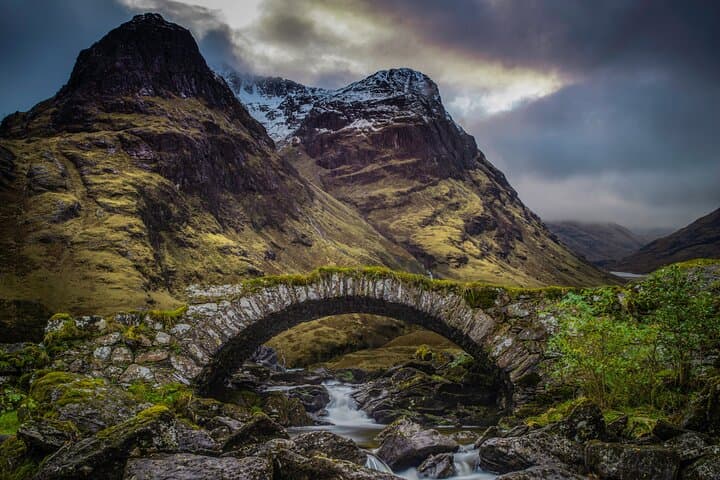
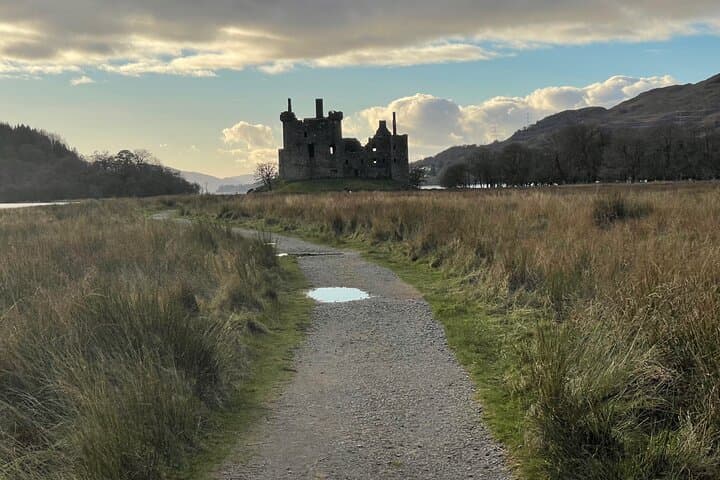
This six‑hour private circuit is a compact seminar in western Scottish history and geology. You’ll visit the Falls of Lora and Connel Bridge, trace the shoreline past Dunstaffnage Castle and chapel, and stand beneath the ruined tower of Dunollie. The route pushes through Appin—where the Appin Murder inspired Robert Louis Stevenson—and into the steep-sided bowl of Glencoe, where the 1692 massacre carved both landscape and memory. Beyond Glencoe the tour crosses Rannoch Moor, a windswept expanse of peat and quartz, and makes photo stops at Kilchurn Castle and the small churches with their local legends tied to Robert the Bruce.
Geologically the Highlands here are uncompromising: old volcanic and metamorphic rock folded and exposed by glaciation, with rivers that seem to dare you to keep up. Rannoch Moor is especially sensitive—blanketed in peat bog that holds carbon and resists footprints. Culturally, the ride stitches together clan strongholds and coastal defenses that defended sea lanes and local power for centuries.
Practical edge: the itinerary is driven—you’ll spend most of the day in an air-conditioned vehicle with short 5–30 minute walks to viewpoints and ruins. The tour is private and flexible; the guide can tailor stops to your interests (history, photography, or walking). Expect several photo stops, one longer 20–30 minute visit at a castle or church, and multiple short interpretive pauses along the A828 and A82.
Bring waterproof layers and good walking shoes: weather changes fast and footing around ruins and shorelines can be uneven. Charge cameras and phones; batteries drain faster in cold, damp conditions. If you’re on a cruise—pickup at the tender port is possible—confirm timing in advance; the tour requires punctual meeting and returns to Oban at the scheduled finish.
For those who want more than scenery, the guide’s local stories and off‑path sites—small chapels, clan stones, and little beaches—turn a sightseeing drive into a living history lesson. With a mix of dramatic valley views, ruined stonework, and peat‑scented moorland, this day trip offers a clear, steady window into why the west Highlands feel both rugged and unfailingly alive.
easy.
6 hours.
Suitable for travelers of average fitness; mostly seated with brief, easy walks.
Yes—pickup from central Oban locations and the cruise tender/port can be arranged; confirm pickup point when booking.
Mostly short walks (5–30 minutes) from the vehicle to viewpoints and ruins; no long hikes are required.
Access varies; the vehicle and some viewpoints are accessible, but many ruined castles and shorelines have uneven terrain—check specific accessibility needs with the operator.
The tour includes interpretive stops; entrance fees to museums or castle interiors may not be included—ask the guide if you want to enter paid sites.
Yes—this private tour is flexible and the guide will tailor stops based on interests and timing where possible.
Guides are local and the tour is delivered in English; request language needs at booking and the operator will advise availability.
This route threads clan history and conflict—Glencoe’s 1692 massacre and medieval coastal strongholds like Dunstaffnage illustrate centuries of power shifts.
Rannoch Moor’s peat bogs are ecologically fragile; stay on paths, carry out waste, and avoid disturbing ground vegetation to protect carbon‑rich habitats.
Charles Henry operates guided outdoor trips and adventures with an emphasis on safety, stewardship, and memorable experiences.
You step out of the Oban tourist office before dawn and the van breathes a warm puff of engine life into the cool salt air. Windows fog, tea steams in paper cups, and within half an hour the coastal town dissolves into a road that climbs toward the high country. The hills close in: dark basalt ridges, tongues of waterfall, and a sky the color of pewter. The guide—born and bred in Argyll—points to a ruin, a roadside chapel, and a scattering of cairns, narrating clan politics like a plotline in an old novel.
You step out of the Oban tourist office before dawn and the van breathes a warm puff of engine life into the cool salt air. Windows fog, tea steams in paper cups, and within half an hour the coastal town dissolves into a road that climbs toward the high country. The hills close in: dark basalt ridges, tongues of waterfall, and a sky the color of pewter. The guide—born and bred in Argyll—points to a ruin, a roadside chapel, and a scattering of cairns, narrating clan politics like a plotline in an old novel.
This six‑hour private circuit is a compact seminar in western Scottish history and geology. You’ll visit the Falls of Lora and Connel Bridge, trace the shoreline past Dunstaffnage Castle and chapel, and stand beneath the ruined tower of Dunollie. The route pushes through Appin—where the Appin Murder inspired Robert Louis Stevenson—and into the steep-sided bowl of Glencoe, where the 1692 massacre carved both landscape and memory. Beyond Glencoe the tour crosses Rannoch Moor, a windswept expanse of peat and quartz, and makes photo stops at Kilchurn Castle and the small churches with their local legends tied to Robert the Bruce.
Geologically the Highlands here are uncompromising: old volcanic and metamorphic rock folded and exposed by glaciation, with rivers that seem to dare you to keep up. Rannoch Moor is especially sensitive—blanketed in peat bog that holds carbon and resists footprints. Culturally, the ride stitches together clan strongholds and coastal defenses that defended sea lanes and local power for centuries.
Practical edge: the itinerary is driven—you’ll spend most of the day in an air-conditioned vehicle with short 5–30 minute walks to viewpoints and ruins. The tour is private and flexible; the guide can tailor stops to your interests (history, photography, or walking). Expect several photo stops, one longer 20–30 minute visit at a castle or church, and multiple short interpretive pauses along the A828 and A82.
Bring waterproof layers and good walking shoes: weather changes fast and footing around ruins and shorelines can be uneven. Charge cameras and phones; batteries drain faster in cold, damp conditions. If you’re on a cruise—pickup at the tender port is possible—confirm timing in advance; the tour requires punctual meeting and returns to Oban at the scheduled finish.
For those who want more than scenery, the guide’s local stories and off‑path sites—small chapels, clan stones, and little beaches—turn a sightseeing drive into a living history lesson. With a mix of dramatic valley views, ruined stonework, and peat‑scented moorland, this day trip offers a clear, steady window into why the west Highlands feel both rugged and unfailingly alive.