THE ADVENTURE COLLECTIVE® · Independent discovery and booking for outdoor travel

Paddle glass‑bottom kayaks through the turquoise Sea of Cortez to El Arco and Playa del Amor on this private Cabo San Lucas tour. Early starts beat the wind, and the underwater window beneath your cockpit puts reefs, fish and sea lions just under your feet.
Paddle glass‑bottom kayaks through the turquoise Sea of Cortez to El Arco and Playa del Amor on this private Cabo San Lucas tour. Early starts beat the wind, and the underwater window beneath your cockpit puts reefs, fish and sea lions just under your feet.
The ocean smells like metal and salt in the hour before sunrise. You meet at the Plaza Gali parking lot, where the guide hands you a neoprene vest and points to a row of glass‑bottom kayaks waiting on the sand. Paddle strokes break the glassy surface, and through the hull the Sea of Cortez seems to fold into a living aquarium — parrotfish flashing, schools of sergeant majors drifting like coins. Ahead, the granite shoulders of Land’s End rise: El Arco, carved by wind and wave into the arch that announces Cabo San Lucas.
Verified experiences and guided adventures in the surrounding area.
Operated by High Tide Los Cabos · Cabo San Lucas, Baja California Sur
The ocean smells like metal and salt in the hour before sunrise. You meet at the Plaza Gali parking lot, where the guide hands you a neoprene vest and points to a row of glass‑bottom kayaks waiting on the sand. Paddle strokes break the glassy surface, and through the hull the Sea of Cortez seems to fold into a living aquarium — parrotfish flashing, schools of sergeant majors drifting like coins. Ahead, the granite shoulders of Land’s End rise: El Arco, carved by wind and wave into the arch that announces Cabo San Lucas.
Geology here is blunt and readable. The granite outcrops at Land’s End are part of Baja’s rugged backbone, worn smooth by Pacific swells where the open ocean bangs into the shallower, warmer Sea of Cortez. That clash of currents has made this mouth of the peninsula a magnet for marine life — and for people. For centuries local fishermen navigated these channels; today the arch is the photo card for international tourism and a staging ground for wildlife viewing, from pelicans to the colony of sea lions that claim the rocks.
The trip threads natural history with practical rhythm. You paddle past Pelican Rock, a shallow reef where snorkeling is usually best — currents slow and visibility sharp. Guides stop at Playa del Amor when conditions allow; the cove is famous for its clear water and sudden surf that marks the transition to the Pacific. Listen for the bark of sea lions and the slap of waves on rock: the animals set the tempo here, often splashing close enough to make you laugh and pull back your paddle.
This is a private tour, which changes the feel. The guide tailors timing to wind and crowd levels and can swap more time into snorkeling if the Arch is too windy to approach. Expect two to three hours on the water, with time floating over reefs in your glass‑bottom kayak and a short snorkel. The operator provides snorkel gear, bottled water and snacks — but bring reef‑safe sunscreen, secure footwear, and a small dry bag for phone and ID.
Timing matters: mornings are calmer and clearer; afternoons build wind and boat traffic. If the captain judges conditions unsafe you’ll be offered another date or refund. For travelers with limited swim ability or back issues, note that the kayaks launch from the beach and some exposure to chop is likely. For everyone else, the reward is both immediate and tactile: the arch coming into view, sunlight dappling the sea, and the chance to float within arms’ reach of a colony of wild sea lions.
Practical tip: choose an early start, confirm your pickup time 24 hours ahead, and keep expectations flexible — the sea decides the route. Do that and the glass‑bottom window beneath your feet turns a famous landmark into an intimate, marine encounter you’ll remember long after the sand dries on your sunscreen.
moderate.
2–3 hours.
Suitable for people comfortable with light paddling and basic swimming; should be able to climb in and out of a kayak from a sandy beach.
No advanced skills required; guides provide instruction and tandem kayaks are available for beginners.
Not always — strong winds or big swell can make the arch inaccessible; guides will adjust the route and offer more snorkeling time or reschedule if necessary.
Participants must be at least 6 years old; tandem kayaks have a combined weight limit of about 195 kg (425 lbs).
Yes — snorkel masks and fins are supplied, but you may bring your own mask for a better fit.
If conditions are unsafe, the operator offers an alternate date or full refund; confirm pickup details and cancellation terms when booking.
No locker facilities — guides typically store personal items in the transport vehicle; use a dry bag for valuables.
El Arco marks a geological and cultural junction where Pacific swells meet the Sea of Cortez; the channel has long been a fishing and navigation landmark for local communities.
The Sea of Cortez is ecologically rich and sensitive—use reef‑safe products, avoid touching coral or wildlife, and follow guide instructions to minimize impact.
High Tide Los Cabos operates guided outdoor trips and adventures with an emphasis on safety, stewardship, and memorable experiences.
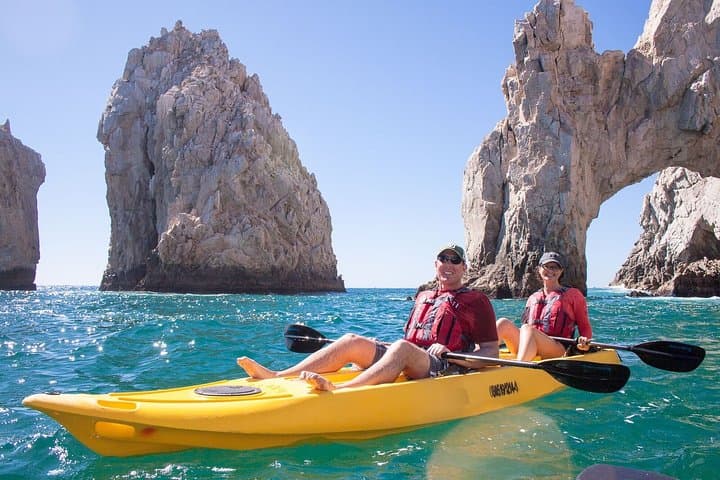
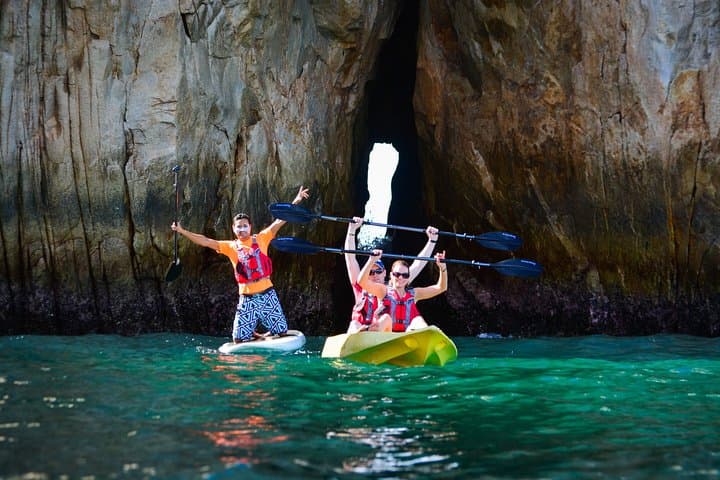
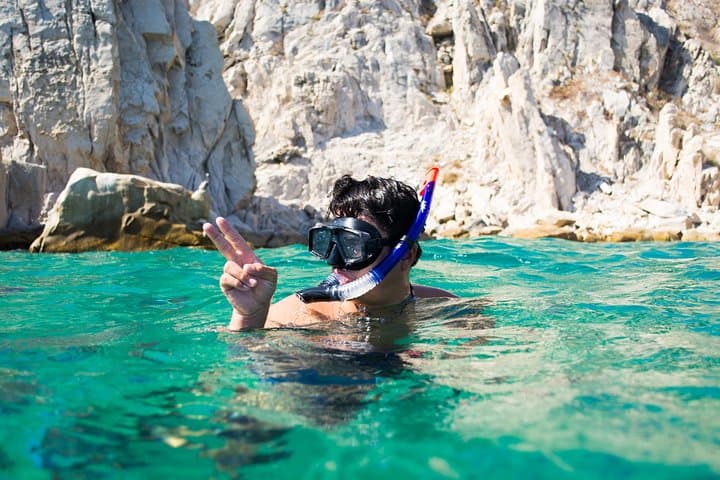
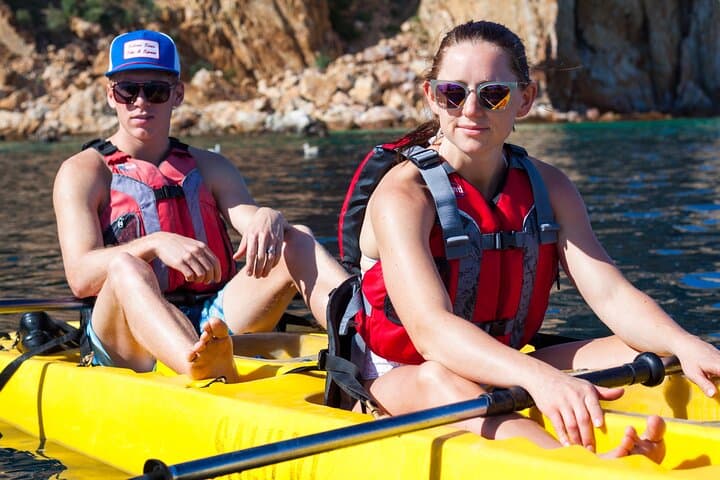
The ocean smells like metal and salt in the hour before sunrise. You meet at the Plaza Gali parking lot, where the guide hands you a neoprene vest and points to a row of glass‑bottom kayaks waiting on the sand. Paddle strokes break the glassy surface, and through the hull the Sea of Cortez seems to fold into a living aquarium — parrotfish flashing, schools of sergeant majors drifting like coins. Ahead, the granite shoulders of Land’s End rise: El Arco, carved by wind and wave into the arch that announces Cabo San Lucas.
The ocean smells like metal and salt in the hour before sunrise. You meet at the Plaza Gali parking lot, where the guide hands you a neoprene vest and points to a row of glass‑bottom kayaks waiting on the sand. Paddle strokes break the glassy surface, and through the hull the Sea of Cortez seems to fold into a living aquarium — parrotfish flashing, schools of sergeant majors drifting like coins. Ahead, the granite shoulders of Land’s End rise: El Arco, carved by wind and wave into the arch that announces Cabo San Lucas.
Geology here is blunt and readable. The granite outcrops at Land’s End are part of Baja’s rugged backbone, worn smooth by Pacific swells where the open ocean bangs into the shallower, warmer Sea of Cortez. That clash of currents has made this mouth of the peninsula a magnet for marine life — and for people. For centuries local fishermen navigated these channels; today the arch is the photo card for international tourism and a staging ground for wildlife viewing, from pelicans to the colony of sea lions that claim the rocks.
The trip threads natural history with practical rhythm. You paddle past Pelican Rock, a shallow reef where snorkeling is usually best — currents slow and visibility sharp. Guides stop at Playa del Amor when conditions allow; the cove is famous for its clear water and sudden surf that marks the transition to the Pacific. Listen for the bark of sea lions and the slap of waves on rock: the animals set the tempo here, often splashing close enough to make you laugh and pull back your paddle.
This is a private tour, which changes the feel. The guide tailors timing to wind and crowd levels and can swap more time into snorkeling if the Arch is too windy to approach. Expect two to three hours on the water, with time floating over reefs in your glass‑bottom kayak and a short snorkel. The operator provides snorkel gear, bottled water and snacks — but bring reef‑safe sunscreen, secure footwear, and a small dry bag for phone and ID.
Timing matters: mornings are calmer and clearer; afternoons build wind and boat traffic. If the captain judges conditions unsafe you’ll be offered another date or refund. For travelers with limited swim ability or back issues, note that the kayaks launch from the beach and some exposure to chop is likely. For everyone else, the reward is both immediate and tactile: the arch coming into view, sunlight dappling the sea, and the chance to float within arms’ reach of a colony of wild sea lions.
Practical tip: choose an early start, confirm your pickup time 24 hours ahead, and keep expectations flexible — the sea decides the route. Do that and the glass‑bottom window beneath your feet turns a famous landmark into an intimate, marine encounter you’ll remember long after the sand dries on your sunscreen.