THE ADVENTURE COLLECTIVE® · Independent discovery and booking for outdoor travel

Ride the Red and seasonal Yellow Routes to sample Glasgow’s architecture, riverfront, and museums from an open-top deck. This practical guide explains what to expect, where to hop off, and how to make the most of a 1–2 day pass.
Ride the Red and seasonal Yellow Routes to sample Glasgow’s architecture, riverfront, and museums from an open-top deck. This practical guide explains what to expect, where to hop off, and how to make the most of a 1–2 day pass.
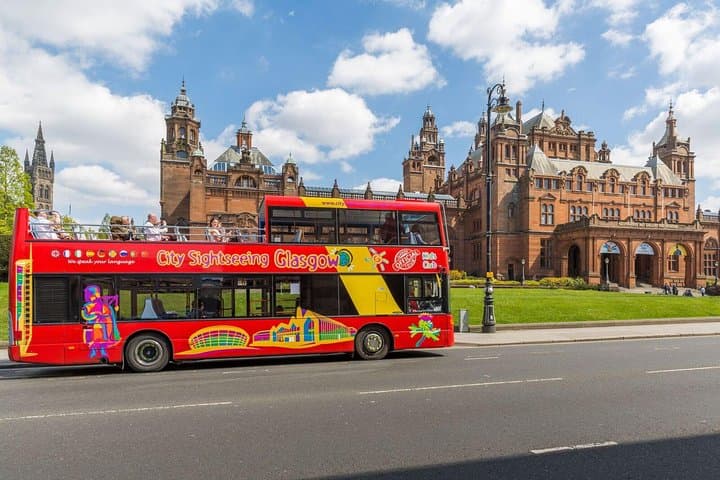
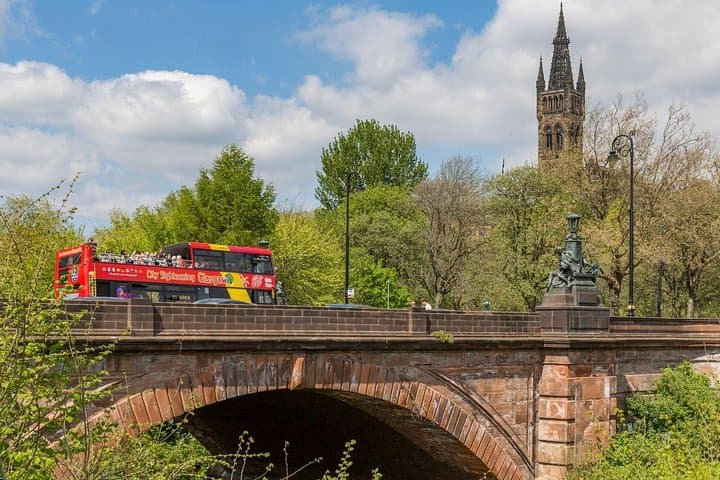
A gray morning over George Square, and the open-top bus eases past Victorian facades and the glass angles of new development. From the raised deck the city rearranges itself—cathedral spires, the sweep of the River Clyde daring you to follow its quays, red sandstone terraces giving way to modern museum glass.
Verified experiences and guided adventures in the surrounding area.
Operated by City Sightseeing Ltd - UK and Ireland · Glasgow, Scotland
A gray morning over George Square, and the open-top bus eases past Victorian facades and the glass angles of new development. From the raised deck the city rearranges itself—cathedral spires, the sweep of the River Clyde daring you to follow its quays, red sandstone terraces giving way to modern museum glass.
Glasgow grew fast during the Industrial Revolution; shipyards and factories shaped streets and attitudes still visible in brick and stone. The Red Route threads through the civic heart, past Glasgow Cathedral and Kelvingrove, while the seasonal Yellow Route stretches to Govan and the Science Centre, tracing the city's maritime and industrial geography. Expect layers of culture: Celtic and Rangers loyalties, a thriving music scene, and distilleries turned visitor sites.
Practically, the tour is straightforward: 90-minute loops, frequent stops, and audio commentary in multiple languages on the Red Route. Buses run year-round; Yellow Route services use electric vehicles in summer months. Accessibility is good—dedicated wheelchair spaces and lower-deck access—so the route suits most travelers.
Tips for planning: start at George Square to orient yourself, use the first loop as a reconnaissance lap, then hop off at Kelvingrove or the Riverside Museum for deeper exploration. Carry a rain jacket and wear comfortable shoes for cobbled streets. Mid-morning and late afternoon offer softer light for photos and fewer crowds than midday. With a 1- or 2-day pass you can balance sightseeing with museum time; if weather turns, the covered lower deck keeps the trip moving. This tour is a practical way to see Glasgow’s architecture, history, and riverside energy without overcommitting time.
easy.
90 minutes per loop · 1–2 days with pass.
Suitable for all fitness levels; requires short walks on cobbled streets
Each loop takes about 90 minutes; buses run frequently and you can stay on for a full circuit or hop off at any official stop.
Yes — mobile or printed vouchers are valid for 12 months from the selected travel date and are activated on first use.
Yes — buses have lower-deck wheelchair spaces and full accessibility features; inform the operator of any special requirements.
Red Route offers audio commentary in multiple languages with free headphones; the Yellow Route provides English audio.
Glasgow’s growth as a 19th-century shipbuilding and trading hub shaped its Victorian architecture and cultural institutions, many of which sit along the tour routes.
The Yellow Route uses electric buses in high season; choosing hop-on hop-off reduces individual car trips and helps lower city center traffic and emissions.
City Sightseeing Ltd - UK and Ireland operates guided outdoor trips and adventures with an emphasis on safety, stewardship, and memorable experiences.
A gray morning over George Square, and the open-top bus eases past Victorian facades and the glass angles of new development. From the raised deck the city rearranges itself—cathedral spires, the sweep of the River Clyde daring you to follow its quays, red sandstone terraces giving way to modern museum glass.
A gray morning over George Square, and the open-top bus eases past Victorian facades and the glass angles of new development. From the raised deck the city rearranges itself—cathedral spires, the sweep of the River Clyde daring you to follow its quays, red sandstone terraces giving way to modern museum glass.
Glasgow grew fast during the Industrial Revolution; shipyards and factories shaped streets and attitudes still visible in brick and stone. The Red Route threads through the civic heart, past Glasgow Cathedral and Kelvingrove, while the seasonal Yellow Route stretches to Govan and the Science Centre, tracing the city's maritime and industrial geography. Expect layers of culture: Celtic and Rangers loyalties, a thriving music scene, and distilleries turned visitor sites.
Practically, the tour is straightforward: 90-minute loops, frequent stops, and audio commentary in multiple languages on the Red Route. Buses run year-round; Yellow Route services use electric vehicles in summer months. Accessibility is good—dedicated wheelchair spaces and lower-deck access—so the route suits most travelers.
Tips for planning: start at George Square to orient yourself, use the first loop as a reconnaissance lap, then hop off at Kelvingrove or the Riverside Museum for deeper exploration. Carry a rain jacket and wear comfortable shoes for cobbled streets. Mid-morning and late afternoon offer softer light for photos and fewer crowds than midday. With a 1- or 2-day pass you can balance sightseeing with museum time; if weather turns, the covered lower deck keeps the trip moving. This tour is a practical way to see Glasgow’s architecture, history, and riverside energy without overcommitting time.