THE ADVENTURE COLLECTIVE® · Independent discovery and booking for outdoor travel

Walk Glasgow after dark with a guide who pairs documented history and local folklore. From grave robbers and witch trials to haunted theatres and a spooky Necropolis, this two-hour tour mixes eerie atmosphere with civic story-telling.
Walk Glasgow after dark with a guide who pairs documented history and local folklore. From grave robbers and witch trials to haunted theatres and a spooky Necropolis, this two-hour tour mixes eerie atmosphere with civic story-telling.
A lantern bobbing on Castle Street, the clack of footsteps on worn stone and the silhouette of Glasgow Cathedral set the evening's mood. The group moves as the guide relays stories that make the city feel older than its glass and sandstone facades—grave robbers' tricks, witch trials by candlelight, and whispered sightings in the Necropolis.
Verified experiences and guided adventures in the surrounding area.
Operated by Where Now Tours · Glasgow, Scotland
A lantern bobbing on Castle Street, the clack of footsteps on worn stone and the silhouette of Glasgow Cathedral set the evening's mood. The group moves as the guide relays stories that make the city feel older than its glass and sandstone facades—grave robbers' tricks, witch trials by candlelight, and whispered sightings in the Necropolis.
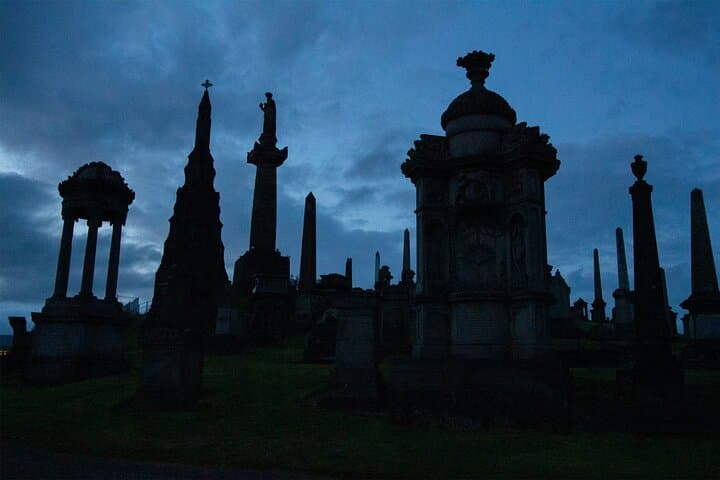
The tour threads through Glasgow's built landscape: a medieval clocktower that once detained accused witches, converted churches with theatrical echoes, and the Victorian Necropolis where sculpted tombs keep civic memory and macabre anecdotes. Geologically, the city's sandstone walls and the nearby River Clyde shaped the industries and crowds that produced the tales—rapid urban growth in the 18th and 19th centuries left room for both civic pride and grisly rumor.
Culturally, the route skews local: the oldest surviving music hall, vivid street murals in the Merchant City, and a pub that closes the walk with a measure of whisky and staged bravado. Guides balance folklore with documented events—some stories are local legend, others tied to verifiable incidents like the Janet McAllister graverobbing case.
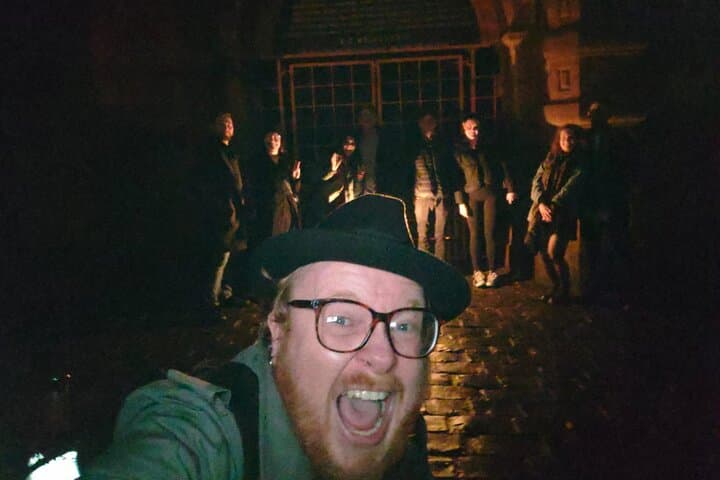
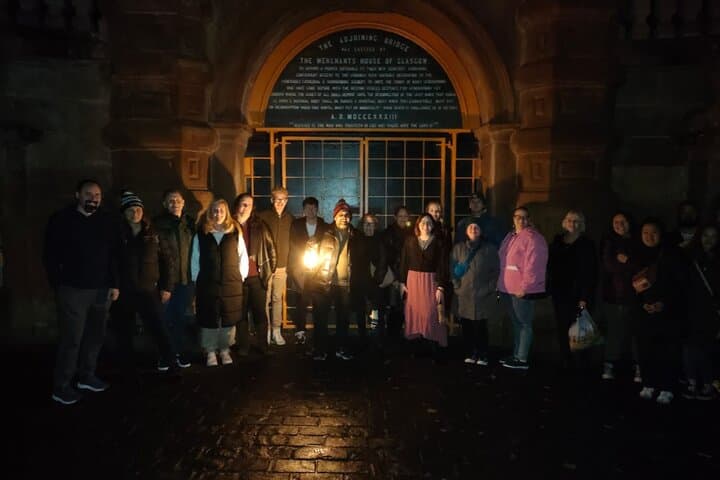
Practical guidance: meet outside Glasgow Cathedral (the guide holds a lantern and wears a black/brown hat), arrive 10 minutes early, and expect two hours of mostly flat walking with some cemetery steps. Dress for variable weather—Glasgow evenings can cool quickly—and keep noise respectful in graveyards. Wheelchair access is available on much of the route but ask ahead if you need full accessibility. The walk is best after dusk when streets sharpen and stories land, and it finishes at a central pub for a warm-down and debrief.
moderate.
2 hours.
Comfortable standing and walking for up to two hours; expect uneven pavements and cemetery steps.
Meet outside Glasgow Cathedral on Castle Street—the guide will be holding a lantern and wearing a black or brown hat.
Much of the route is wheelchair accessible, but there are cemetery steps and narrow lanes; contact the operator in advance to confirm specific access needs.
Tours can be cancelled in very bad weather; the operator typically cancels for safety and offers a refund if you cancel at least 24 hours beforehand.
Stories contain macabre and historical content; parental discretion is advised—children comfortable with spooky history and a two-hour evening walk will do fine.
The route touches sites tied to Glasgow's rapid 18th–19th century growth; the Necropolis is a Victorian cemetery built as the city expanded, and documented graverobbing cases and witch trials appear in local records.
Respect for monuments and graves is emphasized—avoid touching stonework, stick to paths in the Necropolis, and follow Leave No Trace principles in urban green spaces.
Where Now Tours operates guided outdoor trips and adventures with an emphasis on safety, stewardship, and memorable experiences.
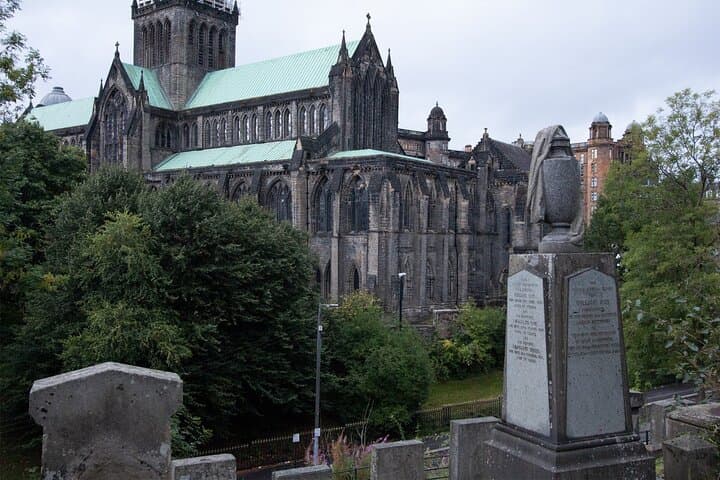
A lantern bobbing on Castle Street, the clack of footsteps on worn stone and the silhouette of Glasgow Cathedral set the evening's mood. The group moves as the guide relays stories that make the city feel older than its glass and sandstone facades—grave robbers' tricks, witch trials by candlelight, and whispered sightings in the Necropolis.
A lantern bobbing on Castle Street, the clack of footsteps on worn stone and the silhouette of Glasgow Cathedral set the evening's mood. The group moves as the guide relays stories that make the city feel older than its glass and sandstone facades—grave robbers' tricks, witch trials by candlelight, and whispered sightings in the Necropolis.
The tour threads through Glasgow's built landscape: a medieval clocktower that once detained accused witches, converted churches with theatrical echoes, and the Victorian Necropolis where sculpted tombs keep civic memory and macabre anecdotes. Geologically, the city's sandstone walls and the nearby River Clyde shaped the industries and crowds that produced the tales—rapid urban growth in the 18th and 19th centuries left room for both civic pride and grisly rumor.
Culturally, the route skews local: the oldest surviving music hall, vivid street murals in the Merchant City, and a pub that closes the walk with a measure of whisky and staged bravado. Guides balance folklore with documented events—some stories are local legend, others tied to verifiable incidents like the Janet McAllister graverobbing case.
Practical guidance: meet outside Glasgow Cathedral (the guide holds a lantern and wears a black/brown hat), arrive 10 minutes early, and expect two hours of mostly flat walking with some cemetery steps. Dress for variable weather—Glasgow evenings can cool quickly—and keep noise respectful in graveyards. Wheelchair access is available on much of the route but ask ahead if you need full accessibility. The walk is best after dusk when streets sharpen and stories land, and it finishes at a central pub for a warm-down and debrief.