THE ADVENTURE COLLECTIVE® · Independent discovery and booking for outdoor travel

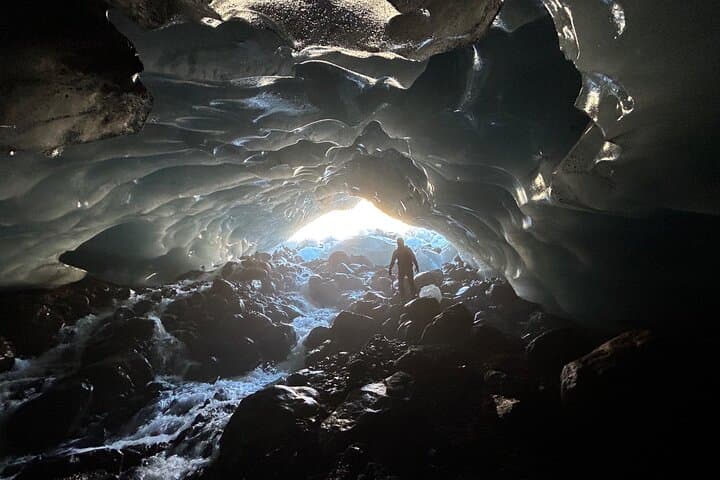
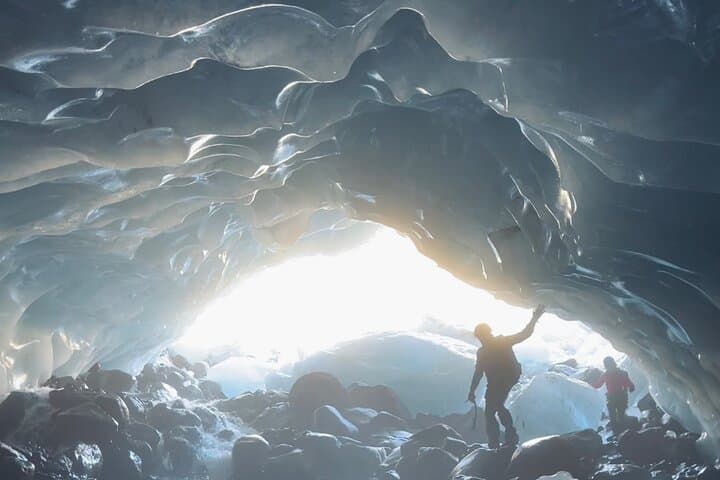
On a four-hour outing from Skaftafell you’ll cross blue ice, probe crevasses, try a beginner ice climb and—if conditions allow—enter an ice cave. Small local guides lead groups beyond the tourist routes for a raw, technical taste of Vatnajökull.
On a four-hour outing from Skaftafell you’ll cross blue ice, probe crevasses, try a beginner ice climb and—if conditions allow—enter an ice cave. Small local guides lead groups beyond the tourist routes for a raw, technical taste of Vatnajökull.
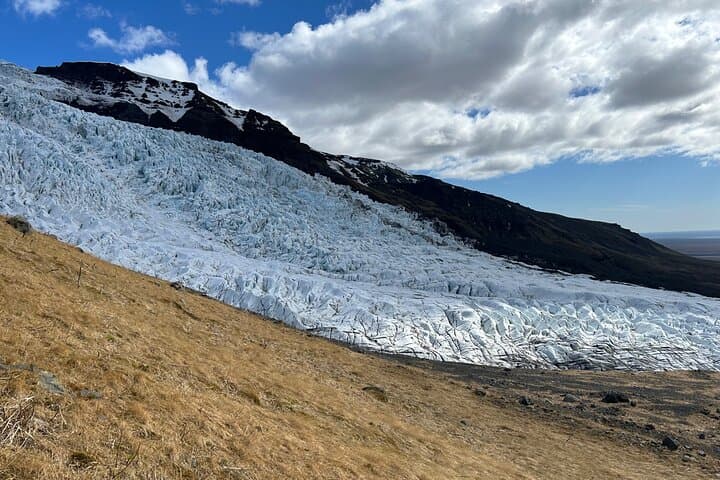
You step out of the van and cold air snaps at your face — the glacier is louder than you expected: a distant groan, the sharp crack of falling ice, wind pushing across a blue surface that refuses to be tamed. Guides tighten crampons and hand you a helmet; the red Toyota Hilux that met you at the barn disappears down the road. For the next four hours you’ll cross a wild margin of Vatnajökull, where ice cliffs tower, crevasses yawn like questions and an ice cave can appear even in summer.
Verified experiences and guided adventures in the surrounding area.
Operated by Pict expeditions · Kirkjubæjarklaustur, Southern Region
You step out of the van and cold air snaps at your face — the glacier is louder than you expected: a distant groan, the sharp crack of falling ice, wind pushing across a blue surface that refuses to be tamed. Guides tighten crampons and hand you a helmet; the red Toyota Hilux that met you at the barn disappears down the road. For the next four hours you’ll cross a wild margin of Vatnajökull, where ice cliffs tower, crevasses yawn like questions and an ice cave can appear even in summer.
This stretch of glacier sits at the edge of Skaftafell, where glacial ice has sculpted the landscape over millennia. The ice you walk on is compacted snow, layered with dust from ancient volcanoes — dark streaks that record eruptions long before roads and houses. Local guides here carry not only technical gear but family stories and route knowledge passed down through seasons of shifting ice; small guiding teams can push beyond the busier tourist tongues of ice and into remoter valleys ringed by high cliffs and calving icefalls.
Geologically, this is active country: the glacier creeps, the moraine shifts, and the skyline is defined by sharp ridgelines worn by wind and time. Culturally, the area sits within the old travel corridor of southern Iceland, where farmsteads once traded sheep for salted fish; today, the hospitality is modern but the rhythm of the landscape still dictates when travel is possible.
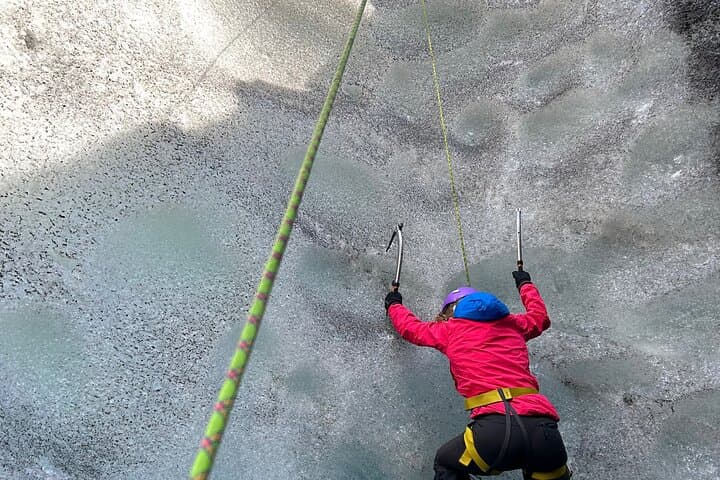
Practically: expect a 3–5 km round-trip on uneven ice with roughly 100–200 m of elevation change depending on route and conditions. Terrain is hard blue ice, broken by crevasses and occasional snow slopes; guides rope the group for safety, place anchors for short ice-climbs, and choose a route that matches the day’s conditions. Small groups — maximum six — mean plenty of instruction time: you’ll learn crampon technique, basic ice-axe arrest, and, if conditions allow, a supervised short ice-climb and a visit into a summer ice cave.
Timing matters. Summer offers long daylight and softer approach terrain but melt can open crevasses; shoulder seasons deliver dramatic light and fewer people but colder conditions. Wear stiff mountaineering boots (not trail runners), layered waterproof clothing, and bring a small pack with water and snacks. Hydration is easy to skip in cold air; sip regularly. If you have back or heart problems, choose a different day — guides screen for health to keep everyone safe.
This is not a guided walk in a parade of helmets; it’s a compact, technical taste of glacier travel led by seasoned local guides who live and climb here. Expect instruction, earnest local knowledge, and a slice of the raw, moving ice that still shapes Iceland’s southern coast.
challenging.
4–4.5 hours.
Moderate to above-average fitness: comfortable with uphill walking on uneven, icy terrain and short technical moves.
No—guides provide instruction for crampons, ice-axe technique and supervised ice-climbing for beginners.
Temperatures vary by season; expect near-freezing conditions on the ice even in summer, and colder with wind chill.
No—this trip is not recommended for pregnant travelers due to remote, technical terrain.
Groups are small, maximum six travelers, allowing close instruction and flexible routing.
The operator cancels for unsafe conditions—full refund if canceled 24+ hours before departure, or if weather forces cancellation.
Meet at the operator’s farm — guides wait by the big barn and transport guests to the glacier in a red Toyota Hilux.
The glaciers of southern Iceland have been measured and debated by farmers and scientists for centuries; recent retreat and surge patterns are well documented in local records.
Operators follow strict leave-no-trace practices and limit group size to reduce impact; avoid walking on fragile moraine vegetation and pack out all waste.
Pict expeditions operates guided outdoor trips and adventures with an emphasis on safety, stewardship, and memorable experiences.
You step out of the van and cold air snaps at your face — the glacier is louder than you expected: a distant groan, the sharp crack of falling ice, wind pushing across a blue surface that refuses to be tamed. Guides tighten crampons and hand you a helmet; the red Toyota Hilux that met you at the barn disappears down the road. For the next four hours you’ll cross a wild margin of Vatnajökull, where ice cliffs tower, crevasses yawn like questions and an ice cave can appear even in summer.
You step out of the van and cold air snaps at your face — the glacier is louder than you expected: a distant groan, the sharp crack of falling ice, wind pushing across a blue surface that refuses to be tamed. Guides tighten crampons and hand you a helmet; the red Toyota Hilux that met you at the barn disappears down the road. For the next four hours you’ll cross a wild margin of Vatnajökull, where ice cliffs tower, crevasses yawn like questions and an ice cave can appear even in summer.
This stretch of glacier sits at the edge of Skaftafell, where glacial ice has sculpted the landscape over millennia. The ice you walk on is compacted snow, layered with dust from ancient volcanoes — dark streaks that record eruptions long before roads and houses. Local guides here carry not only technical gear but family stories and route knowledge passed down through seasons of shifting ice; small guiding teams can push beyond the busier tourist tongues of ice and into remoter valleys ringed by high cliffs and calving icefalls.
Geologically, this is active country: the glacier creeps, the moraine shifts, and the skyline is defined by sharp ridgelines worn by wind and time. Culturally, the area sits within the old travel corridor of southern Iceland, where farmsteads once traded sheep for salted fish; today, the hospitality is modern but the rhythm of the landscape still dictates when travel is possible.
Practically: expect a 3–5 km round-trip on uneven ice with roughly 100–200 m of elevation change depending on route and conditions. Terrain is hard blue ice, broken by crevasses and occasional snow slopes; guides rope the group for safety, place anchors for short ice-climbs, and choose a route that matches the day’s conditions. Small groups — maximum six — mean plenty of instruction time: you’ll learn crampon technique, basic ice-axe arrest, and, if conditions allow, a supervised short ice-climb and a visit into a summer ice cave.
Timing matters. Summer offers long daylight and softer approach terrain but melt can open crevasses; shoulder seasons deliver dramatic light and fewer people but colder conditions. Wear stiff mountaineering boots (not trail runners), layered waterproof clothing, and bring a small pack with water and snacks. Hydration is easy to skip in cold air; sip regularly. If you have back or heart problems, choose a different day — guides screen for health to keep everyone safe.
This is not a guided walk in a parade of helmets; it’s a compact, technical taste of glacier travel led by seasoned local guides who live and climb here. Expect instruction, earnest local knowledge, and a slice of the raw, moving ice that still shapes Iceland’s southern coast.