THE ADVENTURE COLLECTIVE® · Independent discovery and booking for outdoor travel

Board the Glacier Express in Lucerne for a full-day, private guided panorama across Alpine passes, gorges and cultural borders. Expect long scenic stretches, gourmet onboard dining, and guided commentary highlighting geology and regional history.
Board the Glacier Express in Lucerne for a full-day, private guided panorama across Alpine passes, gorges and cultural borders. Expect long scenic stretches, gourmet onboard dining, and guided commentary highlighting geology and regional history.
You step onto the platform at Luzern as a ribbon of steel and glass slides in—windows framing ridgelines, glaciers, and villages that seem to hold their breath. The Glacier Express unfolds like a moving balcony: hairpin turns pitching you toward deep gorges, high passes where cold wind sharpens the air, and plateaus where fields open like pages.
Verified experiences and guided adventures in the surrounding area.
Operated by SwissTravelGuide.ch · Lucerne, Canton of Lucerne
You step onto the platform at Luzern as a ribbon of steel and glass slides in—windows framing ridgelines, glaciers, and villages that seem to hold their breath. The Glacier Express unfolds like a moving balcony: hairpin turns pitching you toward deep gorges, high passes where cold wind sharpens the air, and plateaus where fields open like pages.
The route traces centuries-old transit corridors carved by trade and ice. From Chur—Graubünden’s alpine capital with its medieval core—the train climbs across the Oberalp Pass, where rock and glacier have sculpted narrow cols and moraine-smoothed basins. In the Rhine Gorge the river dares you to look down into 400 meters of raw limestone, while Valais vineyards and the approach to Brig show a different, sun-warmed geology.
Culturally, the ride crosses linguistic and culinary borders: Romansh hamlets give way to German- and French-speaking valleys, and on-board dining nods to Swiss regional produce. A private guide helps translate maps, point out engineering feats and local lore, and time a brisk stroll when the schedule allows.
Practical side: plan for a long, comfortable day—this is travel as observation rather than exertion. Reserve a window seat, carry layers for variable alpine microclimates, bring a camera with a polarizer for glare control, and download route maps ahead of time (cell service is patchy). Hydrate and stretch during stops in Chur and Brig; restrooms and meals are available on the train. The Glacier Express is best enjoyed with patience: move slowly, look closely, and let the landscape do the guiding.
easy.
12 hours.
Minimal fitness required—this is seated travel with optional short walks during stops; be able to manage stairs and your luggage.
Yes—stations and transport on this tour note wheelchair accessibility, but check specific boarding assistance needs with the operator in advance.
Yes—a three-course lunch (with vegetarian options) is served at your seat during the Glacier Express segment.
The itinerary includes scheduled short stops (e.g., Chur and Brig) for brief exploration; longer detours are limited by the timetable.
The operator’s policy lists all sales final, but the tour may cancel in bad weather—confirm cancellation terms and alternatives before booking.
The rail corridor follows historic alpine trade and mule routes; the Glacier Express itself was designed in the 1930s to link remote mountain towns and showcase Swiss engineering.
Rail travel concentrates visitor impact and reduces car use across fragile alpine landscapes; stick to marked areas during stops and carry out waste.
SwissTravelGuide.ch operates guided outdoor trips and adventures with an emphasis on safety, stewardship, and memorable experiences.
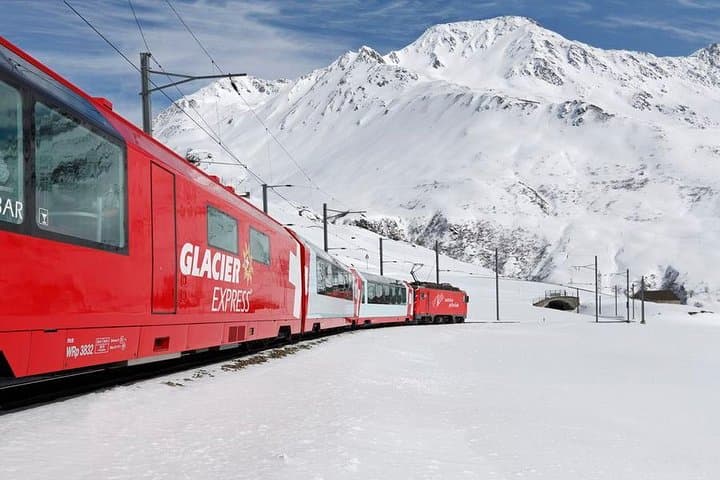
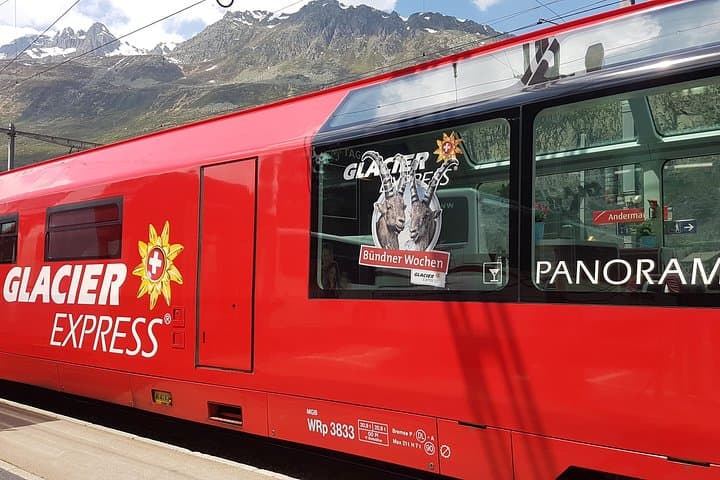
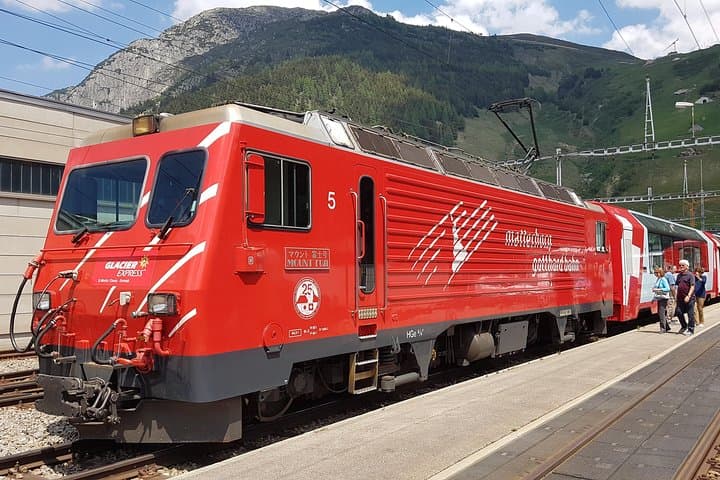
You step onto the platform at Luzern as a ribbon of steel and glass slides in—windows framing ridgelines, glaciers, and villages that seem to hold their breath. The Glacier Express unfolds like a moving balcony: hairpin turns pitching you toward deep gorges, high passes where cold wind sharpens the air, and plateaus where fields open like pages.
You step onto the platform at Luzern as a ribbon of steel and glass slides in—windows framing ridgelines, glaciers, and villages that seem to hold their breath. The Glacier Express unfolds like a moving balcony: hairpin turns pitching you toward deep gorges, high passes where cold wind sharpens the air, and plateaus where fields open like pages.
The route traces centuries-old transit corridors carved by trade and ice. From Chur—Graubünden’s alpine capital with its medieval core—the train climbs across the Oberalp Pass, where rock and glacier have sculpted narrow cols and moraine-smoothed basins. In the Rhine Gorge the river dares you to look down into 400 meters of raw limestone, while Valais vineyards and the approach to Brig show a different, sun-warmed geology.
Culturally, the ride crosses linguistic and culinary borders: Romansh hamlets give way to German- and French-speaking valleys, and on-board dining nods to Swiss regional produce. A private guide helps translate maps, point out engineering feats and local lore, and time a brisk stroll when the schedule allows.
Practical side: plan for a long, comfortable day—this is travel as observation rather than exertion. Reserve a window seat, carry layers for variable alpine microclimates, bring a camera with a polarizer for glare control, and download route maps ahead of time (cell service is patchy). Hydrate and stretch during stops in Chur and Brig; restrooms and meals are available on the train. The Glacier Express is best enjoyed with patience: move slowly, look closely, and let the landscape do the guiding.