THE ADVENTURE COLLECTIVE® · Independent discovery and booking for outdoor travel

Ride from Montreux into the Vaud Alps, then float by cable car to Glacier 3000 for sweeping views and a memorable traverse on the Peak Walk suspension bridge. This is an easy, high-altitude day with big-mountain drama and practical comforts—ideal for travelers who want glacier time without technical gear.
Ride from Montreux into the Vaud Alps, then float by cable car to Glacier 3000 for sweeping views and a memorable traverse on the Peak Walk suspension bridge. This is an easy, high-altitude day with big-mountain drama and practical comforts—ideal for travelers who want glacier time without technical gear.
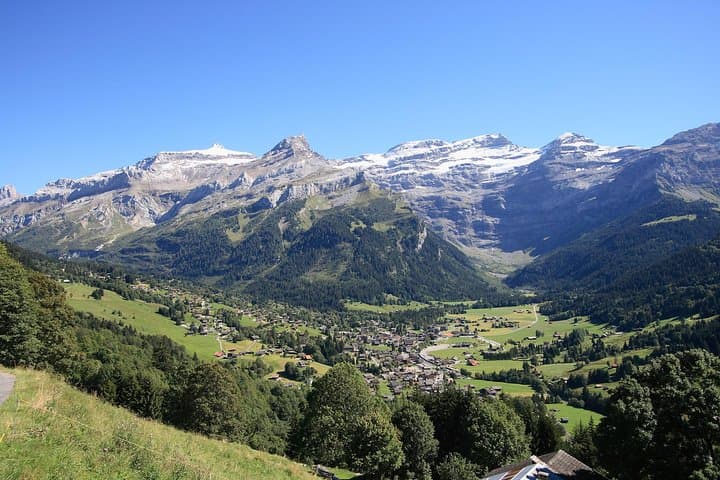
The bus climbs out of Montreux, trading lake-glass calm for switchbacks and spruce. Above Col du Pillon, the mountains gather and the air thins, as if the Alps themselves are drawing a steady breath. At Les Diablerets—chalets tight to the hillside, wood stacked with precision—you board the Glacier 3000 cable car. The cabin lifts fast, skimming cliffs and ice-scored rock. Peaks tilt closer. Snow, even in July, lingers like a dare.
Verified experiences and guided adventures in the surrounding area.
Operated by Keytours (Switzerland) · Les Diablerets, Vaud
The bus climbs out of Montreux, trading lake-glass calm for switchbacks and spruce. Above Col du Pillon, the mountains gather and the air thins, as if the Alps themselves are drawing a steady breath. At Les Diablerets—chalets tight to the hillside, wood stacked with precision—you board the Glacier 3000 cable car. The cabin lifts fast, skimming cliffs and ice-scored rock. Peaks tilt closer. Snow, even in July, lingers like a dare.
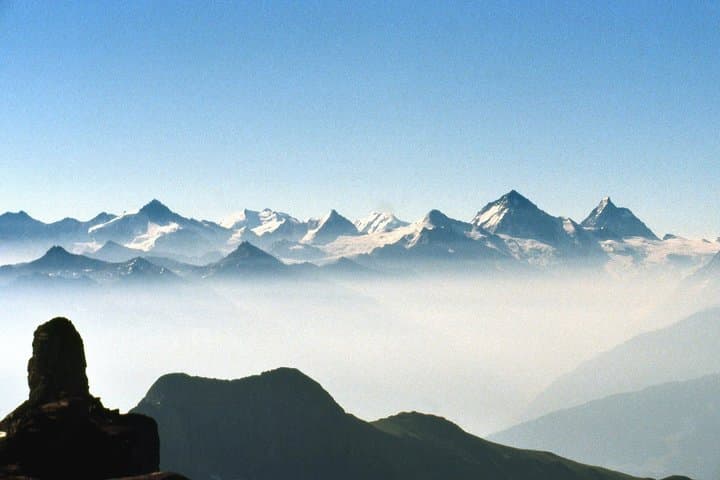
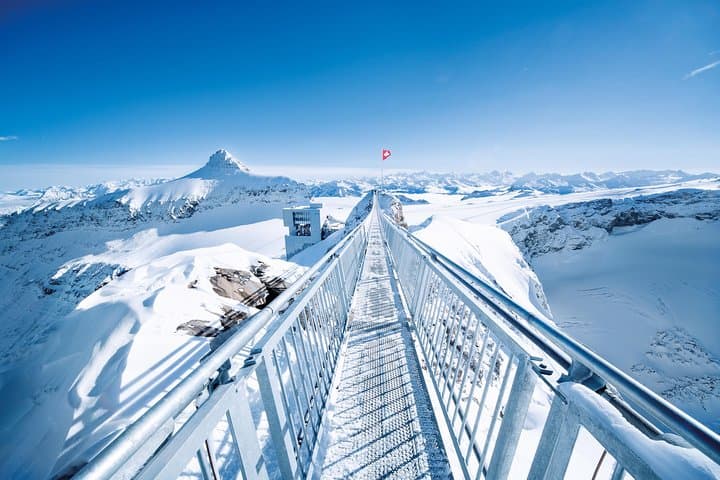
Up top at Scex Rouge (2,971 meters), the wind has opinions and the light is sharp. The glacier pushes forward beneath a skin of packed snow; crevasses keep their secrets behind ropes and signs. On a clear day the horizon stacks with icons: Mont Blanc to the west, the Matterhorn like a shark’s fin, and the Eiger–Mönch–Jungfrau line holding court to the northeast. The star here is the Peak Walk by Tissot, a 107‑meter suspension bridge linking two summits—Scex Rouge to View Point. Step onto the span and the valley drops away; the handrails hum with the breeze. The Alps seem to shuffle and realign while you cross.
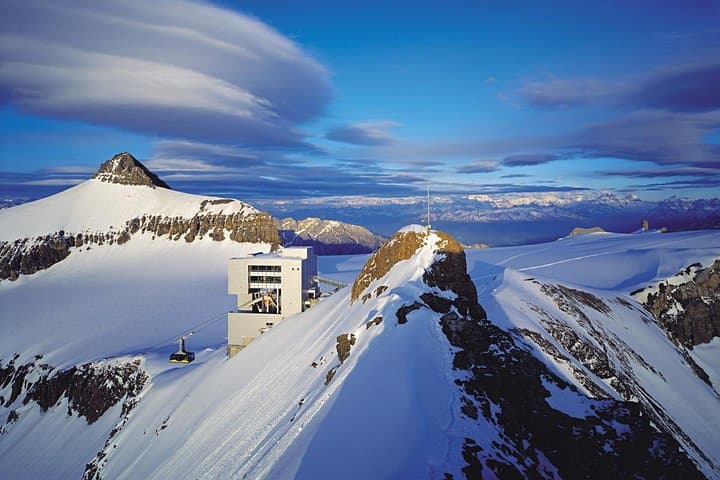
This plateau didn’t arrive gently. It’s a fossil of winter, a compacted world shaped by snowfall, wind, and the slow creep of ice. The region’s history blends mountain grit with design swagger: the top station and restaurant were envisioned with clean lines by Swiss architect Mario Botta, while Les Diablerets village below keeps a lived-in rhythm of dairies, woodwork, and long winters. Cheese from nearby alpine pastures finds its way into rösti and fondue; you’ll taste the altitude in the salt and fat.
Practicality shapes the day. From Montreux, travel time to Col du Pillon runs roughly 1.5 hours each way. The cable car takes about 15–20 minutes to the summit, and most travelers spend 2–3 hours exploring at altitude. Surfaces are snow-covered year-round; sturdy footwear is key. Expect temperatures 10–15°C lower than lakeside, with wind that likes to change the plan. The Peak Walk is typically open when conditions allow; staff close it quickly if gusts pick up, so early departures help.
For an extra hour, detour on the return to Lac Retaud, a small alpine lake that mirrors larch and sky. Back in Montreux by evening, Lake Geneva looks wider than before. The mountains have a way of stretching your sense of scale—and reminding you that the earth here is still on the move, even when you’re standing still.
easy.
7–8 hours.
Comfortable walking 1–3 miles at altitude with short stairs and snowy surfaces.
The suspension bridge is about 107 meters long and connects Scex Rouge to the View Point summit, opening when wind and weather allow.
Yes. It’s a sightseeing-focused outing with short walks; just dress warmly and move carefully on snowy surfaces.
Most visitors feel only mild effects. Stay hydrated, avoid rushing, and rest if you develop a headache or dizziness.
In clear conditions, you can spot both along with the Eiger–Mönch–Jungfrau range from viewing terraces and the Peak Walk.
This tour offers a cable car option; if you did not select it at booking, you can usually purchase tickets on-site, subject to availability.
Operations stop quickly for safety. You can still enjoy viewing terraces and facilities; staff resume access as soon as conditions improve.
The Peak Walk opened in 2014 as the world’s first suspension bridge linking two mountain summits; the summit station’s clean lines reflect Swiss architect Mario Botta’s vision.
Glaciers here are retreating; stay on marked paths and respect roped-off zones to protect fragile ice and alpine flora. Pack out all waste—wind can scatter litter across the snowfields.
Keytours (Switzerland) operates guided outdoor trips and adventures with an emphasis on safety, stewardship, and memorable experiences.
The bus climbs out of Montreux, trading lake-glass calm for switchbacks and spruce. Above Col du Pillon, the mountains gather and the air thins, as if the Alps themselves are drawing a steady breath. At Les Diablerets—chalets tight to the hillside, wood stacked with precision—you board the Glacier 3000 cable car. The cabin lifts fast, skimming cliffs and ice-scored rock. Peaks tilt closer. Snow, even in July, lingers like a dare.
The bus climbs out of Montreux, trading lake-glass calm for switchbacks and spruce. Above Col du Pillon, the mountains gather and the air thins, as if the Alps themselves are drawing a steady breath. At Les Diablerets—chalets tight to the hillside, wood stacked with precision—you board the Glacier 3000 cable car. The cabin lifts fast, skimming cliffs and ice-scored rock. Peaks tilt closer. Snow, even in July, lingers like a dare.
Up top at Scex Rouge (2,971 meters), the wind has opinions and the light is sharp. The glacier pushes forward beneath a skin of packed snow; crevasses keep their secrets behind ropes and signs. On a clear day the horizon stacks with icons: Mont Blanc to the west, the Matterhorn like a shark’s fin, and the Eiger–Mönch–Jungfrau line holding court to the northeast. The star here is the Peak Walk by Tissot, a 107‑meter suspension bridge linking two summits—Scex Rouge to View Point. Step onto the span and the valley drops away; the handrails hum with the breeze. The Alps seem to shuffle and realign while you cross.
This plateau didn’t arrive gently. It’s a fossil of winter, a compacted world shaped by snowfall, wind, and the slow creep of ice. The region’s history blends mountain grit with design swagger: the top station and restaurant were envisioned with clean lines by Swiss architect Mario Botta, while Les Diablerets village below keeps a lived-in rhythm of dairies, woodwork, and long winters. Cheese from nearby alpine pastures finds its way into rösti and fondue; you’ll taste the altitude in the salt and fat.
Practicality shapes the day. From Montreux, travel time to Col du Pillon runs roughly 1.5 hours each way. The cable car takes about 15–20 minutes to the summit, and most travelers spend 2–3 hours exploring at altitude. Surfaces are snow-covered year-round; sturdy footwear is key. Expect temperatures 10–15°C lower than lakeside, with wind that likes to change the plan. The Peak Walk is typically open when conditions allow; staff close it quickly if gusts pick up, so early departures help.
For an extra hour, detour on the return to Lac Retaud, a small alpine lake that mirrors larch and sky. Back in Montreux by evening, Lake Geneva looks wider than before. The mountains have a way of stretching your sense of scale—and reminding you that the earth here is still on the move, even when you’re standing still.