THE ADVENTURE COLLECTIVE® · Independent discovery and booking for outdoor travel

Watch the pyramids and Sphinx glow at sunrise on a private Giza Plateau tour that pairs a one-hour camel ride with expert commentary at the Valley Temple. Avoid crowds, catch optimal light, and learn the funerary rituals preserved in stone.
Watch the pyramids and Sphinx glow at sunrise on a private Giza Plateau tour that pairs a one-hour camel ride with expert commentary at the Valley Temple. Avoid crowds, catch optimal light, and learn the funerary rituals preserved in stone.
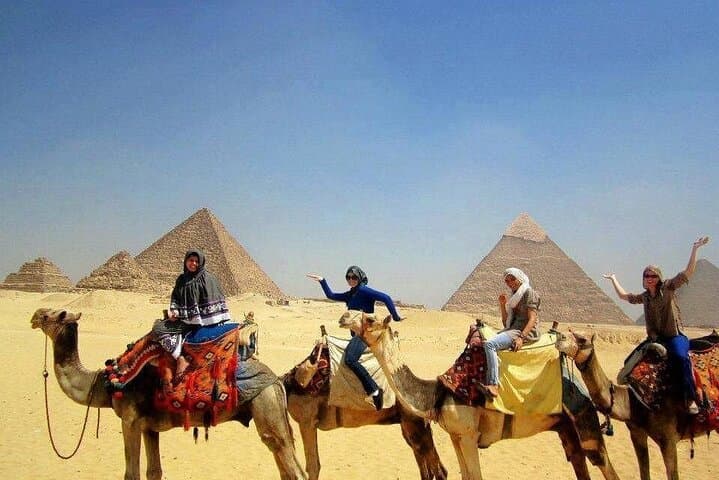
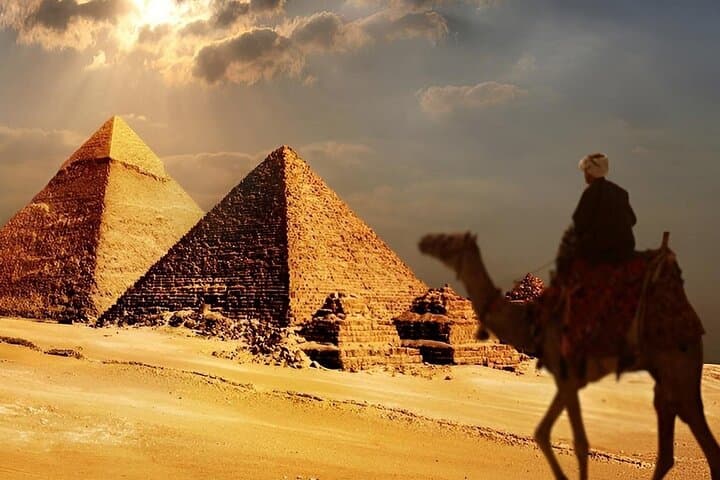
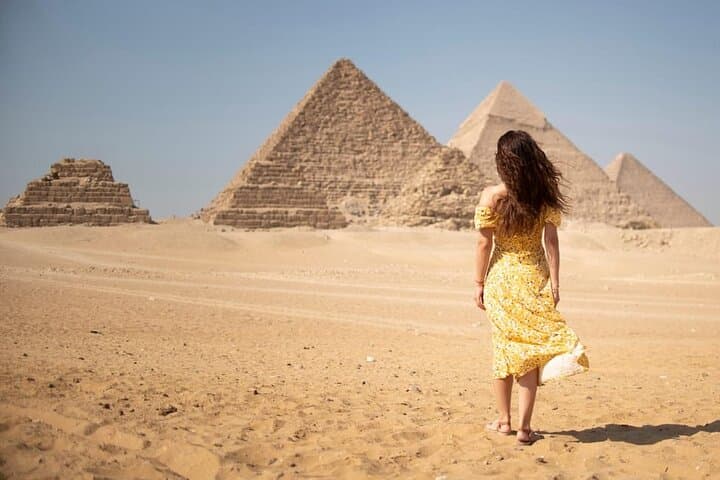
Before the sun clears the horizon, the Giza Plateau is spare and urgent—the pyramids cast long, cool shadows while a thin ribbon of orange light edges the limestone. Riders on camels move slowly across firm sand as the desert breeze brushes past; the Great Pyramid’s silhouette sharpens, the Sphinx’s profile becomes visible, and the morning feels private even within a world-famous site.
Verified experiences and guided adventures in the surrounding area.
Operated by Cyclope · Giza, Giza Governorate
Before the sun clears the horizon, the Giza Plateau is spare and urgent—the pyramids cast long, cool shadows while a thin ribbon of orange light edges the limestone. Riders on camels move slowly across firm sand as the desert breeze brushes past; the Great Pyramid’s silhouette sharpens, the Sphinx’s profile becomes visible, and the morning feels private even within a world-famous site.
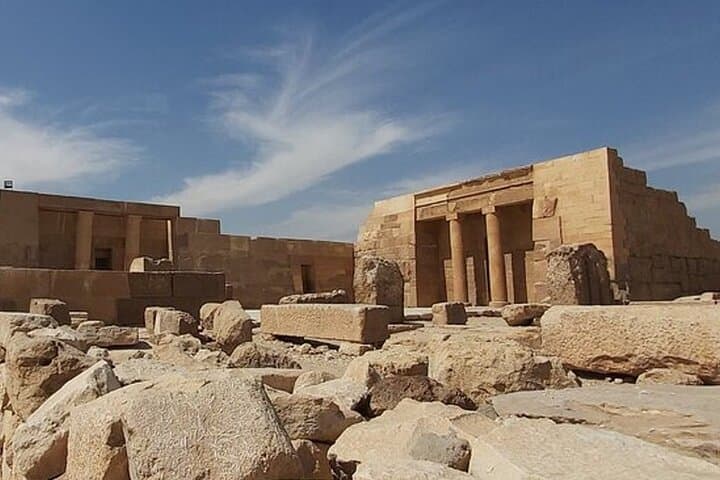
Geology here is simple and old: the plateau is capped in Tura limestone and the monuments themselves are quarried and stacked stone, their weathered surfaces recording millennia of wind and sand. Culturally, the Plateau is a civic stage—pharaohic power, funerary rites, and later tourist imagination converge at the Valley Temple and the Sphinx, where an Egyptologist can unpack rituals of mummification and the architectural choices that stabilized massive stone blocks.
Practically, expect a 5-hour private outing starting pre-dawn with hotel pickup in Cairo or Giza. The camel ride lasts about an hour across 1–2 kilometers of plateau; walking sections around the pyramids and the Valley Temple add another 1–2 km on packed sand and paved areas. Temperatures climb quickly after sunrise, so layers are useful for the cool start. Wear sturdy closed-toe shoes for traction on uneven stone and sand, bring 1–2 liters of water, sun protection, and small bills for tips and on-site purchases.
Photography is excellent at sunrise but moves fast—arrive with charged batteries. The private format reduces crowds and lets your guide tailor stops and commentary, making this both a visually striking and context-rich way to meet ancient Egypt without the mid-day heat and the crush of group tours.
easy.
5 hours.
Suitable for most fitness levels; requires short rides and moderate walking on uneven ground.
This private tour includes guided time at the Plateau and the Sphinx; standard site entry fees are typically included or arranged by your operator—confirm at booking.
The advertised camel ride is about an hour across the plateau; handlers are experienced, but children should be supervised and infants must sit on laps per provider rules.
Yes—pick-up and drop-off from hotels in Cairo or Giza are included in the private tour; specify your pickup point when booking.
Tipping is customary: consider a moderate tip for your Egyptologist guide and a small gratuity to camel handlers; carry small local bills.
The Giza complex dates to Egypt’s Old Kingdom (c. 2600–2500 BCE); the Valley Temple played a role in funerary rituals and the Sphinx likely represents Pharaoh Khafre.
Visitor pressure and urban expansion challenge the site; stay on designated paths, avoid touching fragile stone, and support guides who follow conservation-minded practices.
Cyclope operates guided outdoor trips and adventures with an emphasis on safety, stewardship, and memorable experiences.
Before the sun clears the horizon, the Giza Plateau is spare and urgent—the pyramids cast long, cool shadows while a thin ribbon of orange light edges the limestone. Riders on camels move slowly across firm sand as the desert breeze brushes past; the Great Pyramid’s silhouette sharpens, the Sphinx’s profile becomes visible, and the morning feels private even within a world-famous site.
Before the sun clears the horizon, the Giza Plateau is spare and urgent—the pyramids cast long, cool shadows while a thin ribbon of orange light edges the limestone. Riders on camels move slowly across firm sand as the desert breeze brushes past; the Great Pyramid’s silhouette sharpens, the Sphinx’s profile becomes visible, and the morning feels private even within a world-famous site.
Geology here is simple and old: the plateau is capped in Tura limestone and the monuments themselves are quarried and stacked stone, their weathered surfaces recording millennia of wind and sand. Culturally, the Plateau is a civic stage—pharaohic power, funerary rites, and later tourist imagination converge at the Valley Temple and the Sphinx, where an Egyptologist can unpack rituals of mummification and the architectural choices that stabilized massive stone blocks.
Practically, expect a 5-hour private outing starting pre-dawn with hotel pickup in Cairo or Giza. The camel ride lasts about an hour across 1–2 kilometers of plateau; walking sections around the pyramids and the Valley Temple add another 1–2 km on packed sand and paved areas. Temperatures climb quickly after sunrise, so layers are useful for the cool start. Wear sturdy closed-toe shoes for traction on uneven stone and sand, bring 1–2 liters of water, sun protection, and small bills for tips and on-site purchases.
Photography is excellent at sunrise but moves fast—arrive with charged batteries. The private format reduces crowds and lets your guide tailor stops and commentary, making this both a visually striking and context-rich way to meet ancient Egypt without the mid-day heat and the crush of group tours.