THE ADVENTURE COLLECTIVE® · Independent discovery and booking for outdoor travel

Spend a day tracing Egypt’s royal tombs from the Step Pyramid at Saqqara to the Great Pyramids and Sphinx of Giza. This private tour pairs expert interpretation with a short camel ride and local lunch — ideal for first-time visitors who want context and comfort.
Spend a day tracing Egypt’s royal tombs from the Step Pyramid at Saqqara to the Great Pyramids and Sphinx of Giza. This private tour pairs expert interpretation with a short camel ride and local lunch — ideal for first-time visitors who want context and comfort.
Dawn spills over the Giza plateau and the stone faces of the Great Pyramid catch the first hard light. You move through dust and history in an air-conditioned van, stepping from modern Cairo into a landscape shaped by millennia of labor and limestone. At Saqqara, the weathered step of Djoser’s pyramid rises from the desert like the first attempt to hold eternity in stone; the painted tombs of nobles show everyday life in crisp, practiced relief.
Verified experiences and guided adventures in the surrounding area.
Operated by Egypt Top Tours · Giza, Giza Governorate
Dawn spills over the Giza plateau and the stone faces of the Great Pyramid catch the first hard light. You move through dust and history in an air-conditioned van, stepping from modern Cairo into a landscape shaped by millennia of labor and limestone. At Saqqara, the weathered step of Djoser’s pyramid rises from the desert like the first attempt to hold eternity in stone; the painted tombs of nobles show everyday life in crisp, practiced relief.
The geology here is simple and decisive: a band of Tura limestone and underlying bedrock made large masonry possible, and the necropolises are arranged to catch the Nile’s cycle of life and death. At Giza, three major tombs — Khufu, Khafre and Menkaure — punctuate the skyline beside the enigmatic Sphinx and its adjoining valley temple. Culturally, these sites frame pharaonic power, funerary ritual, and an evolving relationship between city and desert that continues in the small local restaurants serving simple, hearty mezze.
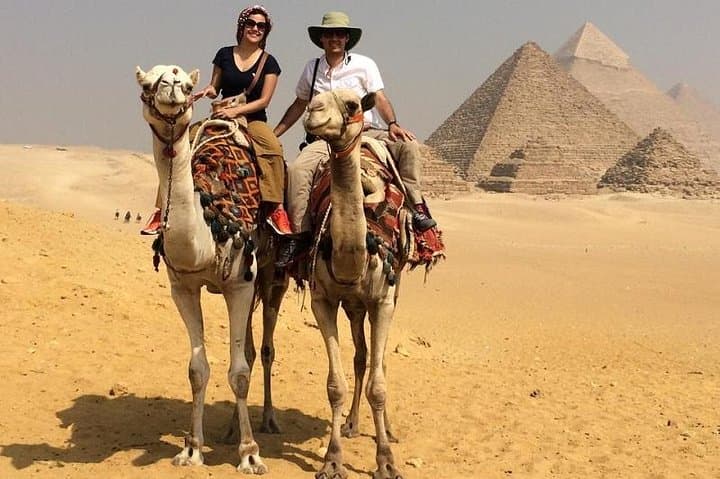
Practically, expect a full day: several hours of walking on uneven stone and compacted sand, photo stops at the panorama point, and a short camel ride around the pyramids. Travel with a licensed Egyptologist to make sense of construction techniques, hieroglyphic panels and tomb contexts. Bring sun protection, durable shoes, local cash for tips and souvenirs, and allow time for security and ticket lines. This private tour balances close-up archaeology with the practicalities of desert heat and busy sites, delivering both context and the classic images that draw visitors to Egypt.
easy.
7–8 hours.
Light walking fitness required; able to stand and walk on uneven ground for several hours and tolerate heat.
This tour description indicates admissions are not included — check with the operator or be prepared to purchase site tickets on the day.
Camel rides are short and generally safe; children should be accompanied by an adult and follow handler instructions.
Access to the interior can be limited and may require an extra ticket; confirm availability with your guide before arrival.
Yes — the tour includes private hotel pickup and drop-off in Cairo as part of the package.
Saqqara’s Step Pyramid (c. 2700 BCE) marks the earliest major stone construction; the Giza necropolis grew centuries later as a royal burial zone for the Fourth Dynasty.
High visitor numbers stress fragile stone and painted surfaces; stick to paths, avoid touching reliefs, and support licensed local guides to ensure sustainable site management.
Egypt Top Tours operates guided outdoor trips and adventures with an emphasis on safety, stewardship, and memorable experiences.
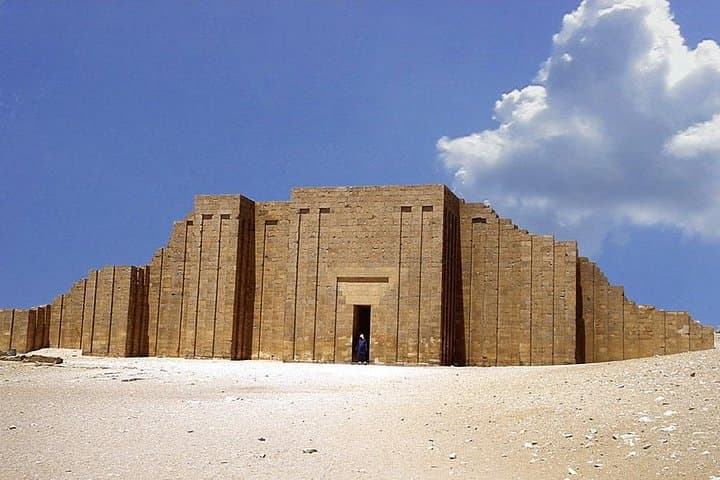
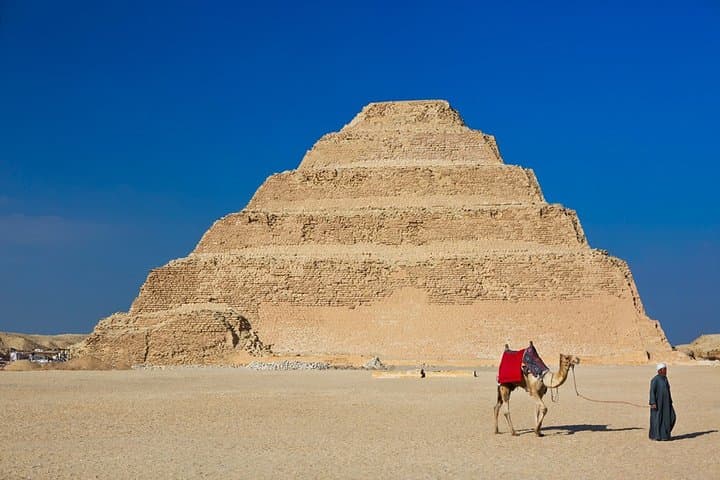
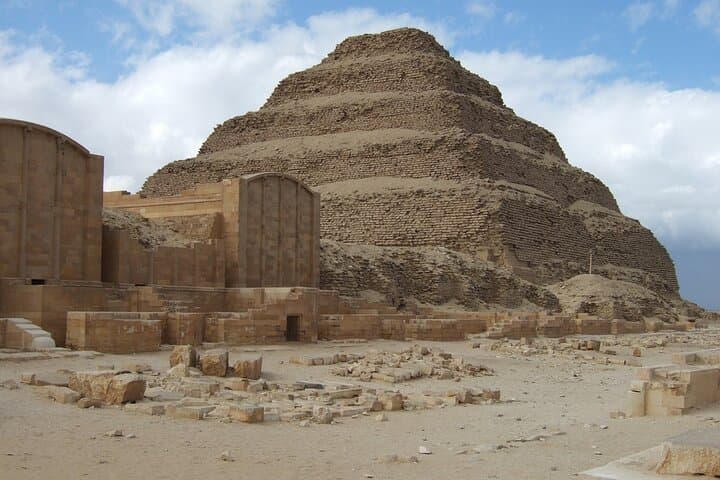
Dawn spills over the Giza plateau and the stone faces of the Great Pyramid catch the first hard light. You move through dust and history in an air-conditioned van, stepping from modern Cairo into a landscape shaped by millennia of labor and limestone. At Saqqara, the weathered step of Djoser’s pyramid rises from the desert like the first attempt to hold eternity in stone; the painted tombs of nobles show everyday life in crisp, practiced relief.
Dawn spills over the Giza plateau and the stone faces of the Great Pyramid catch the first hard light. You move through dust and history in an air-conditioned van, stepping from modern Cairo into a landscape shaped by millennia of labor and limestone. At Saqqara, the weathered step of Djoser’s pyramid rises from the desert like the first attempt to hold eternity in stone; the painted tombs of nobles show everyday life in crisp, practiced relief.
The geology here is simple and decisive: a band of Tura limestone and underlying bedrock made large masonry possible, and the necropolises are arranged to catch the Nile’s cycle of life and death. At Giza, three major tombs — Khufu, Khafre and Menkaure — punctuate the skyline beside the enigmatic Sphinx and its adjoining valley temple. Culturally, these sites frame pharaonic power, funerary ritual, and an evolving relationship between city and desert that continues in the small local restaurants serving simple, hearty mezze.
Practically, expect a full day: several hours of walking on uneven stone and compacted sand, photo stops at the panorama point, and a short camel ride around the pyramids. Travel with a licensed Egyptologist to make sense of construction techniques, hieroglyphic panels and tomb contexts. Bring sun protection, durable shoes, local cash for tips and souvenirs, and allow time for security and ticket lines. This private tour balances close-up archaeology with the practicalities of desert heat and busy sites, delivering both context and the classic images that draw visitors to Egypt.