THE ADVENTURE COLLECTIVE® · Independent discovery and booking for outdoor travel

Race over sand dunes with the Giza pyramids sliding into view. This accessible quad-bike safari combines adrenaline, panoramic ancient sights, and practical guidance for first-time riders.
Race over sand dunes with the Giza pyramids sliding into view. This accessible quad-bike safari combines adrenaline, panoramic ancient sights, and practical guidance for first-time riders.
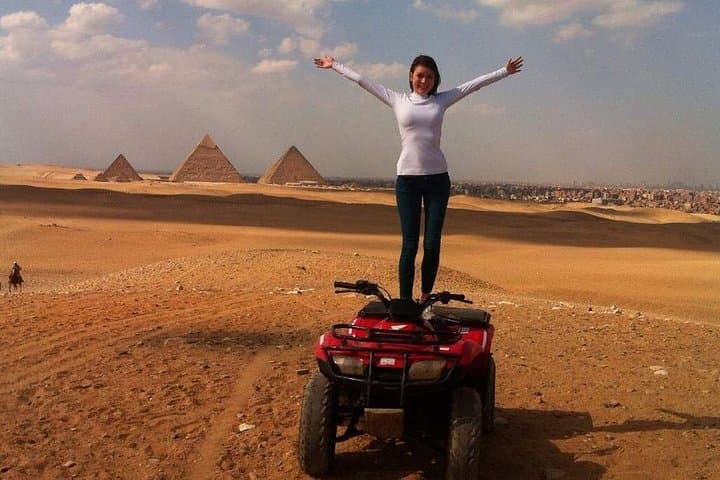
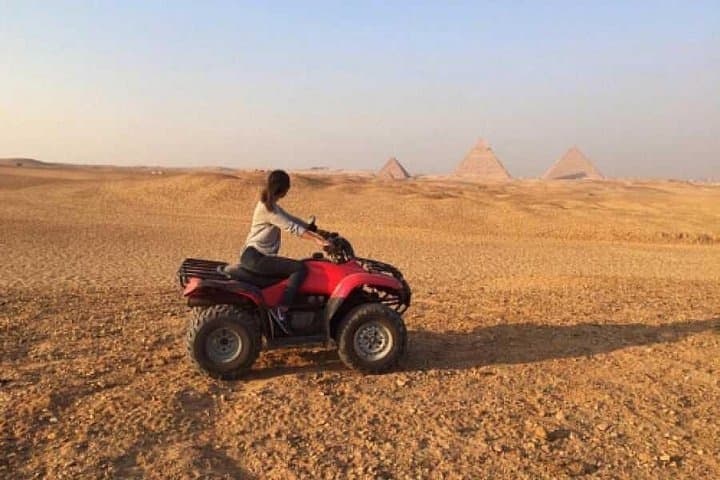
You crest a golden dune and the three pyramids of Giza — Khufu (Cheops), Khafre (Chephren) and Menkaure (Mykerinus) — drop into view like ancient monuments punctuating the desert horizon. Wind pulls sand into sharp ridges; the quad hums beneath you and the city of Cairo fades to a distant wash of heat. This is a ride that trades postcard stillness for motion, putting the pyramids and raw Sahara within reach.
Verified experiences and guided adventures in the surrounding area.
Operated by Ancient Egypt Tours · Giza, Giza Governorate
You crest a golden dune and the three pyramids of Giza — Khufu (Cheops), Khafre (Chephren) and Menkaure (Mykerinus) — drop into view like ancient monuments punctuating the desert horizon. Wind pulls sand into sharp ridges; the quad hums beneath you and the city of Cairo fades to a distant wash of heat. This is a ride that trades postcard stillness for motion, putting the pyramids and raw Sahara within reach.
Geology here is stark: wind-sculpted dunes sit on a limestone plateau whose exposed edges contain millennia of human history. The pyramids themselves are 4,500-year-old tombs built during Egypt’s Old Kingdom and sit at the edge of a desert that has alternately pressed and retreated against the Nile’s life-giving floodplain. Local culture around Giza blends modern urban life with Bedouin desert traditions — guides often share practical desert lore and the etiquette of visiting sensitive sites.
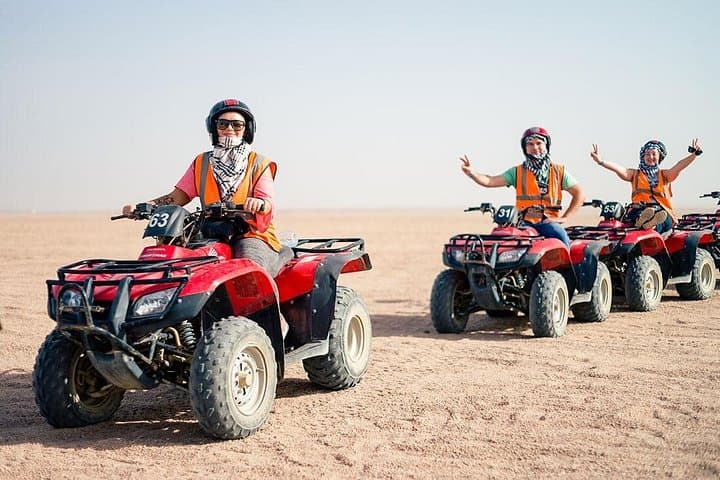
Practically, expect 3–4 hours including hotel transfers. The route alternates flat traverses and steep dune faces; surfaces are loose sand that tests traction and balance. Guides issue helmets and basic instruction before you go; follow their briefings, maintain a steady throttle uphill, and avoid sudden braking on dune lips. Bring plenty of water, long sleeves for sun protection, goggles for sand, closed-toe shoes, and a camera secured with a strap.
Best times are early morning or late afternoon for cooler temperatures and long shadows on the pyramids. Operators usually include pickup and return to Cairo or Giza hotels, and tours can suit beginners after a short training run. Respect fenced archaeological areas and take only photos — the desert and monuments both benefit from careful stewardship.
moderate.
3–4 hours.
Light to moderate fitness; you should be able to sit and brace on uneven terrain and follow short safety instructions.
Yes—operators provide a short training session and guides lead the group; beginners should listen carefully and start conservatively.
Helmet use is standard and usually provided; bring your own goggles if you prefer a secure fit.
You’ll get panoramic views from desert overlooks near the Giza plateau but not inside fenced archaeological areas; respect restricted zones.
Yes, most tours include private, air-conditioned pickup and return to hotels in Cairo or Giza as part of the package.
The Giza pyramids date to Egypt’s Fourth Dynasty (around 2600–2500 BCE) and their presence shaped trade and settlement patterns around the Nile for millennia.
Stick to designated routes and avoid trampling archaeological edges; operators should follow local regulations to minimize disturbance and respect cultural heritage.
Ancient Egypt Tours operates guided outdoor trips and adventures with an emphasis on safety, stewardship, and memorable experiences.

You crest a golden dune and the three pyramids of Giza — Khufu (Cheops), Khafre (Chephren) and Menkaure (Mykerinus) — drop into view like ancient monuments punctuating the desert horizon. Wind pulls sand into sharp ridges; the quad hums beneath you and the city of Cairo fades to a distant wash of heat. This is a ride that trades postcard stillness for motion, putting the pyramids and raw Sahara within reach.
You crest a golden dune and the three pyramids of Giza — Khufu (Cheops), Khafre (Chephren) and Menkaure (Mykerinus) — drop into view like ancient monuments punctuating the desert horizon. Wind pulls sand into sharp ridges; the quad hums beneath you and the city of Cairo fades to a distant wash of heat. This is a ride that trades postcard stillness for motion, putting the pyramids and raw Sahara within reach.
Geology here is stark: wind-sculpted dunes sit on a limestone plateau whose exposed edges contain millennia of human history. The pyramids themselves are 4,500-year-old tombs built during Egypt’s Old Kingdom and sit at the edge of a desert that has alternately pressed and retreated against the Nile’s life-giving floodplain. Local culture around Giza blends modern urban life with Bedouin desert traditions — guides often share practical desert lore and the etiquette of visiting sensitive sites.
Practically, expect 3–4 hours including hotel transfers. The route alternates flat traverses and steep dune faces; surfaces are loose sand that tests traction and balance. Guides issue helmets and basic instruction before you go; follow their briefings, maintain a steady throttle uphill, and avoid sudden braking on dune lips. Bring plenty of water, long sleeves for sun protection, goggles for sand, closed-toe shoes, and a camera secured with a strap.
Best times are early morning or late afternoon for cooler temperatures and long shadows on the pyramids. Operators usually include pickup and return to Cairo or Giza hotels, and tours can suit beginners after a short training run. Respect fenced archaeological areas and take only photos — the desert and monuments both benefit from careful stewardship.