THE ADVENTURE COLLECTIVE® · Independent discovery and booking for outdoor travel

Throttle up and cross the sands that frame the Great Pyramids on a guided quad-bike loop, with hotel pickup and lunch included. This half-day ride pairs high-adrenaline dune runs with close views of Khufu, Khafre and Menkaure.
Throttle up and cross the sands that frame the Great Pyramids on a guided quad-bike loop, with hotel pickup and lunch included. This half-day ride pairs high-adrenaline dune runs with close views of Khufu, Khafre and Menkaure.
The engine kicks and sand sprays sideways as the quad pulls onto an open dune face, the Great Pyramid rising like an ancient geometry test at the edge of the horizon.
Verified experiences and guided adventures in the surrounding area.
Operated by Yalla Egypt Tours LLC · Giza, Giza
The engine kicks and sand sprays sideways as the quad pulls onto an open dune face, the Great Pyramid rising like an ancient geometry test at the edge of the horizon.
This guided ATV loop around the Giza Plateau gives riders a close, fast perspective on the landscape that cradled Pharaohs for 4,500 years. The plateau itself is limestone bedrock capped with wind-blown sand; from here the three major pyramids — Khufu, Khafre and Menkaure — read like chapters of ancient engineering. The desert fringe carries a modern layer of local life: Bedouin camps, shepherd tracks and the distant urban sprawl of Cairo.
Expect mostly open sandy tracks with intermittent harder-packed paths; experienced guides point out small archaeological features while keeping riders away from protected zones. The typical guided pace is 20–30 mph on safe stretches, with bursts faster on wide dunes when permitted. Lunch and round-trip hotel transfers from Cairo or Giza are included, simplifying logistics for a half-day outing.
Practical edge: wear closed-toe shoes and eye protection, carry at least one liter of water and sunscreen, and listen to the safety briefing — dune riding requires throttle control and weight shifts more than raw speed. Operators commonly provide helmets and basic instructions; confirm mobility requirements and any age limits before booking. Aim for an early-morning or late-afternoon departure to avoid peak heat and to catch the pyramids in softer light.
moderate.
2–3 hours.
Participants should be in average physical condition; you’ll sit and maneuver the quad for up to an hour of riding with short breaks.
Yes—round-trip pickup and drop-off from hotels in Cairo or Giza is included in the tour price.
No prior experience is required; instructors give a safety briefing and basic handling tips before heading into the dunes.
Operators typically provide helmets and basic protective gear; confirm availability and size options when you book.
Guides schedule photographic stops at approved viewpoints that avoid protected archaeological areas—follow their direction for safety and preservation.
The Giza Plateau hosts the 4,500-year-old pyramids built during Egypt's Old Kingdom, including the Great Pyramid of Khufu, one of the last surviving ancient wonders.
Riders are asked to stick to designated tracks to protect fragile archaeological zones and desert flora; avoid littering and respect local sites.
Yalla Egypt Tours LLC operates guided outdoor trips and adventures with an emphasis on safety, stewardship, and memorable experiences.

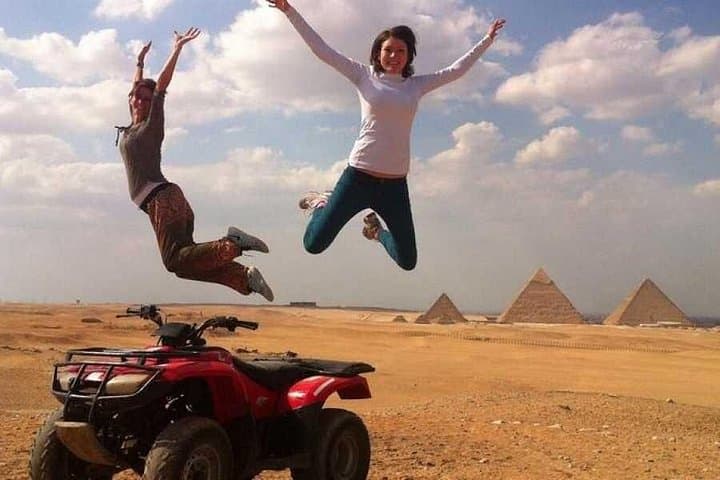
The engine kicks and sand sprays sideways as the quad pulls onto an open dune face, the Great Pyramid rising like an ancient geometry test at the edge of the horizon.
The engine kicks and sand sprays sideways as the quad pulls onto an open dune face, the Great Pyramid rising like an ancient geometry test at the edge of the horizon.
This guided ATV loop around the Giza Plateau gives riders a close, fast perspective on the landscape that cradled Pharaohs for 4,500 years. The plateau itself is limestone bedrock capped with wind-blown sand; from here the three major pyramids — Khufu, Khafre and Menkaure — read like chapters of ancient engineering. The desert fringe carries a modern layer of local life: Bedouin camps, shepherd tracks and the distant urban sprawl of Cairo.
Expect mostly open sandy tracks with intermittent harder-packed paths; experienced guides point out small archaeological features while keeping riders away from protected zones. The typical guided pace is 20–30 mph on safe stretches, with bursts faster on wide dunes when permitted. Lunch and round-trip hotel transfers from Cairo or Giza are included, simplifying logistics for a half-day outing.
Practical edge: wear closed-toe shoes and eye protection, carry at least one liter of water and sunscreen, and listen to the safety briefing — dune riding requires throttle control and weight shifts more than raw speed. Operators commonly provide helmets and basic instructions; confirm mobility requirements and any age limits before booking. Aim for an early-morning or late-afternoon departure to avoid peak heat and to catch the pyramids in softer light.