THE ADVENTURE COLLECTIVE® · Independent discovery and booking for outdoor travel

Stand where pharaohs once walked: explore the Great Pyramid, the Valley Temple of Khafre, and the Great Sphinx with a private Egyptologist, then take in sweeping panoramic views and an optional camel ride into the nearby desert. Practical tips on tickets, timing, and terrain help you plan a focused half-day adventure.
Stand where pharaohs once walked: explore the Great Pyramid, the Valley Temple of Khafre, and the Great Sphinx with a private Egyptologist, then take in sweeping panoramic views and an optional camel ride into the nearby desert. Practical tips on tickets, timing, and terrain help you plan a focused half-day adventure.
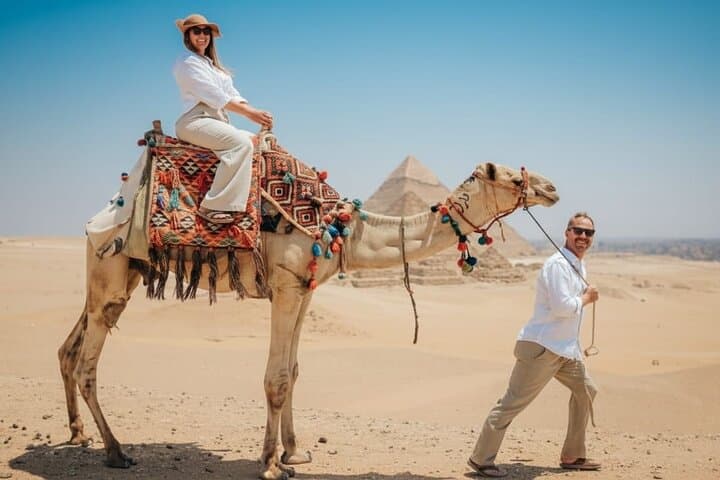
The plateau opens like a stage: wind pushes sand across an expanse of pale stone, and three geometric mountains hold the sun’s glare while a lone camel silhouette punctuates the horizon. A local Egyptologist guides the group along hard-packed paths between towering blocks, translating millennia of labor into clear moments—each joint, each quarry mark a sentence in an old conversation.
Verified experiences and guided adventures in the surrounding area.
Operated by Egypt Travels · Giza, Cairo Governorate
The plateau opens like a stage: wind pushes sand across an expanse of pale stone, and three geometric mountains hold the sun’s glare while a lone camel silhouette punctuates the horizon. A local Egyptologist guides the group along hard-packed paths between towering blocks, translating millennia of labor into clear moments—each joint, each quarry mark a sentence in an old conversation.
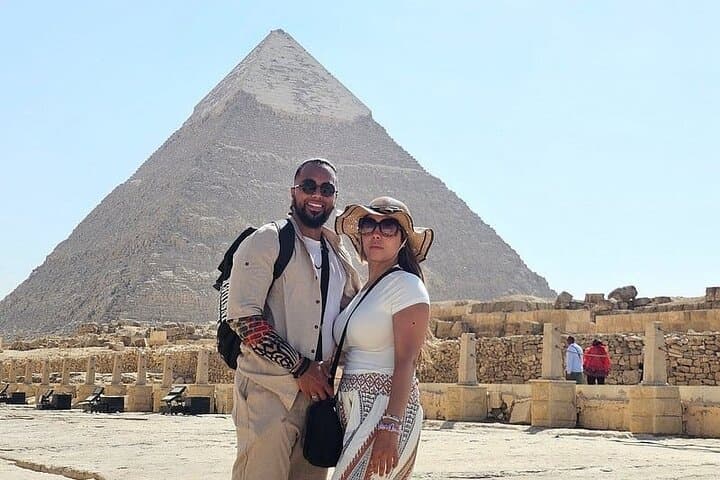
Built in the fourth dynasty (c. 2600–2500 BCE), the Great Pyramid of Khufu, the mid-sized Khafre complex with its valley temple, and Menkaure’s partially granite-clad base reflect both Egypt’s technical reach and its geological story: Tura limestone for casing, Aswan granite hauled hundreds of kilometers for finishing. The Sphinx — a lion’s body with a royal head — anchors ceremonial approaches and points to funerary practices performed at valley temples.
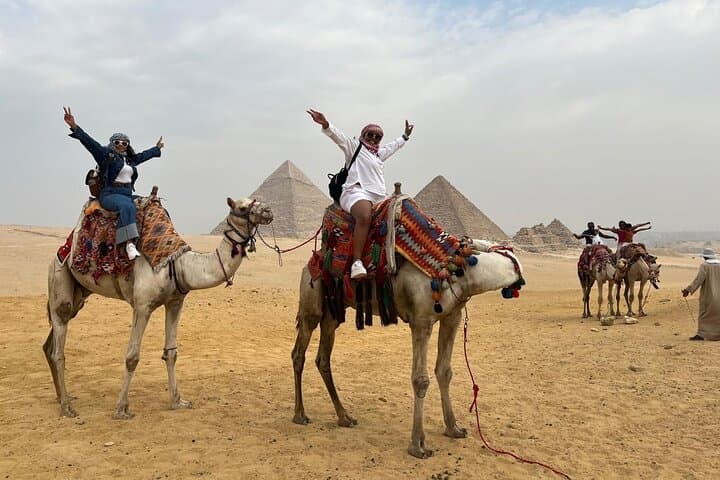
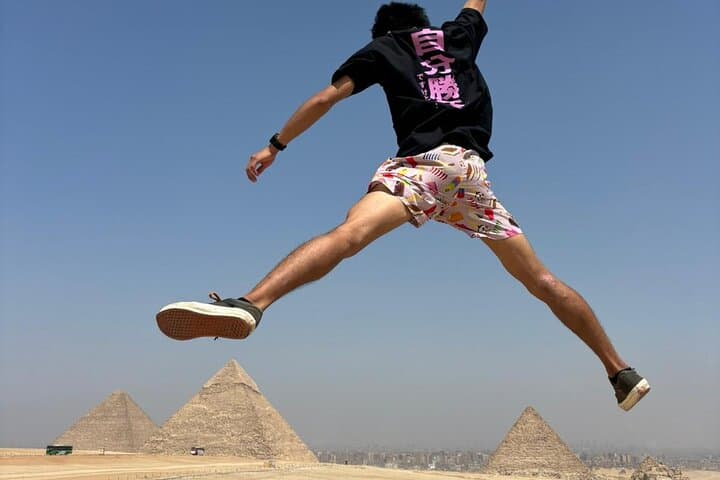
Visitors should expect uneven, sandy terrain and open sun; the panoramic viewpoint offers framed shots of all three pyramids while camel operators linger nearby offering short rides. Interior access to Khufu and other chambers requires a separate ticket; guides typically assist with purchase. The experience balances easy walking with cultural density: allow 3–6 hours to move at an unhurried pace, ask questions, and stop for photos.
Practical notes: arrive early to beat heat and crowds, carry water and sun protection, and wear sturdy shoes for mixed sand and stone surfaces. Respect site rules—no climbing—and tip guides and camel handlers fairly. The plateau gives you both scale and detail: the desert dares you forward while ancient stone keeps its own quiet time.
easy.
3–6 hours.
Basic mobility required—able to walk up to 2–3 miles on uneven sandy and stone surfaces; not strenuous.
Yes, interior access requires a limited, separate ticket; guides can assist buying it but availability varies so request in advance.
Camel rides are usually optional and arranged on-site by local operators for an additional fee; prices are negotiable—confirm duration and price first.
The plateau has uneven surfaces and limited accessibility; some viewpoints are reachable by car, but interior pyramid access and most close-up areas are challenging for wheelchairs.
Tipping is customary for guides, drivers, and camel handlers—small, reasonable amounts are appreciated and support local workers.
The Giza complex dates to Egypt’s Fourth Dynasty; Khufu’s pyramid was the world’s tallest construction for millennia, while quarrying and transport reveal advanced ancient logistics.
Visitor pressure and urban encroachment stress the plateau; follow marked paths, avoid littering, and do not climb monuments to help preserve fragile stone and archaeological context.
Egypt Travels operates guided outdoor trips and adventures with an emphasis on safety, stewardship, and memorable experiences.
The plateau opens like a stage: wind pushes sand across an expanse of pale stone, and three geometric mountains hold the sun’s glare while a lone camel silhouette punctuates the horizon. A local Egyptologist guides the group along hard-packed paths between towering blocks, translating millennia of labor into clear moments—each joint, each quarry mark a sentence in an old conversation.
The plateau opens like a stage: wind pushes sand across an expanse of pale stone, and three geometric mountains hold the sun’s glare while a lone camel silhouette punctuates the horizon. A local Egyptologist guides the group along hard-packed paths between towering blocks, translating millennia of labor into clear moments—each joint, each quarry mark a sentence in an old conversation.
Built in the fourth dynasty (c. 2600–2500 BCE), the Great Pyramid of Khufu, the mid-sized Khafre complex with its valley temple, and Menkaure’s partially granite-clad base reflect both Egypt’s technical reach and its geological story: Tura limestone for casing, Aswan granite hauled hundreds of kilometers for finishing. The Sphinx — a lion’s body with a royal head — anchors ceremonial approaches and points to funerary practices performed at valley temples.
Visitors should expect uneven, sandy terrain and open sun; the panoramic viewpoint offers framed shots of all three pyramids while camel operators linger nearby offering short rides. Interior access to Khufu and other chambers requires a separate ticket; guides typically assist with purchase. The experience balances easy walking with cultural density: allow 3–6 hours to move at an unhurried pace, ask questions, and stop for photos.
Practical notes: arrive early to beat heat and crowds, carry water and sun protection, and wear sturdy shoes for mixed sand and stone surfaces. Respect site rules—no climbing—and tip guides and camel handlers fairly. The plateau gives you both scale and detail: the desert dares you forward while ancient stone keeps its own quiet time.