THE ADVENTURE COLLECTIVE® · Independent discovery and booking for outdoor travel

Stand before the Great Pyramid and move through millennia in a single half-day: an accessible private tour that pairs the Giza Plateau with the Egyptian Museum and a short camel ride. Learn when to go, what to bring and how to make the most of the experience.
Stand before the Great Pyramid and move through millennia in a single half-day: an accessible private tour that pairs the Giza Plateau with the Egyptian Museum and a short camel ride. Learn when to go, what to bring and how to make the most of the experience.
You arrive on the Giza Plateau with wind carrying dry heat across stone that has stood since the age of pharaohs. Sand scuffs the soles of your shoes; the Great Pyramid looms, patient and immense, while a camel exhales nearby, indifferent to the tourists who circle the plateau. The scene is immediate — monumental shapes against a pale Cairo sky — and it sets the tone for a four-hour sweep through Egypt’s ancient heart.
Verified experiences and guided adventures in the surrounding area.
Operated by Upper Egypt Services · Giza, Giza Governorate
You arrive on the Giza Plateau with wind carrying dry heat across stone that has stood since the age of pharaohs. Sand scuffs the soles of your shoes; the Great Pyramid looms, patient and immense, while a camel exhales nearby, indifferent to the tourists who circle the plateau. The scene is immediate — monumental shapes against a pale Cairo sky — and it sets the tone for a four-hour sweep through Egypt’s ancient heart.
The Giza Pyramids date to roughly 2560–2540 BCE, constructed as royal tombs during the Fourth Dynasty. Geologically, the plateau sits on limestone bedrock whose quarried blocks built the surrounding monuments; the Egyptian Museum in Cairo houses artifacts spanning millennia, including the funerary objects connected to Tutankhamun. Local culture pulses in the nearby Khan el-Khalili bazaar: craftsmen, café owners and the tangle of alleyways that frame modern Egyptian life.
Practically, this private, four-hour tour mixes short walks on packed dirt and sand with stops at museum galleries and a brief camel ride around the plateau. Wear sturdy, breathable shoes and sun protection; carry water and light cash for tips and small purchases. Expect some uneven terrain and dusty surfaces, but no technical climbing. Guides handle logistics and entrances, but interior access to pyramid chambers can be limited or require additional tickets — ask ahead. Schedule early morning or late afternoon to dodge peak heat and harsh light.
The tour gives a concentrated, accessible introduction to one of the planet’s most enduring landscapes: bring curiosity, a camera, and respect for fragile, heavily managed antiquities.
easy.
4 hours.
Suitable for most fitness levels; involves short walks on sandy and paved surfaces and minimal elevation change.
Yes — this private tour lists entrance fees as included; confirm specific museum rooms or pyramid chamber access that might require separate fees.
Yes — the tour includes pickup and drop-off; you’ll be asked your pickup point when booking.
Duplicate field prevented; see prior answer.
A short camel ride around the Giza Plateau is included; animals are handled by handlers — follow their instructions and avoid sudden movements for safety.
The major pyramids were built during Egypt’s Fourth Dynasty (c. 2600 BCE) as monumental royal tombs; the Egyptian Museum preserves artifacts spanning Pharaonic to Greco-Roman periods, including Tutankhamun’s burial treasures.
The site faces pressure from tourism and urban expansion; visitors should not touch ancient stonework, stay on designated paths and follow guide instructions to help preserve fragile archaeology.
Upper Egypt Services operates guided outdoor trips and adventures with an emphasis on safety, stewardship, and memorable experiences.
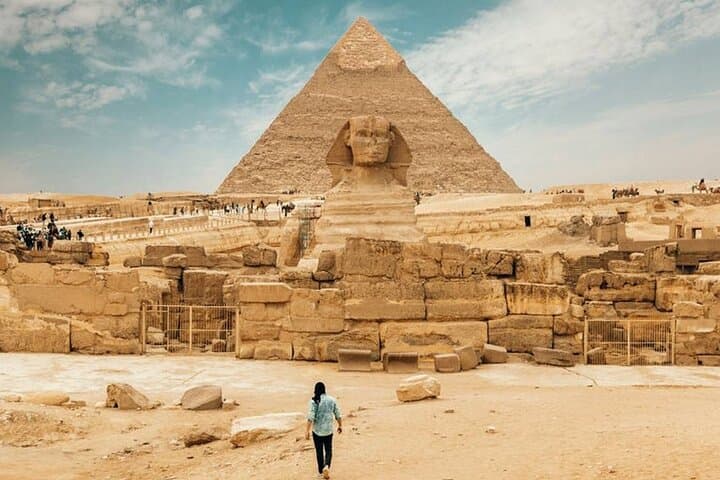
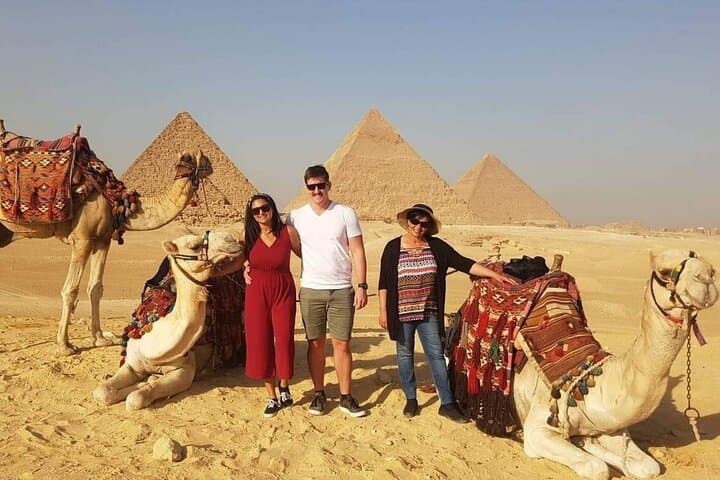
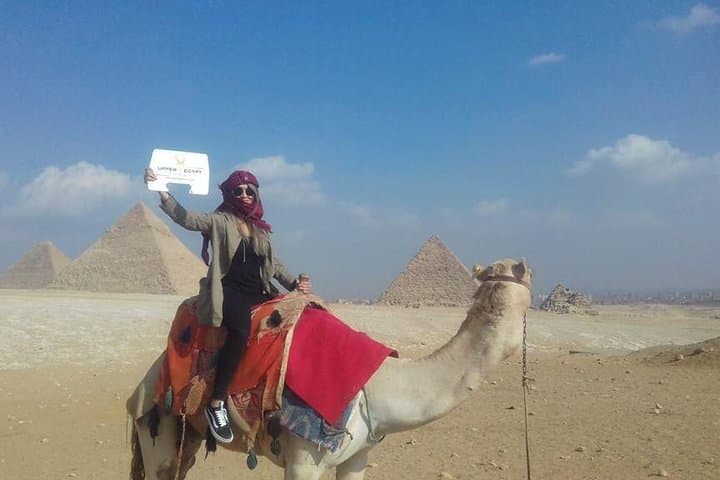
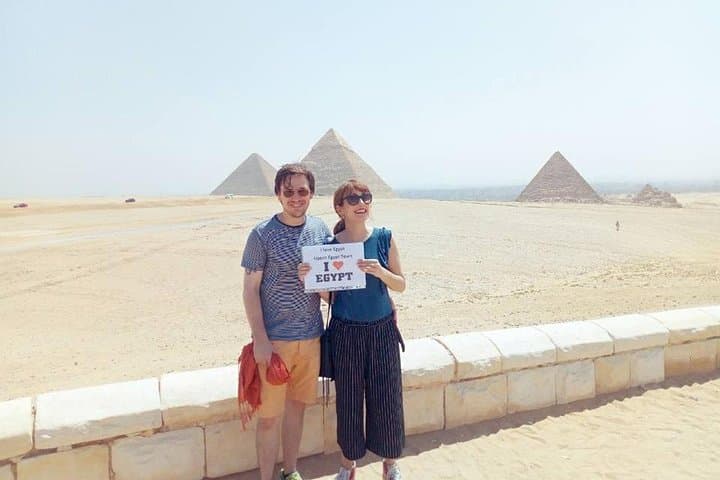
You arrive on the Giza Plateau with wind carrying dry heat across stone that has stood since the age of pharaohs. Sand scuffs the soles of your shoes; the Great Pyramid looms, patient and immense, while a camel exhales nearby, indifferent to the tourists who circle the plateau. The scene is immediate — monumental shapes against a pale Cairo sky — and it sets the tone for a four-hour sweep through Egypt’s ancient heart.
You arrive on the Giza Plateau with wind carrying dry heat across stone that has stood since the age of pharaohs. Sand scuffs the soles of your shoes; the Great Pyramid looms, patient and immense, while a camel exhales nearby, indifferent to the tourists who circle the plateau. The scene is immediate — monumental shapes against a pale Cairo sky — and it sets the tone for a four-hour sweep through Egypt’s ancient heart.
The Giza Pyramids date to roughly 2560–2540 BCE, constructed as royal tombs during the Fourth Dynasty. Geologically, the plateau sits on limestone bedrock whose quarried blocks built the surrounding monuments; the Egyptian Museum in Cairo houses artifacts spanning millennia, including the funerary objects connected to Tutankhamun. Local culture pulses in the nearby Khan el-Khalili bazaar: craftsmen, café owners and the tangle of alleyways that frame modern Egyptian life.
Practically, this private, four-hour tour mixes short walks on packed dirt and sand with stops at museum galleries and a brief camel ride around the plateau. Wear sturdy, breathable shoes and sun protection; carry water and light cash for tips and small purchases. Expect some uneven terrain and dusty surfaces, but no technical climbing. Guides handle logistics and entrances, but interior access to pyramid chambers can be limited or require additional tickets — ask ahead. Schedule early morning or late afternoon to dodge peak heat and harsh light.
The tour gives a concentrated, accessible introduction to one of the planet’s most enduring landscapes: bring curiosity, a camera, and respect for fragile, heavily managed antiquities.