THE ADVENTURE COLLECTIVE® · Independent discovery and booking for outdoor travel

See the Great Pyramid, Sphinx, Saqqara’s Step Pyramid and ancient Memphis in one private, full-day itinerary led by a qualified Egyptologist. Expect limestone walks, optional camel rides, and concentrated history across eight hours.
See the Great Pyramid, Sphinx, Saqqara’s Step Pyramid and ancient Memphis in one private, full-day itinerary led by a qualified Egyptologist. Expect limestone walks, optional camel rides, and concentrated history across eight hours.
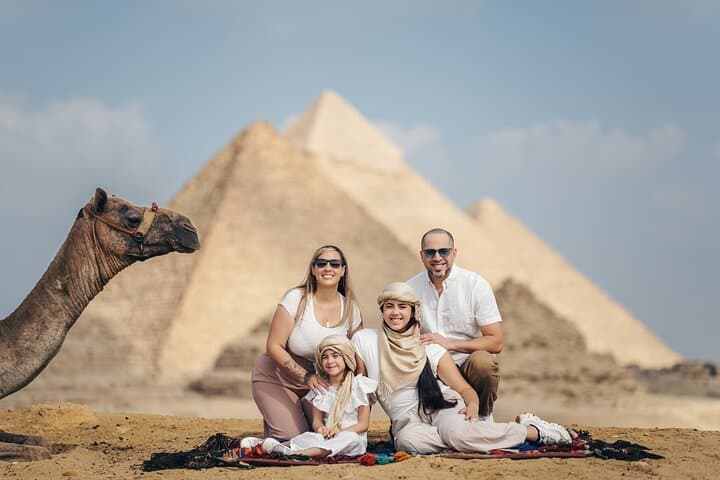
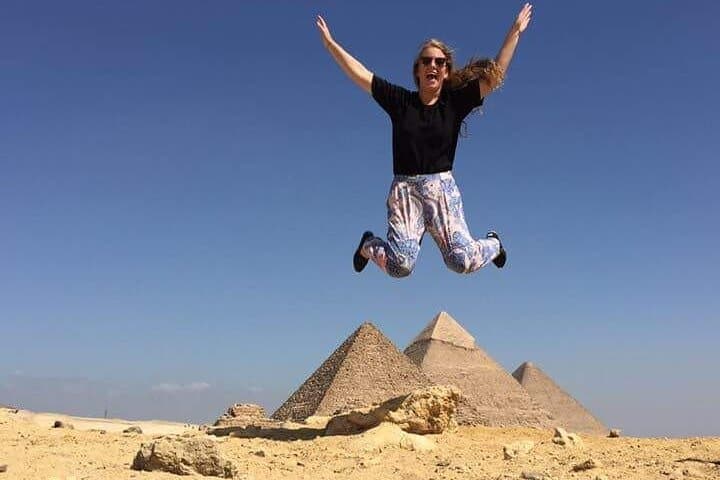
The morning light strips the desert coolness from the Giza Plateau as a private guide leads the group across sands that still carry the footprint of ancient craftsmen.
Verified experiences and guided adventures in the surrounding area.
Operated by Hesham Egypt tour guide · Giza, Cairo Governorate
The morning light strips the desert coolness from the Giza Plateau as a private guide leads the group across sands that still carry the footprint of ancient craftsmen.
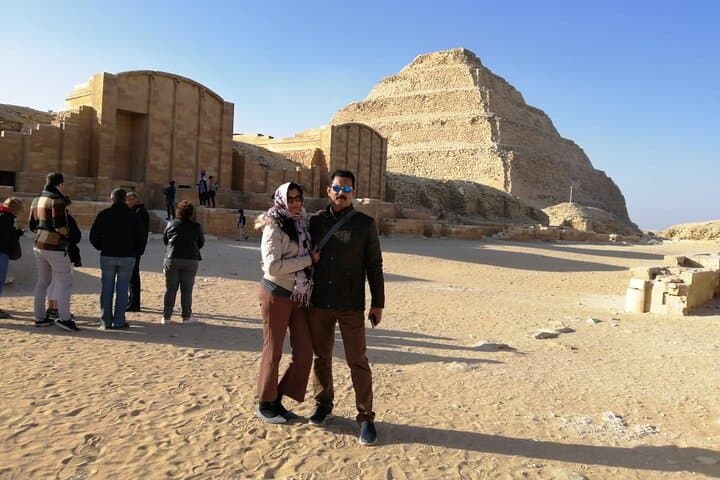
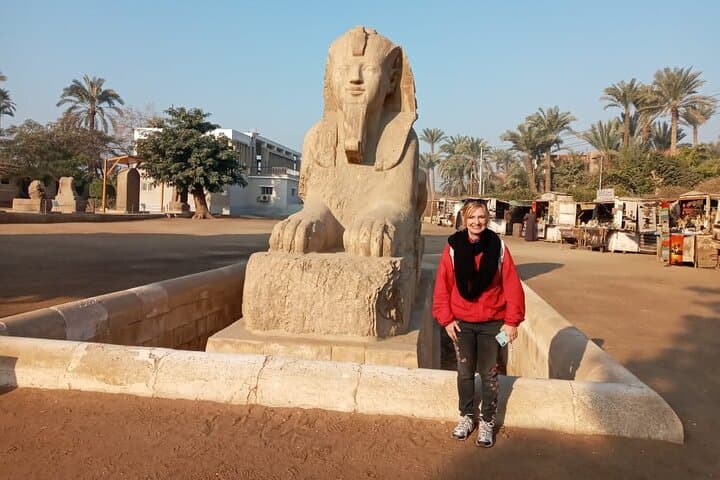
Visitors stand before the Great Pyramid’s straight, towering faces, then move to the stoic Sphinx where wind-sculpted limestone seems to hold conversation with the sky. Later the day shifts south to Saqqara’s Step Pyramid—Egypt’s architectural experiment—and the open-air remains of Memphis where a fallen colossus of Ramses II lies prostrate in the sun.
Geology here is blunt and visible: the plateau’s Tura limestone and Giza’s bedrock were quarried by hand and set the palette for pharaonic construction. Saqqara’s stepped silhouette marks a turning point in funerary design—Imhotep’s innovation that redefined stone masonry and funerary ritual.
Culturally the tour centers on continuity: a living local economy around tourism, the craft of papyrus and perfume explained by guides, and centuries of myth layered onto concrete ruins. Practicalities follow: expect roughly eight hours with multiple short walks on uneven, dusty limestone and packed sand.
Bring sun protection, comfortable closed-toe shoes, and a charged phone for photos; bottled water is provided but a refillable bottle and pace-conscious hydration are smart. Peak hours are late morning—start early to avoid heat and crowds. Entrance fees and optional activities like camel rides are typically handled on site; tipping your Egyptologist and driver is customary.
This private full-day option condenses three millennia of history into one accessible itinerary—best suited to travelers who want context-rich exploration with the convenience of private transport and an expert guide.
easy.
8 hours.
Light fitness required—comfortable walking on uneven ground and the ability to stand for short periods.
Entrance fees vary by option—some packages include main-area tickets while others require payment at the sites; confirm at booking.
Yes—this tour is suitable for all fitness levels, but prepare for walking on uneven ground and use shade breaks for vulnerable travelers.
Camel rides are optional and arranged locally at Giza; they are typically paid for on-site rather than included in standard pricing.
Stops are scheduled to allow photo time and guided interpretation: expect a couple of hours at Giza and roughly an hour to two at Saqqara and Memphis combined, depending on your chosen pace.
Saqqara’s Step Pyramid (c. 2650 BCE) marks the first large-scale stone pyramid, while Memphis served as Egypt’s administrative capital for millennia.
Stick to designated paths and avoid touching carvings; supporting licensed local guides helps funnel tourism income into conservation and community projects.
Hesham Egypt tour guide operates guided outdoor trips and adventures with an emphasis on safety, stewardship, and memorable experiences.
The morning light strips the desert coolness from the Giza Plateau as a private guide leads the group across sands that still carry the footprint of ancient craftsmen.
The morning light strips the desert coolness from the Giza Plateau as a private guide leads the group across sands that still carry the footprint of ancient craftsmen.
Visitors stand before the Great Pyramid’s straight, towering faces, then move to the stoic Sphinx where wind-sculpted limestone seems to hold conversation with the sky. Later the day shifts south to Saqqara’s Step Pyramid—Egypt’s architectural experiment—and the open-air remains of Memphis where a fallen colossus of Ramses II lies prostrate in the sun.
Geology here is blunt and visible: the plateau’s Tura limestone and Giza’s bedrock were quarried by hand and set the palette for pharaonic construction. Saqqara’s stepped silhouette marks a turning point in funerary design—Imhotep’s innovation that redefined stone masonry and funerary ritual.
Culturally the tour centers on continuity: a living local economy around tourism, the craft of papyrus and perfume explained by guides, and centuries of myth layered onto concrete ruins. Practicalities follow: expect roughly eight hours with multiple short walks on uneven, dusty limestone and packed sand.
Bring sun protection, comfortable closed-toe shoes, and a charged phone for photos; bottled water is provided but a refillable bottle and pace-conscious hydration are smart. Peak hours are late morning—start early to avoid heat and crowds. Entrance fees and optional activities like camel rides are typically handled on site; tipping your Egyptologist and driver is customary.
This private full-day option condenses three millennia of history into one accessible itinerary—best suited to travelers who want context-rich exploration with the convenience of private transport and an expert guide.