THE ADVENTURE COLLECTIVE® · Independent discovery and booking for outdoor travel

Spend a day moving through Egypt's oldest monumental sites: the Great Pyramids of Giza, the Sphinx, and Djoser’s Step Pyramid at Saqqara, with a guided camel loop by the plateau. This private tour pairs archaeological context with practical tips for a sun-exposed, full-day outing.
Spend a day moving through Egypt's oldest monumental sites: the Great Pyramids of Giza, the Sphinx, and Djoser’s Step Pyramid at Saqqara, with a guided camel loop by the plateau. This private tour pairs archaeological context with practical tips for a sun-exposed, full-day outing.
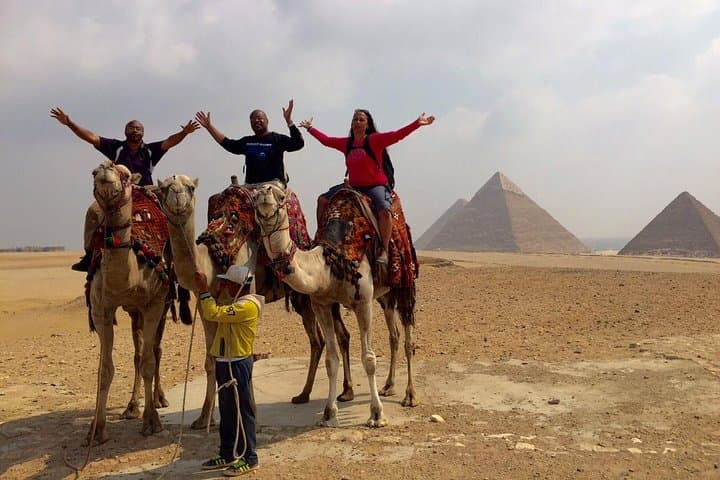
Morning light slices across the Giza Plateau and dust lifts from the low scrub as a private vehicle eases you into the shadow of the Great Pyramid. The scale hits first—the blocks rearrange your sense of time—and a camel waits patiently at the edge of the plateau, as if offering a slow, deliberate passage through millennia.
Verified experiences and guided adventures in the surrounding area.
Operated by Egypt Daily Tours · Giza, Cairo Governorate
Morning light slices across the Giza Plateau and dust lifts from the low scrub as a private vehicle eases you into the shadow of the Great Pyramid. The scale hits first—the blocks rearrange your sense of time—and a camel waits patiently at the edge of the plateau, as if offering a slow, deliberate passage through millennia.
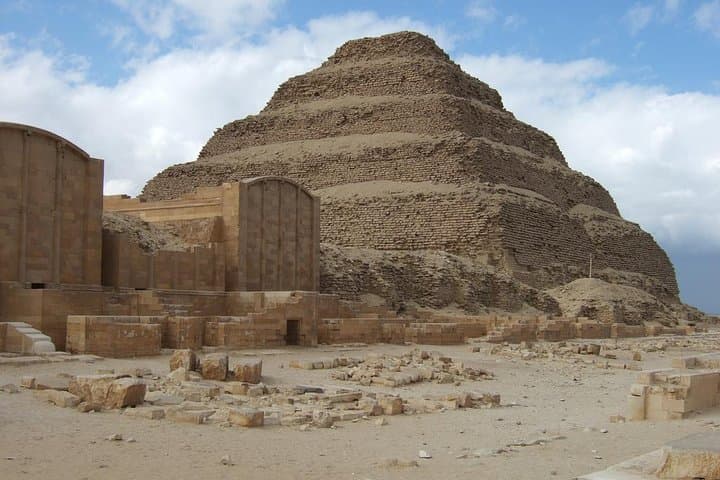
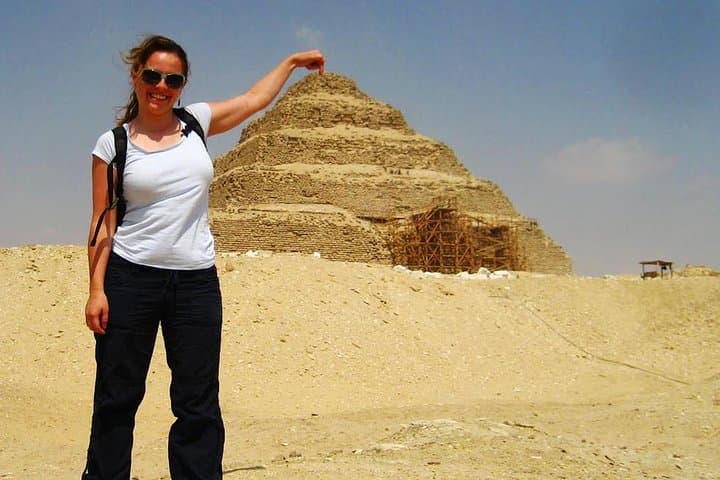
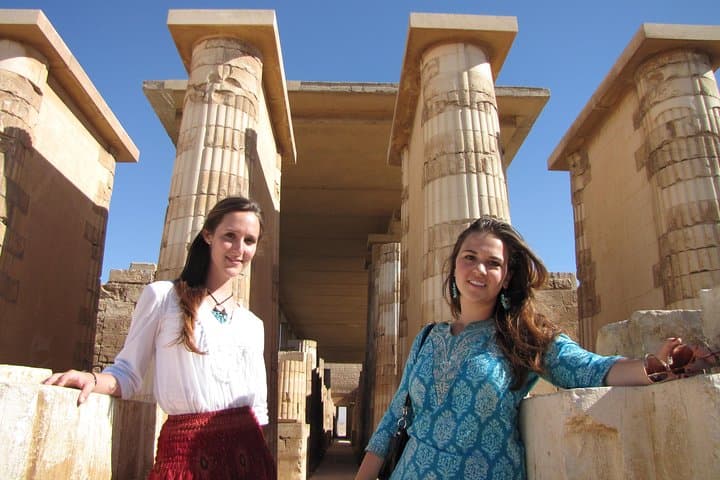
This full-day route threads three eras of ancient Egypt: the Old Kingdom engineering of Khufu, Khafre and Menkaure at Giza; the enigmatic limestone guardian of the Sphinx and its adjacent Valley Temple; then onward to Saqqara, where the Step Pyramid of Djoser marks one of the earliest large-scale stone constructions (c. 2630 BCE). Geologically the plateau is Pleistocene limestone; erosion and quarrying carved the forms you see today. Culturally, these sites were civic and funerary centers—each monument a functional, ritual object rather than decoration.
Expect short walks over uneven, sandy stone and paved paths, plus a guided camel loop near the pyramid base. The day is largely flat but sun-exposed; temperatures swing dramatically between early morning and afternoon.
Practical guidance: book morning pickup to avoid heat and crowds, carry at least 1–2 liters of water, wear sturdy closed shoes for footing around loose stone, and bring a hat and sunscreen. Photography is permitted around exteriors; entrance fees and internal chamber access are commonly separate. Respect local dress codes and the site staff—these places are active archaeological and cultural landscapes. This tour mixes spectacle and practicality: you’ll leave with a clearer sense of how the monuments were built and why their scale still quietly commands attention.
easy.
7–8 hours.
Suitable for travelers in average fitness—requires standing and short walks over uneven ground throughout the day.
This tour commonly excludes official entrance fees and special-access tickets (such as entering the Great Pyramid interior); confirm with the operator before booking.
The short camel loop is optional and generally suitable for most ages, but it involves mounting/dismounting and sitting on a moving animal—advise the guide of mobility concerns.
Driving time between the Giza Plateau and Saqqara is typically 30–50 minutes depending on traffic; the full tour runs roughly 7–8 hours including stops.
Access inside certain pyramids is limited and may require additional tickets or timed entry; the Sphinx interior is not open to the public—your guide can confirm current access rules.
The Giza necropolis dates to Egypt’s Fourth Dynasty (c. 2600–2500 BCE); Saqqara’s Step Pyramid predates Giza and signals the shift to large-scale stone architecture under King Djoser.
Site managers and Egyptian authorities monitor visitor flow to protect structures; avoid climbing on monuments and follow guide instructions to minimize wear and disturbance.
Egypt Daily Tours operates guided outdoor trips and adventures with an emphasis on safety, stewardship, and memorable experiences.
Morning light slices across the Giza Plateau and dust lifts from the low scrub as a private vehicle eases you into the shadow of the Great Pyramid. The scale hits first—the blocks rearrange your sense of time—and a camel waits patiently at the edge of the plateau, as if offering a slow, deliberate passage through millennia.
Morning light slices across the Giza Plateau and dust lifts from the low scrub as a private vehicle eases you into the shadow of the Great Pyramid. The scale hits first—the blocks rearrange your sense of time—and a camel waits patiently at the edge of the plateau, as if offering a slow, deliberate passage through millennia.
This full-day route threads three eras of ancient Egypt: the Old Kingdom engineering of Khufu, Khafre and Menkaure at Giza; the enigmatic limestone guardian of the Sphinx and its adjacent Valley Temple; then onward to Saqqara, where the Step Pyramid of Djoser marks one of the earliest large-scale stone constructions (c. 2630 BCE). Geologically the plateau is Pleistocene limestone; erosion and quarrying carved the forms you see today. Culturally, these sites were civic and funerary centers—each monument a functional, ritual object rather than decoration.
Expect short walks over uneven, sandy stone and paved paths, plus a guided camel loop near the pyramid base. The day is largely flat but sun-exposed; temperatures swing dramatically between early morning and afternoon.
Practical guidance: book morning pickup to avoid heat and crowds, carry at least 1–2 liters of water, wear sturdy closed shoes for footing around loose stone, and bring a hat and sunscreen. Photography is permitted around exteriors; entrance fees and internal chamber access are commonly separate. Respect local dress codes and the site staff—these places are active archaeological and cultural landscapes. This tour mixes spectacle and practicality: you’ll leave with a clearer sense of how the monuments were built and why their scale still quietly commands attention.