THE ADVENTURE COLLECTIVE® · Independent discovery and booking for outdoor travel

A single day that collides Egypt’s monumental past with a hands‑on taste of desert travel: climb the Giza Plateau, explore Saqqara’s step pyramid, and finish at the Egyptian Museum with a camel ride to round the experience. This private tour includes a licensed guide, entrance fees and lunch.
A single day that collides Egypt’s monumental past with a hands‑on taste of desert travel: climb the Giza Plateau, explore Saqqara’s step pyramid, and finish at the Egyptian Museum with a camel ride to round the experience. This private tour includes a licensed guide, entrance fees and lunch.
You step out of an air‑conditioned car onto the heat-washed limestone of the Giza Plateau and the scale of the place arrives before words can. The three great pyramids—Khufu, Khafre and Menkaure—stand like engineered mountains, their blocks sun-softened and shaded by the busy hum of guides, vendors and tourists. Nearby the Sphinx watches the plain; faintly weathered hieroglyphs and carved halls at Saqqara speak of an older experiment in stone: Djoser’s step pyramid.
Verified experiences and guided adventures in the surrounding area.
Operated by Let`s Explore Egypt · Giza, Giza Governorate
You step out of an air‑conditioned car onto the heat-washed limestone of the Giza Plateau and the scale of the place arrives before words can. The three great pyramids—Khufu, Khafre and Menkaure—stand like engineered mountains, their blocks sun-softened and shaded by the busy hum of guides, vendors and tourists. Nearby the Sphinx watches the plain; faintly weathered hieroglyphs and carved halls at Saqqara speak of an older experiment in stone: Djoser’s step pyramid.
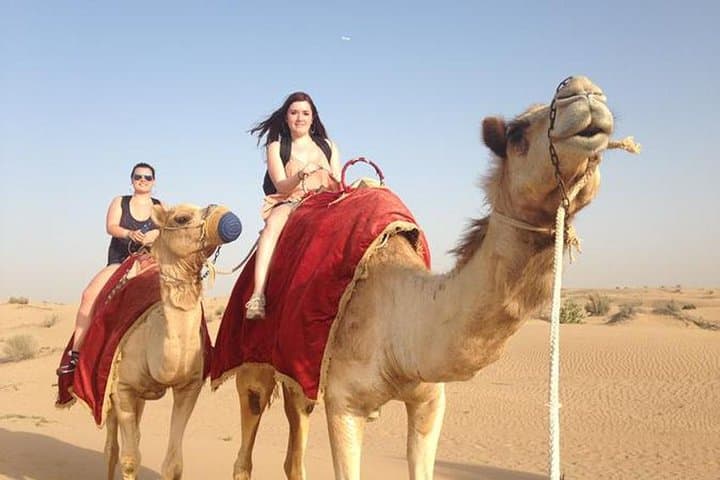
This full-day private tour threads Egypt’s deepest archaeology with modern museum context. A licensed Egyptologist guides you through funerary architecture on the plateau, the valley temple and the Sphinx, then drives south to Saqqara to examine early Old Kingdom tombs and the Step Pyramid complex. The route finishes in a major museum of antiquities where Tutankhamen’s funerary treasures and thousands of artifacts trace 5,000 years of Nile civilization. A 30‑minute camel ride across the desert edge punctuates the day; lunch and bottled water are provided.
Geology here is simple but telling—Nile silt plains give way to Eocene limestone ridges that provided the very material for these monuments. Expect hot sun, dusty paths and lots of walking on uneven stone. Practical notes: wear sturdy shoes, sun protection and a light daypack; carry local currency for gratuities and small purchases. Book early to secure a private Egyptologist and morning pickup to avoid peak heat and crowds.
easy.
9 hours.
Suitable for travelers of average fitness; expect several hours on foot and short climbs on uneven stone.
The private tour runs about 9 hours and typically includes an English‑speaking Egyptologist, entrance fees to listed sites, lunch, bottled water, transfers and a 30‑minute camel ride.
Handlers regulate pace and mount/dismount assistance is provided; disclose mobility limits when booking and for very young or frail travelers it may be advisable to skip the camel ride.
Itinerary lists the Egyptian Museum of Antiquities with the Tutankhamen collection; depending on timing and openings the guide may reference exhibits at the new Grand Egyptian Museum area but entrance specifics will be confirmed at booking.
You must carry passport and visa (if required for entry to Egypt); booking requires passport details and expiry information for site admissions.
The Giza pyramids date to the Fourth Dynasty (c. 2600–2500 BCE); Saqqara’s Step Pyramid of Djoser predates them and marks a pivotal shift in Egyptian funerary architecture.
High visitor numbers, urban pollution and erosion challenge these sites; follow marked paths, avoid touching reliefs and support guides who practice low‑impact touring.
Let`s Explore Egypt operates guided outdoor trips and adventures with an emphasis on safety, stewardship, and memorable experiences.
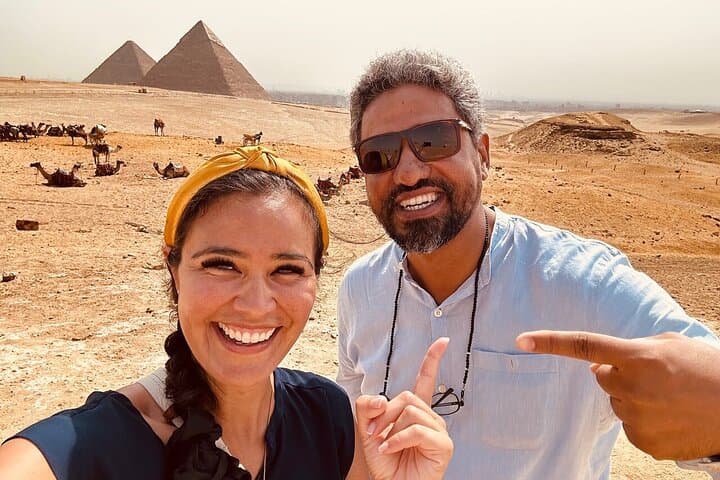
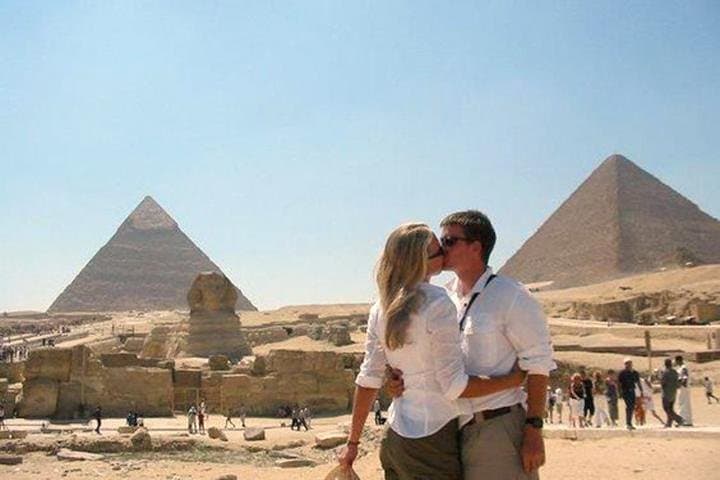
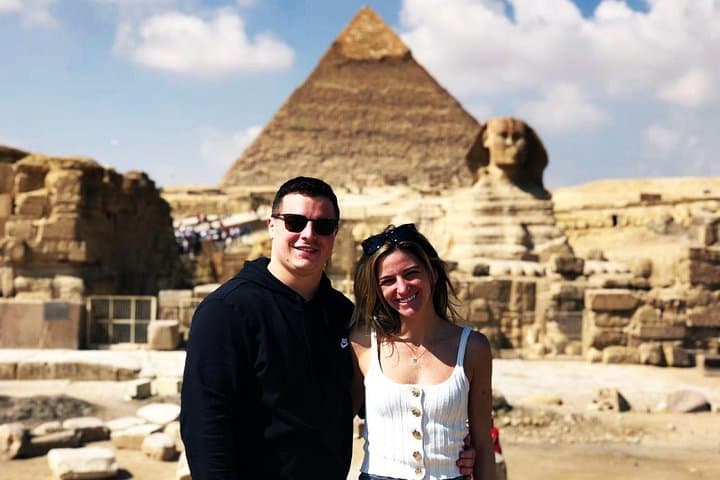
You step out of an air‑conditioned car onto the heat-washed limestone of the Giza Plateau and the scale of the place arrives before words can. The three great pyramids—Khufu, Khafre and Menkaure—stand like engineered mountains, their blocks sun-softened and shaded by the busy hum of guides, vendors and tourists. Nearby the Sphinx watches the plain; faintly weathered hieroglyphs and carved halls at Saqqara speak of an older experiment in stone: Djoser’s step pyramid.
You step out of an air‑conditioned car onto the heat-washed limestone of the Giza Plateau and the scale of the place arrives before words can. The three great pyramids—Khufu, Khafre and Menkaure—stand like engineered mountains, their blocks sun-softened and shaded by the busy hum of guides, vendors and tourists. Nearby the Sphinx watches the plain; faintly weathered hieroglyphs and carved halls at Saqqara speak of an older experiment in stone: Djoser’s step pyramid.
This full-day private tour threads Egypt’s deepest archaeology with modern museum context. A licensed Egyptologist guides you through funerary architecture on the plateau, the valley temple and the Sphinx, then drives south to Saqqara to examine early Old Kingdom tombs and the Step Pyramid complex. The route finishes in a major museum of antiquities where Tutankhamen’s funerary treasures and thousands of artifacts trace 5,000 years of Nile civilization. A 30‑minute camel ride across the desert edge punctuates the day; lunch and bottled water are provided.
Geology here is simple but telling—Nile silt plains give way to Eocene limestone ridges that provided the very material for these monuments. Expect hot sun, dusty paths and lots of walking on uneven stone. Practical notes: wear sturdy shoes, sun protection and a light daypack; carry local currency for gratuities and small purchases. Book early to secure a private Egyptologist and morning pickup to avoid peak heat and crowds.