THE ADVENTURE COLLECTIVE® · Independent discovery and booking for outdoor travel

A single-day, private tour that pairs an Egyptologist guide with air-conditioned transport to see the Giza Pyramids, Great Sphinx, Saladin Citadel and the bustling Khan el-Khalili bazaar—perfect for first-time visitors who want history, panoramas and market culture in one outing.
A single-day, private tour that pairs an Egyptologist guide with air-conditioned transport to see the Giza Pyramids, Great Sphinx, Saladin Citadel and the bustling Khan el-Khalili bazaar—perfect for first-time visitors who want history, panoramas and market culture in one outing.
You step from an air-conditioned van onto a wind-scrubbed plateau where stone meets sky. The Great Pyramid rises like a rectilinear cliff, its edges catching the sun while the Sphinx keeps a patient, watchful gaze. In the distance, the city of Cairo hums—minarets punctuating the skyline—and the desert seems to dare you to walk its margins.
Verified experiences and guided adventures in the surrounding area.
Operated by Luxury Tours Egypt · Giza, Giza Governorate
You step from an air-conditioned van onto a wind-scrubbed plateau where stone meets sky. The Great Pyramid rises like a rectilinear cliff, its edges catching the sun while the Sphinx keeps a patient, watchful gaze. In the distance, the city of Cairo hums—minarets punctuating the skyline—and the desert seems to dare you to walk its margins.
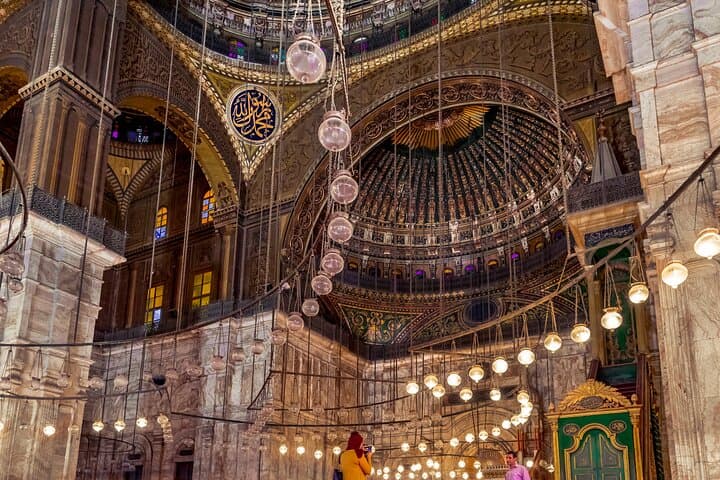
The Giza Plateau is both geology and memory: layers of Tura limestone capped by ancient engineering that has withstood millennia of sand and human traffic. The Sphinx bears erosion and repair, its face a palimpsest of weather and restoration. A short drive across the Nile places you at the Citadel of Saladin, a medieval fortress carved into Mokattam rock with sweeping views over a modern metropolis. Finally, Khan el-Khalili delivers the sensory contrast—narrow lanes, metalwork and spices, the chatter of bargaining that has defined Cairo’s commercial life for centuries.
This full-day, private outing—typically about 6–7 hours—pairs an Egyptologist guide with air-conditioned transport, bottled water and lunch. Expect several short walks on uneven ground, steps at historic sites and crowds at main viewpoints.
Practical guidance: dress modestly for cultural sites, wear sturdy shoes for loose stone and steps, and carry sun protection and small cash for the bazaar. Plan morning starts in summer to avoid peak heat and keep passports or ID handy for ticketing. Move deliberately between sites: take time at viewpoints for scale and photographs, then slip into Khan el-Khalili’s side alleys for quieter crafts and better bargains.
moderate.
6–7 hours.
Moderate fitness: able to walk 2–3 miles over uneven ground, climb stairs and stand during guided stops.
This tour includes admission to the Giza Plateau and the sites listed; interior entry to a pyramid (entering the chamber) is often a separate ticket—confirm with the operator in advance.
The tour runs about 6–7 hours with hotel or central pickup and drop-off in Cairo or Giza using an air-conditioned vehicle.
Children are welcome but note uneven ground and steps; travelers with limited mobility should check specifics—some sites have restricted access and extended walking may be required.
Yes—bargaining is expected; start lower than your target price and be friendly; carry small change and inspect items before purchase.
The Giza monuments date to Egypt’s Old Kingdom (c. 2600–2500 BCE); the Saladin Citadel stems from 12th–13th century Islamic rule and has long been a military and administrative hub.
High visitation stresses fragile stone and archeological contexts—stick to marked paths, avoid touching ancient masonry, and support sites by using licensed guides and paying official fees.
Luxury Tours Egypt operates guided outdoor trips and adventures with an emphasis on safety, stewardship, and memorable experiences.


You step from an air-conditioned van onto a wind-scrubbed plateau where stone meets sky. The Great Pyramid rises like a rectilinear cliff, its edges catching the sun while the Sphinx keeps a patient, watchful gaze. In the distance, the city of Cairo hums—minarets punctuating the skyline—and the desert seems to dare you to walk its margins.
You step from an air-conditioned van onto a wind-scrubbed plateau where stone meets sky. The Great Pyramid rises like a rectilinear cliff, its edges catching the sun while the Sphinx keeps a patient, watchful gaze. In the distance, the city of Cairo hums—minarets punctuating the skyline—and the desert seems to dare you to walk its margins.
The Giza Plateau is both geology and memory: layers of Tura limestone capped by ancient engineering that has withstood millennia of sand and human traffic. The Sphinx bears erosion and repair, its face a palimpsest of weather and restoration. A short drive across the Nile places you at the Citadel of Saladin, a medieval fortress carved into Mokattam rock with sweeping views over a modern metropolis. Finally, Khan el-Khalili delivers the sensory contrast—narrow lanes, metalwork and spices, the chatter of bargaining that has defined Cairo’s commercial life for centuries.
This full-day, private outing—typically about 6–7 hours—pairs an Egyptologist guide with air-conditioned transport, bottled water and lunch. Expect several short walks on uneven ground, steps at historic sites and crowds at main viewpoints.
Practical guidance: dress modestly for cultural sites, wear sturdy shoes for loose stone and steps, and carry sun protection and small cash for the bazaar. Plan morning starts in summer to avoid peak heat and keep passports or ID handy for ticketing. Move deliberately between sites: take time at viewpoints for scale and photographs, then slip into Khan el-Khalili’s side alleys for quieter crafts and better bargains.