THE ADVENTURE COLLECTIVE® · Independent discovery and booking for outdoor travel

Stand on the Giza Plateau, feel the desert wind, and meet the last surviving Wonder of the Ancient World on a private Egyptologist-led tour. This half-day excursion pairs big-picture history with practical tips—tickets, timing, and what to pack.
Stand on the Giza Plateau, feel the desert wind, and meet the last surviving Wonder of the Ancient World on a private Egyptologist-led tour. This half-day excursion pairs big-picture history with practical tips—tickets, timing, and what to pack.
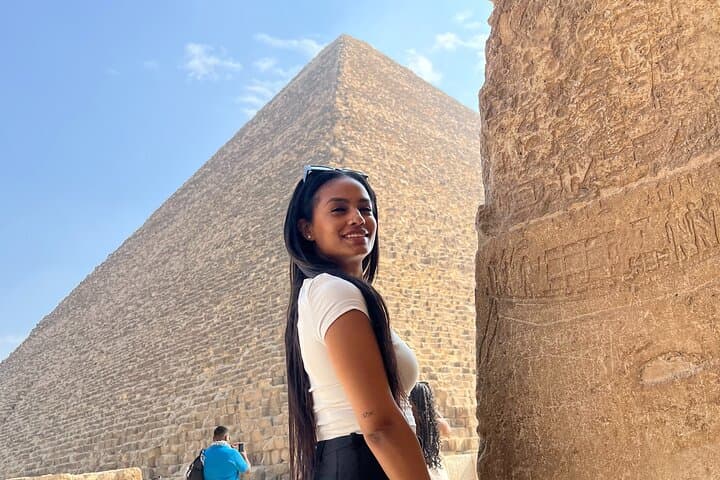
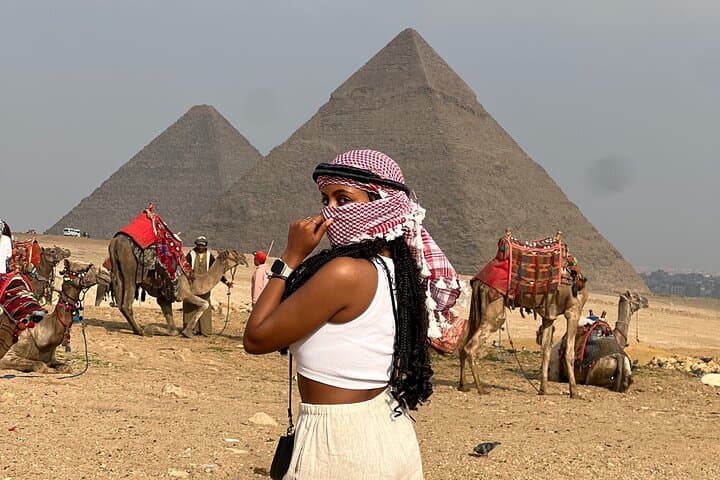
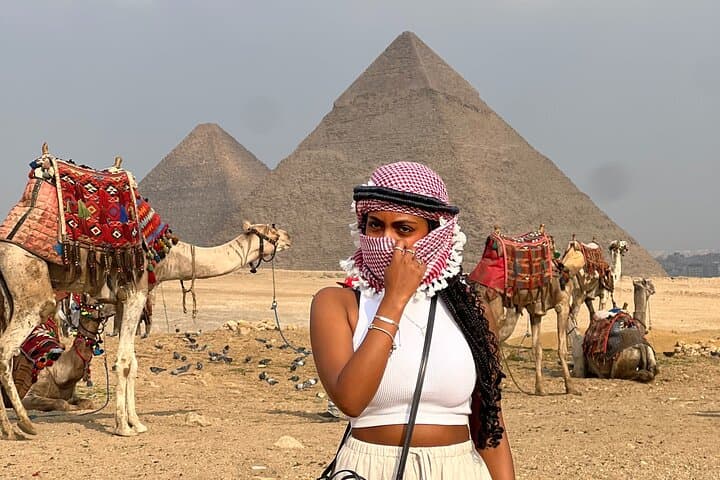
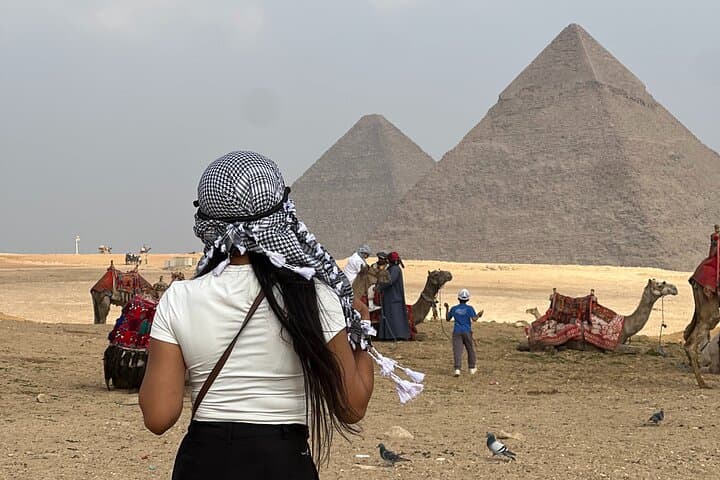
You step off an air-conditioned vehicle onto the sun-baked Giza Plateau and the desert seems to dare you to look away. Stone meets sky: the Great Pyramid rises like a block of frozen sunlight, wind skimming across ancient limestone while a lone camel waits, patient and sure.
Verified experiences and guided adventures in the surrounding area.
Operated by Travelloo · Giza, Cairo Governorate
You step off an air-conditioned vehicle onto the sun-baked Giza Plateau and the desert seems to dare you to look away. Stone meets sky: the Great Pyramid rises like a block of frozen sunlight, wind skimming across ancient limestone while a lone camel waits, patient and sure.
This private Egyptologist-led tour threads history and geology in tight, accessible segments—Khufu’s Great Pyramid (originally 146.6 m tall) built from precisely cut limestone blocks, Khafre’s slightly smaller but visually dominant tomb, and the compact Menkaure. The Sphinx, carved from the same bedrock, keeps its inscrutable watch near the Valley Temple where pharaohs were prepared for eternity. Expect talk of mortuary rites, quarrying techniques, and how polished casing stones once reflected the desert sun.
Practicalities are straightforward: allow 2–5 hours depending on traffic and your chosen options; entry inside pyramids requires a separate ticket; camel rides are typically 15–20 minutes and included only on certain options. Wear sturdy shoes—sand and uneven stone are constant—bring layered sun protection and at least 1–2 liters of water, and aim for early morning or late afternoon for softer light and cooler temperatures. Follow your Egyptologist’s guidance when photographing and avoid climbing monuments; local guides help navigate bargaining and tipping etiquette.
The experience balances spectacle with context: you’ll leave with vivid images of scale and simple, layered facts about why these structures persist, what they reveal about ancient engineering, and how to visit respectfully in a fragile, heavily visited landscape.
easy.
2–5 hours.
Suitable for most fitness levels; expect walking on uneven stone and loose sand.
General plateau entry is usually included depending on your option, but entry inside the pyramids requires an additional ticket purchased separately.
Camel rides offered on this tour are typically around 15–20 minutes and may depend on the option you select at booking.
The tour is low-impact but the operator notes it is not recommended for those with poor cardiovascular health due to heat and occasional walking on uneven surfaces.
Yes—private pickup and drop-off from Cairo hotels are included; confirm pickup time and location when booking.
The Giza complex dates to the Fourth Dynasty (c. 2600–2500 BCE); the Great Pyramid was the tallest man-made structure for nearly 3,800 years and demonstrates advanced stone-cutting and transport techniques.
Visitor pressure and urban encroachment threaten the plateau; follow site rules, avoid littering, and support licensed guides and local conservation efforts to reduce impact.
Travelloo operates guided outdoor trips and adventures with an emphasis on safety, stewardship, and memorable experiences.
You step off an air-conditioned vehicle onto the sun-baked Giza Plateau and the desert seems to dare you to look away. Stone meets sky: the Great Pyramid rises like a block of frozen sunlight, wind skimming across ancient limestone while a lone camel waits, patient and sure.
You step off an air-conditioned vehicle onto the sun-baked Giza Plateau and the desert seems to dare you to look away. Stone meets sky: the Great Pyramid rises like a block of frozen sunlight, wind skimming across ancient limestone while a lone camel waits, patient and sure.
This private Egyptologist-led tour threads history and geology in tight, accessible segments—Khufu’s Great Pyramid (originally 146.6 m tall) built from precisely cut limestone blocks, Khafre’s slightly smaller but visually dominant tomb, and the compact Menkaure. The Sphinx, carved from the same bedrock, keeps its inscrutable watch near the Valley Temple where pharaohs were prepared for eternity. Expect talk of mortuary rites, quarrying techniques, and how polished casing stones once reflected the desert sun.
Practicalities are straightforward: allow 2–5 hours depending on traffic and your chosen options; entry inside pyramids requires a separate ticket; camel rides are typically 15–20 minutes and included only on certain options. Wear sturdy shoes—sand and uneven stone are constant—bring layered sun protection and at least 1–2 liters of water, and aim for early morning or late afternoon for softer light and cooler temperatures. Follow your Egyptologist’s guidance when photographing and avoid climbing monuments; local guides help navigate bargaining and tipping etiquette.
The experience balances spectacle with context: you’ll leave with vivid images of scale and simple, layered facts about why these structures persist, what they reveal about ancient engineering, and how to visit respectfully in a fragile, heavily visited landscape.