THE ADVENTURE COLLECTIVE® · Independent discovery and booking for outdoor travel

Spend a day among Egypt’s oldest monuments: the Great Pyramid and Sphinx at Giza, the Step Pyramid at Saqqara, and the ruins of ancient Memphis. This practical guide covers what to expect, local context, and how to prepare for a long, immersive day on the plateau.
Spend a day among Egypt’s oldest monuments: the Great Pyramid and Sphinx at Giza, the Step Pyramid at Saqqara, and the ruins of ancient Memphis. This practical guide covers what to expect, local context, and how to prepare for a long, immersive day on the plateau.
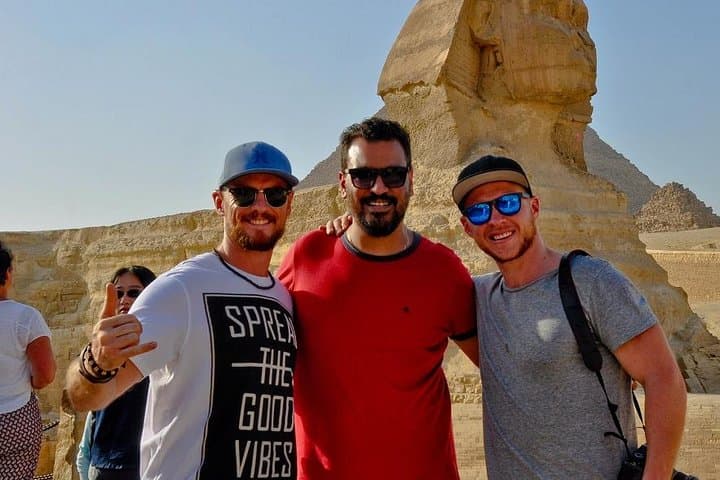
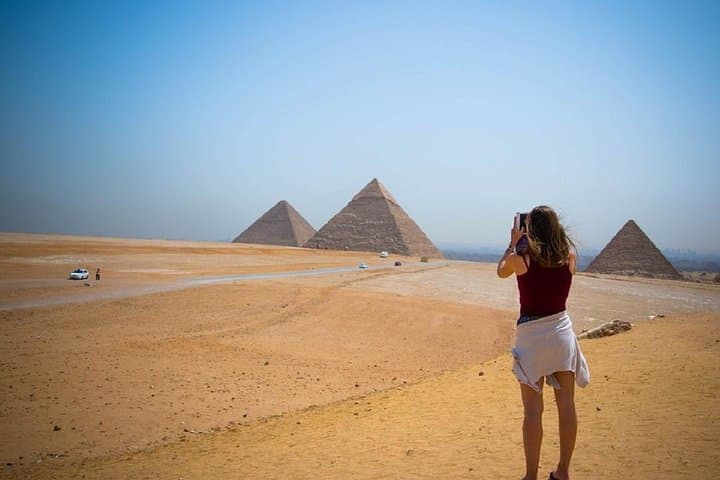
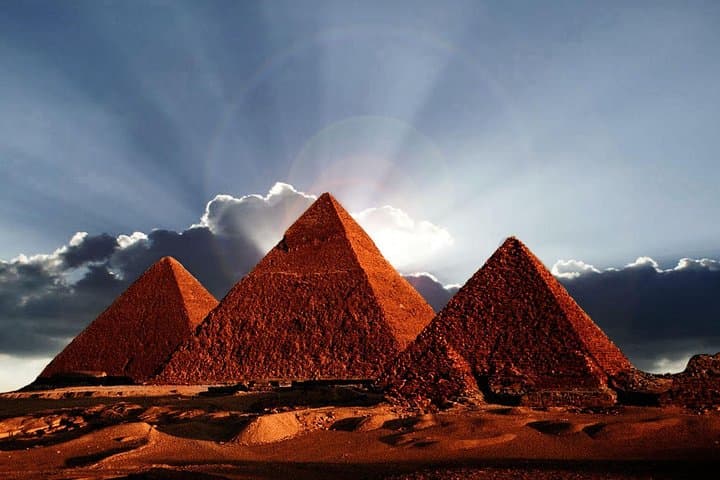
You arrive before the heat peaks and the plateau is still rimmed in long, cool shadows. Dust tastes faintly of limestone; the Great Pyramid rises like a deliberate machine from the bedrock, its angles sharp against a Cairo sky. Guides gesture toward the Sphinx, its face worn but watchful, while the plateau hums with translators, vendors and the steady shuffle of visitors.
Verified experiences and guided adventures in the surrounding area.
Operated by Egypt Tours World · Giza, Giza Governorate
You arrive before the heat peaks and the plateau is still rimmed in long, cool shadows. Dust tastes faintly of limestone; the Great Pyramid rises like a deliberate machine from the bedrock, its angles sharp against a Cairo sky. Guides gesture toward the Sphinx, its face worn but watchful, while the plateau hums with translators, vendors and the steady shuffle of visitors.
This full-day route threads three layers of Egypt's past: Giza’s Old Kingdom monuments, Saqqara’s Step Pyramid—built by Imhotep for Djoser—and the ruins of Memphis, Egypt’s ancient administrative heart. Geologically, the sites sit on Eocene limestone with exposed bedrock the ancients carved into; the Nile’s shifting course shaped the fertile floodplain that supported these cities.
Culturally, expect a blend of modern Cairo life and living archaeological practice: conservators at work, local craftsmen selling replicas, and guides who parse hieroglyphs into crisp stories. Don’t miss the Solar Boat Museum at Giza or the Mastabas at Saqqara for quieter, detailed reliefs.
Practically: this is a long, mostly flat day with lots of standing and walking over uneven stone and sand—plan 7–9 hours. Start early to avoid peak sun and crowds, carry sun protection and at least 2 liters of water, and wear closed shoes for traction. Photography is allowed in most outdoor areas but respect signage and restricted interiors. Favor licensed guides (Egyptologists where possible) and follow marked paths to protect fragile masonry.
Expect a day of close-up history, exposed rock and steady cultural exchange—the sites reward patience and an observant pair of feet.
easy.
7–9 hours.
Suitable for travelers in average fitness: expect repeated standing, walking on uneven stone, and short stair sections.
Typical duration is 7–9 hours and covers the Giza Plateau (Great Pyramid and Sphinx), Saqqara (Step Pyramid and mastabas), and the ruins of ancient Memphis; some stops include the Solar Boat Museum.
Confirm with your operator—this tour’s itinerary lists some admissions included and others not; your booking page will specify which sites charge separate entry.
Some parts of the tour and the vehicle transfer are wheelchair accessible, but ancient sites have uneven terrain and limited ramp access—check with the operator in advance for specific needs.
Modest, breathable clothing that covers shoulders and knees is recommended out of cultural respect; sun protection and layers for cooler mornings are useful.
Memphis served as Egypt’s early capital and Saqqara holds the Step Pyramid of Djoser—the first large-scale stone structure attributed to the architect Imhotep.
High visitor numbers stress fragile surfaces; stick to marked routes, avoid touching carved surfaces, and support local conservation fees or licensed guides.
Egypt Tours World operates guided outdoor trips and adventures with an emphasis on safety, stewardship, and memorable experiences.

You arrive before the heat peaks and the plateau is still rimmed in long, cool shadows. Dust tastes faintly of limestone; the Great Pyramid rises like a deliberate machine from the bedrock, its angles sharp against a Cairo sky. Guides gesture toward the Sphinx, its face worn but watchful, while the plateau hums with translators, vendors and the steady shuffle of visitors.
You arrive before the heat peaks and the plateau is still rimmed in long, cool shadows. Dust tastes faintly of limestone; the Great Pyramid rises like a deliberate machine from the bedrock, its angles sharp against a Cairo sky. Guides gesture toward the Sphinx, its face worn but watchful, while the plateau hums with translators, vendors and the steady shuffle of visitors.
This full-day route threads three layers of Egypt's past: Giza’s Old Kingdom monuments, Saqqara’s Step Pyramid—built by Imhotep for Djoser—and the ruins of Memphis, Egypt’s ancient administrative heart. Geologically, the sites sit on Eocene limestone with exposed bedrock the ancients carved into; the Nile’s shifting course shaped the fertile floodplain that supported these cities.
Culturally, expect a blend of modern Cairo life and living archaeological practice: conservators at work, local craftsmen selling replicas, and guides who parse hieroglyphs into crisp stories. Don’t miss the Solar Boat Museum at Giza or the Mastabas at Saqqara for quieter, detailed reliefs.
Practically: this is a long, mostly flat day with lots of standing and walking over uneven stone and sand—plan 7–9 hours. Start early to avoid peak sun and crowds, carry sun protection and at least 2 liters of water, and wear closed shoes for traction. Photography is allowed in most outdoor areas but respect signage and restricted interiors. Favor licensed guides (Egyptologists where possible) and follow marked paths to protect fragile masonry.
Expect a day of close-up history, exposed rock and steady cultural exchange—the sites reward patience and an observant pair of feet.