THE ADVENTURE COLLECTIVE® · Independent discovery and booking for outdoor travel

Walk among the Great Pyramid, stand before the Great Sphinx and take a camel ride around the plateau on this six‑hour, all‑inclusive tour with an Egyptologist guide. Expect interior pyramid access options, a traditional lunch, and guided photo stops.
Walk among the Great Pyramid, stand before the Great Sphinx and take a camel ride around the plateau on this six‑hour, all‑inclusive tour with an Egyptologist guide. Expect interior pyramid access options, a traditional lunch, and guided photo stops.
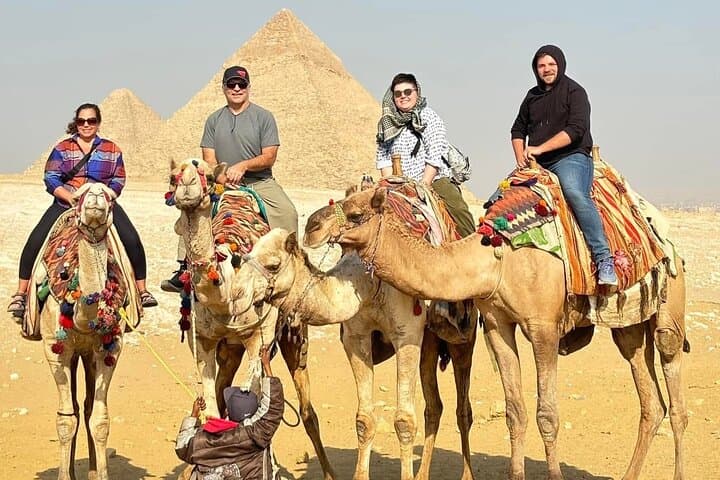
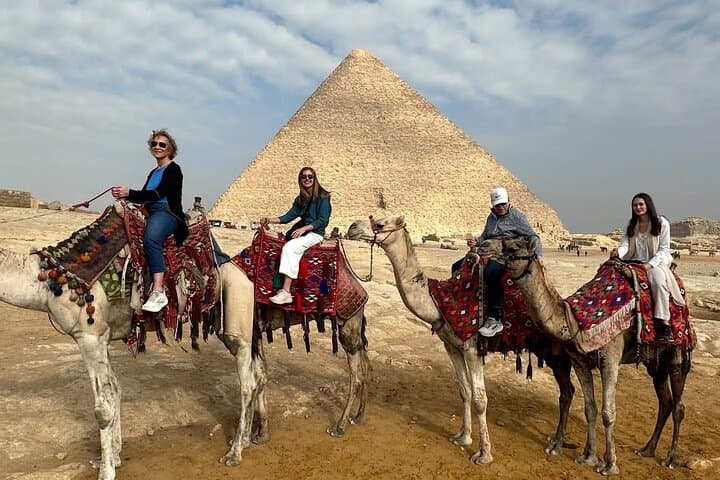
The sun lifts off the desert like a slow, warm hand as you step out of an air‑conditioned van onto the Giza Plateau. Stone slopes rise from baked sand; the Great Pyramid looms ahead, its weathered blocks holding the hush of millennia. Camels wait with patient huffs at the edge of the tourist tracks, and the Sphinx stares eastward, as if timing each visitor’s shadow.
Verified experiences and guided adventures in the surrounding area.
Operated by Cairo Portal Tours · Giza, Giza Governorate
The sun lifts off the desert like a slow, warm hand as you step out of an air‑conditioned van onto the Giza Plateau. Stone slopes rise from baked sand; the Great Pyramid looms ahead, its weathered blocks holding the hush of millennia. Camels wait with patient huffs at the edge of the tourist tracks, and the Sphinx stares eastward, as if timing each visitor’s shadow.
This full‑day tour threads history and geography into a single rhythm. The pyramids date to the Fourth Dynasty (circa 2600–2500 BCE), and their core limestone and casing stones tell a story of quarrying, transport and unmatched engineering. The plateau sits on Eocene limestone; beneath the monuments are ancient quarry scars and pathways cut by workers centuries ago. Culturally, Giza has long been a crossroads — Bedouin camel handlers, Coptic and Islamic sites, and modern Cairo’s bustle converge here.
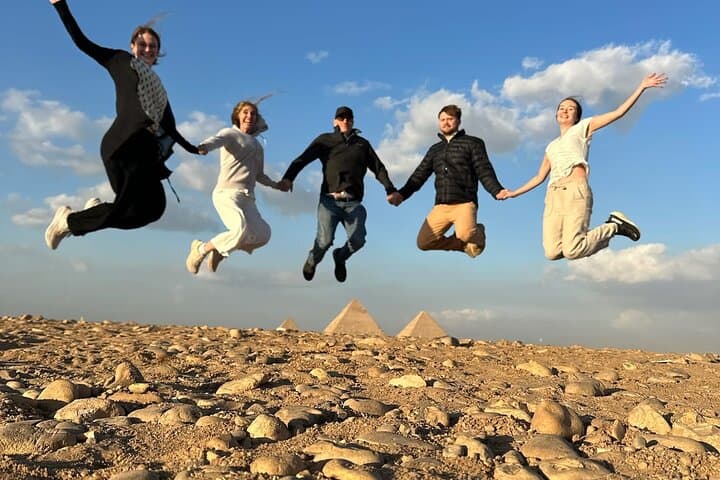
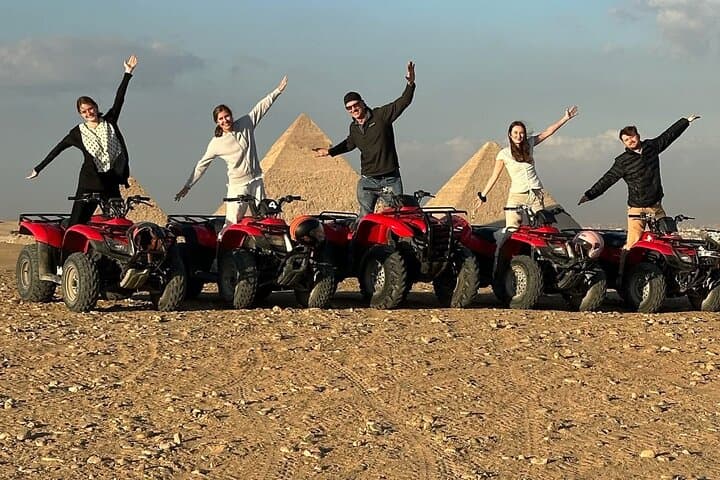
Expect guided visits to the Valley Temple, the option to enter a pyramid chamber with a special ticket, a 30‑minute camel perimeter ride, and an included local lunch. Photography stops are frequent: early morning or late afternoon light is best for depth and contrast. Wear sturdy shoes for uneven stone surfaces and modest clothing for respect at heritage sites.
Practical note: plan for six hours on site including transport; bring sun protection, cash for tips and small purchases, and minimal bags — security and narrow internal passageways inside pyramids limit what you can carry. Move deliberately, listen to your Egyptologist guide, and allow time to simply stand and let the desert push you forward into the past.
easy.
6 hours.
Suitable for most fitness levels; requires walking on uneven stone, short climbs and standing for extended periods.
Interior access is available on certain ticket options but subject to limited availability and physical constraints; check if your chosen package includes pyramid entry.
Yes — rides are run by local handlers and usually last around 30 minutes; follow the handler’s instructions and wear comfortable, secure footwear.
Van pickup and some plateau areas are accessible, but internal pyramid chambers and some temple areas have steps and tight passages that are not suitable for wheelchairs.
Tipping is customary; plan modest cash tips for your Egyptologist guide, driver and camel handler according to service and group size.
The Giza pyramids were built in the Fourth Dynasty (around 2600–2500 BCE); Khufu’s Great Pyramid was originally ~146 m tall and served as a royal tomb.
Heavy visitation puts pressure on stone surfaces and local ecosystems; follow designated paths, avoid touching carved surfaces and reduce plastic waste to support preservation.
Cairo Portal Tours operates guided outdoor trips and adventures with an emphasis on safety, stewardship, and memorable experiences.
The sun lifts off the desert like a slow, warm hand as you step out of an air‑conditioned van onto the Giza Plateau. Stone slopes rise from baked sand; the Great Pyramid looms ahead, its weathered blocks holding the hush of millennia. Camels wait with patient huffs at the edge of the tourist tracks, and the Sphinx stares eastward, as if timing each visitor’s shadow.
The sun lifts off the desert like a slow, warm hand as you step out of an air‑conditioned van onto the Giza Plateau. Stone slopes rise from baked sand; the Great Pyramid looms ahead, its weathered blocks holding the hush of millennia. Camels wait with patient huffs at the edge of the tourist tracks, and the Sphinx stares eastward, as if timing each visitor’s shadow.
This full‑day tour threads history and geography into a single rhythm. The pyramids date to the Fourth Dynasty (circa 2600–2500 BCE), and their core limestone and casing stones tell a story of quarrying, transport and unmatched engineering. The plateau sits on Eocene limestone; beneath the monuments are ancient quarry scars and pathways cut by workers centuries ago. Culturally, Giza has long been a crossroads — Bedouin camel handlers, Coptic and Islamic sites, and modern Cairo’s bustle converge here.
Expect guided visits to the Valley Temple, the option to enter a pyramid chamber with a special ticket, a 30‑minute camel perimeter ride, and an included local lunch. Photography stops are frequent: early morning or late afternoon light is best for depth and contrast. Wear sturdy shoes for uneven stone surfaces and modest clothing for respect at heritage sites.
Practical note: plan for six hours on site including transport; bring sun protection, cash for tips and small purchases, and minimal bags — security and narrow internal passageways inside pyramids limit what you can carry. Move deliberately, listen to your Egyptologist guide, and allow time to simply stand and let the desert push you forward into the past.