THE ADVENTURE COLLECTIVE® · Independent discovery and booking for outdoor travel

Spend five focused hours on the Giza Plateau with an Egyptologist, taking in the Great Pyramid, the Sphinx, a camel ride, and lunch. This half‑day tour combines readable history, close-up views, and practical tips for beating the heat and crowds.
Spend five focused hours on the Giza Plateau with an Egyptologist, taking in the Great Pyramid, the Sphinx, a camel ride, and lunch. This half‑day tour combines readable history, close-up views, and practical tips for beating the heat and crowds.
You step off the shuttle onto sun-baked stone and the plateau opens like a stage: the Great Pyramid looms to your right, the Sphinx keeps its guarded stare to the left, and a line of camels waits to sway you across ancient sand.
Verified experiences and guided adventures in the surrounding area.
You step off the shuttle onto sun-baked stone and the plateau opens like a stage: the Great Pyramid looms to your right, the Sphinx keeps its guarded stare to the left, and a line of camels waits to sway you across ancient sand.
This compact, five‑hour tour pairs front-row views with concise context. The Great Pyramid of Khufu dates to Egypt’s Fourth Dynasty (around 2580–2560 BCE) and sits on the same Nile-clay bedrock that made this site politically and ritually central for millennia. The Sphinx—often linked with Khafre—wears the scars of erosion and restoration; its limestone face and the quarried blocks of the pyramids reveal both geological layering and the immense human effort behind the monuments.
Culturally, the plateau has been a focus of pilgrimage, excavation, and national identity; recent conservation and the nearby Grand Egyptian Museum shape how visitors experience the site today. Expect a mix of guided interpretation, short walks across gravelly footing, and a camel ride that gives the plateau a slower rhythm.
Practical guidance: start early or later in the afternoon to avoid the peak sun, carry sun protection and water, and bring small bills for entrance fees, photo permits, and tips. Footwear should handle uneven, dusty surfaces. Respect barriers around tombs and the Sphinx—photo opportunities are excellent but regulated. With an Egyptologist-led commentary, a light lunch, and a camel segment, this half‑day tour lets you absorb history without wearing you out—ideal for travelers who want a focused, on-the-ground introduction to Giza.
moderate.
5 hours.
Light to moderate fitness: you’ll be walking on uneven ground with brief climbs and standing during explanations.
Access inside the Great Pyramid is limited, may require a separate ticket, and can be cramped and warm—check current access rules before booking.
Camel rides are typically optional; handlers guide the animals but watch your step mounting and dismounting and avoid sudden movements.
Basic restroom facilities and snack stands exist near the plateau entrances; this tour includes a light lunch but bring snacks if you have dietary needs.
Bring small cash (Egyptian pounds) for permits, tips, and vendors; some sites accept cards, but cash is faster and more reliable.
The major pyramids at Giza were built in the 4th Dynasty (c. 2600–2500 BCE) as monumental tombs; the Sphinx is usually attributed to Khafre’s reign.
Ongoing restoration and visitor management aim to protect fragile limestone surfaces—stay on designated paths and avoid touching carved stone.
You step off the shuttle onto sun-baked stone and the plateau opens like a stage: the Great Pyramid looms to your right, the Sphinx keeps its guarded stare to the left, and a line of camels waits to sway you across ancient sand.
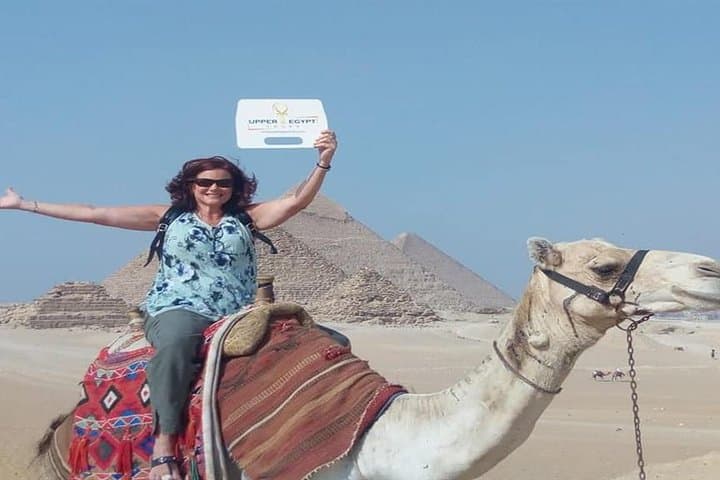
You step off the shuttle onto sun-baked stone and the plateau opens like a stage: the Great Pyramid looms to your right, the Sphinx keeps its guarded stare to the left, and a line of camels waits to sway you across ancient sand.
This compact, five‑hour tour pairs front-row views with concise context. The Great Pyramid of Khufu dates to Egypt’s Fourth Dynasty (around 2580–2560 BCE) and sits on the same Nile-clay bedrock that made this site politically and ritually central for millennia. The Sphinx—often linked with Khafre—wears the scars of erosion and restoration; its limestone face and the quarried blocks of the pyramids reveal both geological layering and the immense human effort behind the monuments.
Culturally, the plateau has been a focus of pilgrimage, excavation, and national identity; recent conservation and the nearby Grand Egyptian Museum shape how visitors experience the site today. Expect a mix of guided interpretation, short walks across gravelly footing, and a camel ride that gives the plateau a slower rhythm.
Practical guidance: start early or later in the afternoon to avoid the peak sun, carry sun protection and water, and bring small bills for entrance fees, photo permits, and tips. Footwear should handle uneven, dusty surfaces. Respect barriers around tombs and the Sphinx—photo opportunities are excellent but regulated. With an Egyptologist-led commentary, a light lunch, and a camel segment, this half‑day tour lets you absorb history without wearing you out—ideal for travelers who want a focused, on-the-ground introduction to Giza.