THE ADVENTURE COLLECTIVE® · Independent discovery and booking for outdoor travel

Spend four focused hours at Giza: walk among the three great pyramids, view the inscrutable Sphinx, and take a camel ride across the plateau. This half-day tour pairs archaeological context with practical tips for a safe, memorable visit.
Spend four focused hours at Giza: walk among the three great pyramids, view the inscrutable Sphinx, and take a camel ride across the plateau. This half-day tour pairs archaeological context with practical tips for a safe, memorable visit.
Sunlight slices the desert flat; sand presses heat against the soles of your shoes as you round the plateau and the Great Pyramid resolves from the shimmer. A half-day at Giza condenses millennia into four hours: a walk past limestone blocks hewn with ancient precision, a camel’s slow step offering a different rhythm, and the Sphinx’s limestone face holding a history that rarely speaks but always watches.
Verified experiences and guided adventures in the surrounding area.
Operated by MyEgyTours · Giza, Giza Governorate
Sunlight slices the desert flat; sand presses heat against the soles of your shoes as you round the plateau and the Great Pyramid resolves from the shimmer. A half-day at Giza condenses millennia into four hours: a walk past limestone blocks hewn with ancient precision, a camel’s slow step offering a different rhythm, and the Sphinx’s limestone face holding a history that rarely speaks but always watches.
The three main pyramids—Khufu (Cheops), Khafre (Chephren) and Menkaure (Mykerinus)—date to Egypt’s Fourth Dynasty (around 2600–2500 BCE). The plateau sits on Tura and Mokattam limestone, carved and transported by a workforce organized by state. Nearby, the Valley Temple shows the practical side of funerary culture: mummification practices and mortuary rituals that sustained pharaonic afterlife beliefs.
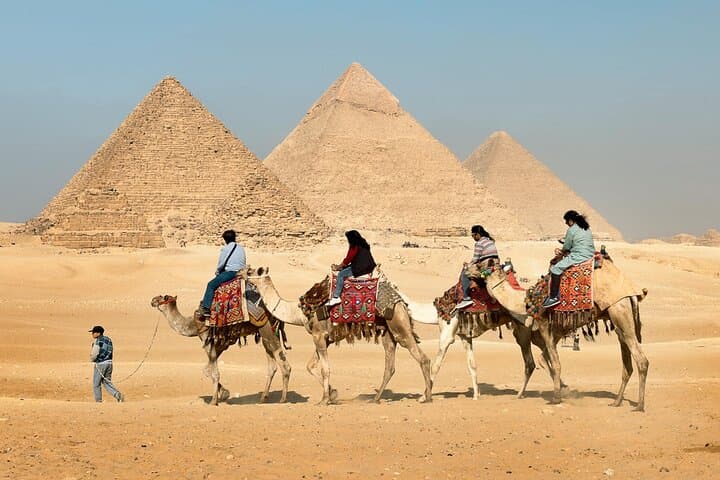
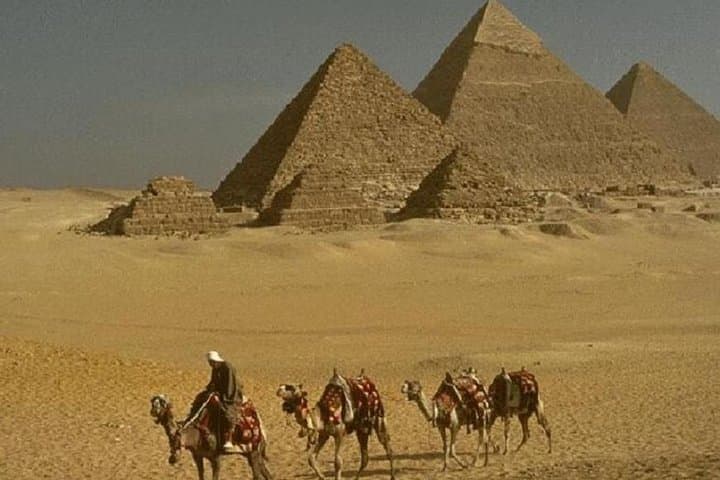
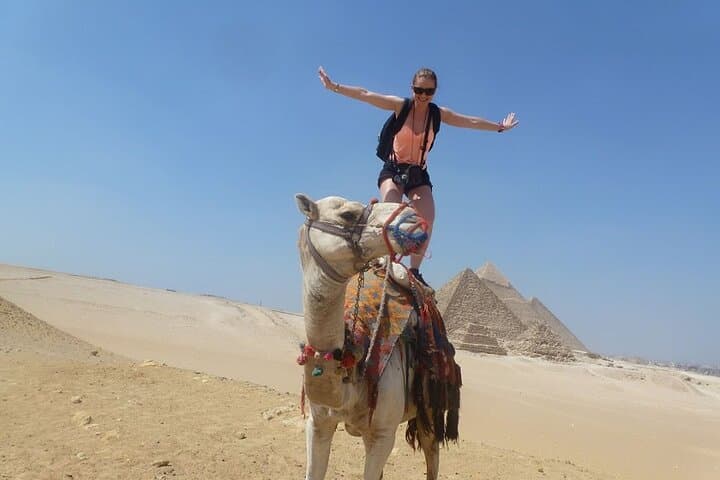
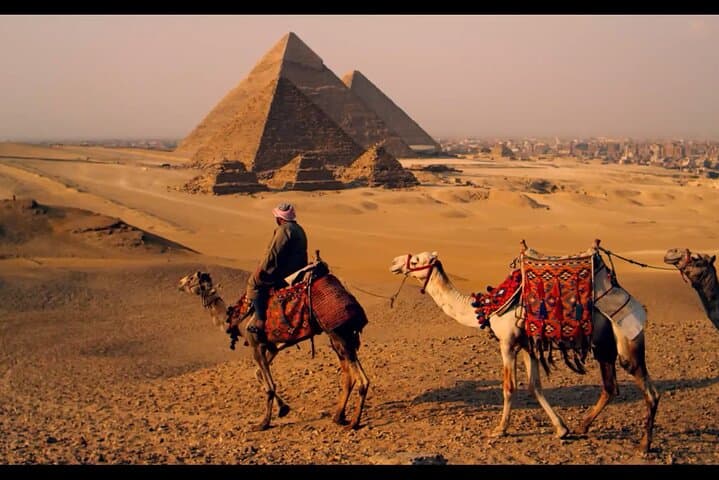
Local guides bring context: the Sphinx’s association with Khafre, the later re-use of blocks in medieval Cairo, and modern conservation challenges. A camel ride gives you a vantage that cameras miss—the slow rise and fall of the desert horizon and the city of Cairo breathing at the plateau’s edge.
Plan for heat, dust, and steady walking on uneven stone. Morning departures are cooler and less crowded; bring sun protection, comfortable closed-toe shoes, and a small daypack for water and camera. Expect short guided stops—the Pyramids’ front faces, the Sphinx and Valley Temple—and time for photos at the panoramic viewpoint. Respect barrier lines: climbing is illegal and damages fragile masonry. With an informed guide and light planning, this half-day tour delivers a compact, vivid introduction to one of the world’s most enduring archaeological landscapes.
easy.
4 hours.
Minimal fitness required; involves walking on uneven stone and mounting a camel for a short ride.
Most standard half‑day tours include exterior visits; entry inside the Great Pyramid usually requires a separate ticket and is limited—confirm with your operator.
Yes—short, guided camel rides on level ground are common; inform the operator of mobility concerns and follow the handler’s instructions.
Some vendors accept cards, but carry small Egyptian pounds for tips, small purchases, or restroom fees.
Primary viewpoints are reachable, and some operators provide accessible transport, but interior pyramid access and sand paths limit full mobility; check in advance.
The Great Pyramid of Khufu was built around 2560 BCE and is the only surviving structure from the ancient Seven Wonders; the plateau served as both necropolis and monument complex for Old Kingdom pharaohs.
Heavy visitation and past souvenir hunting stressed the site; modern conservation restricts access, prohibits climbing, and emphasizes respectful photography to protect fragile stone.
MyEgyTours operates guided outdoor trips and adventures with an emphasis on safety, stewardship, and memorable experiences.
Sunlight slices the desert flat; sand presses heat against the soles of your shoes as you round the plateau and the Great Pyramid resolves from the shimmer. A half-day at Giza condenses millennia into four hours: a walk past limestone blocks hewn with ancient precision, a camel’s slow step offering a different rhythm, and the Sphinx’s limestone face holding a history that rarely speaks but always watches.
Sunlight slices the desert flat; sand presses heat against the soles of your shoes as you round the plateau and the Great Pyramid resolves from the shimmer. A half-day at Giza condenses millennia into four hours: a walk past limestone blocks hewn with ancient precision, a camel’s slow step offering a different rhythm, and the Sphinx’s limestone face holding a history that rarely speaks but always watches.
The three main pyramids—Khufu (Cheops), Khafre (Chephren) and Menkaure (Mykerinus)—date to Egypt’s Fourth Dynasty (around 2600–2500 BCE). The plateau sits on Tura and Mokattam limestone, carved and transported by a workforce organized by state. Nearby, the Valley Temple shows the practical side of funerary culture: mummification practices and mortuary rituals that sustained pharaonic afterlife beliefs.
Local guides bring context: the Sphinx’s association with Khafre, the later re-use of blocks in medieval Cairo, and modern conservation challenges. A camel ride gives you a vantage that cameras miss—the slow rise and fall of the desert horizon and the city of Cairo breathing at the plateau’s edge.
Plan for heat, dust, and steady walking on uneven stone. Morning departures are cooler and less crowded; bring sun protection, comfortable closed-toe shoes, and a small daypack for water and camera. Expect short guided stops—the Pyramids’ front faces, the Sphinx and Valley Temple—and time for photos at the panoramic viewpoint. Respect barrier lines: climbing is illegal and damages fragile masonry. With an informed guide and light planning, this half-day tour delivers a compact, vivid introduction to one of the world’s most enduring archaeological landscapes.