THE ADVENTURE COLLECTIVE® · Independent discovery and booking for outdoor travel

Experience the scale of the Giza Plateau in the morning and the museum-quality artifacts at the Grand Egyptian Museum in the afternoon. This private, full-day guided tour pairs outdoor exploration with curated archaeology for a compact, insightful day.
Experience the scale of the Giza Plateau in the morning and the museum-quality artifacts at the Grand Egyptian Museum in the afternoon. This private, full-day guided tour pairs outdoor exploration with curated archaeology for a compact, insightful day.
You step out of an air-conditioned van into a wind that has polished stone for four millennia—sand brushes your ankles and the sun throws hard light across angular shadows. The Great Pyramid dominates the horizon, its blocks calibrated by hands that read the stars; the Sphinx watches the approach like a slow-moving guardian.
Verified experiences and guided adventures in the surrounding area.
Operated by Oracle Tours Egypt · Giza, Giza Governorate
You step out of an air-conditioned van into a wind that has polished stone for four millennia—sand brushes your ankles and the sun throws hard light across angular shadows. The Great Pyramid dominates the horizon, its blocks calibrated by hands that read the stars; the Sphinx watches the approach like a slow-moving guardian.
This route stitches visible history to modern archaeology: the Giza Plateau is limestone sitting above Nile sediments, carved and quarried through successive dynasties. Nearby, the Grand Egyptian Museum (GEM) gathers artifacts from Predynastic coffins to Tutankhamun’s funerary mask, offering context to the pyramids’ funerary landscape. Local culture remains active—vendors, camel handlers, and preservation teams all shape the visitor experience.
Expect wide, uneven walking around the pyramids with dusty paths and short climbs for better viewpoints; GEM provides climate-controlled galleries and curated displays. Your Egyptologist guide narrates construction theories, funerary customs, and recent conservation work while pointing out details standard guidebooks miss.
Practical guidance: arrive early to avoid mid-day heat, carry sun protection and a refillable water bottle, and wear shoes with solid soles for gravel and steps. Photography is permitted at most outdoor points but respect restricted areas and signage inside the GEM. The tour includes an air-conditioned vehicle, lunch, bottled water, and hotel transfers; note the site uses shuttle vans between drop-off and the plateau.
Balanced between majestic monuments and curated museum storytelling, this full-day itinerary delivers both the scale of ancient engineering and the intimate artifacts that explain why those stones still matter.
easy.
8 hours.
Suitable for most travelers who can walk short distances on uneven ground; minimal sustained exertion required.
This tour includes transportation and a guide; verify whether entrance tickets are provided during booking—some departures include GEM admission while pyramid access may require separate onsite fees.
Yes; the itinerary is low-impact but involves walking on uneven ground—infants can use strollers for short stretches and older guests shouldavoid long standing periods or climbing high steps.
Photography policies vary by exhibit and artifact; casual photography is typically allowed, but flash, tripods, and certain rooms may be restricted—follow signage and your guide’s instructions.
Expect several short walks across gravel and limestone and low climbs to viewpoints; overall exertion is light but requires steady footing and mobility on uneven surfaces.
The Giza Plateau records royal funerary practices dating to Egypt’s Old Kingdom (c. 2600–2500 BCE); recent archaeological work at the GEM centralizes artifacts long-held in museums and caches across Egypt.
Ongoing conservation at both the plateau and GEM focuses on stabilizing structures and controlling visitor impact; visitors can help by staying on marked paths and avoiding touching ancient stone.
Oracle Tours Egypt operates guided outdoor trips and adventures with an emphasis on safety, stewardship, and memorable experiences.
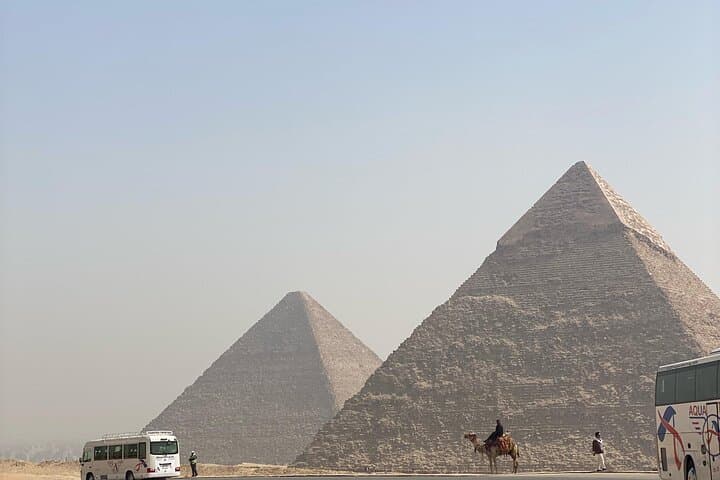
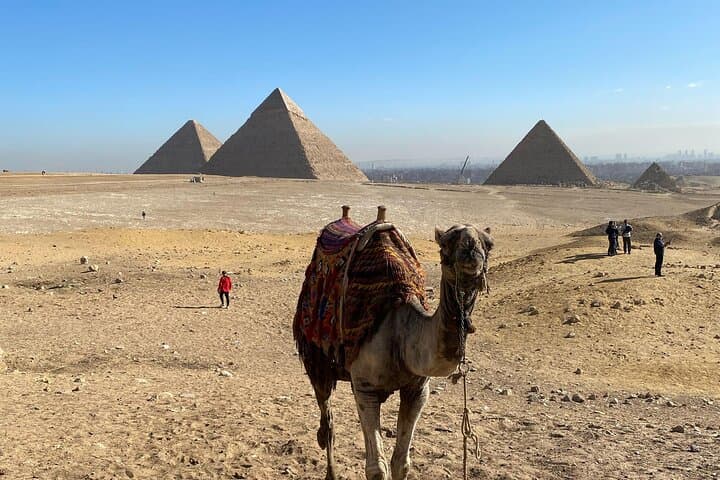
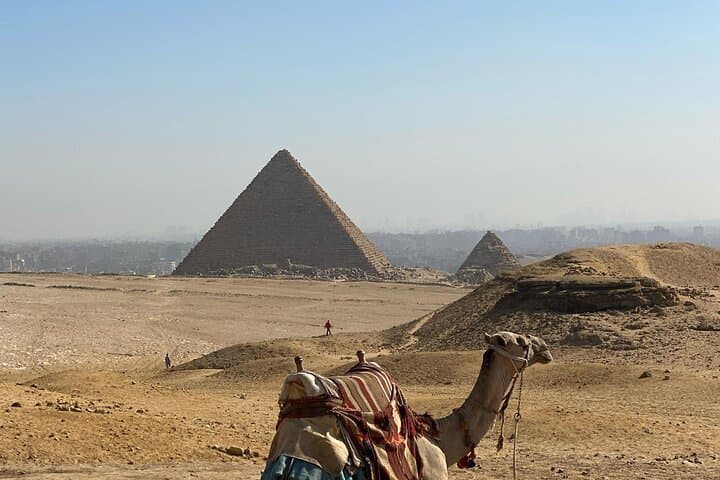
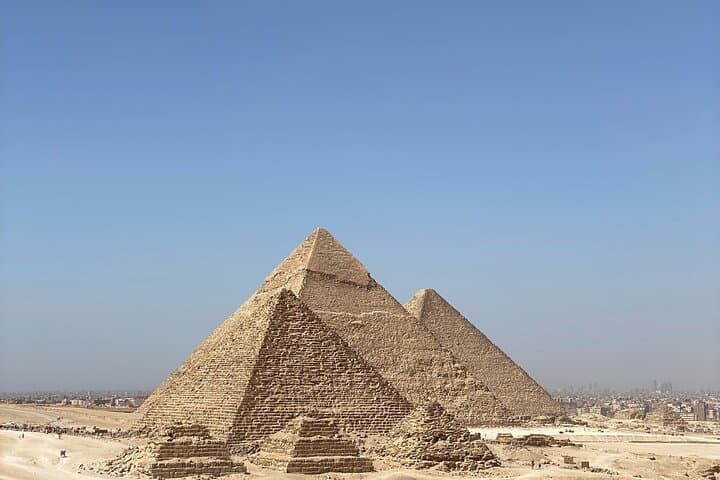
You step out of an air-conditioned van into a wind that has polished stone for four millennia—sand brushes your ankles and the sun throws hard light across angular shadows. The Great Pyramid dominates the horizon, its blocks calibrated by hands that read the stars; the Sphinx watches the approach like a slow-moving guardian.
You step out of an air-conditioned van into a wind that has polished stone for four millennia—sand brushes your ankles and the sun throws hard light across angular shadows. The Great Pyramid dominates the horizon, its blocks calibrated by hands that read the stars; the Sphinx watches the approach like a slow-moving guardian.
This route stitches visible history to modern archaeology: the Giza Plateau is limestone sitting above Nile sediments, carved and quarried through successive dynasties. Nearby, the Grand Egyptian Museum (GEM) gathers artifacts from Predynastic coffins to Tutankhamun’s funerary mask, offering context to the pyramids’ funerary landscape. Local culture remains active—vendors, camel handlers, and preservation teams all shape the visitor experience.
Expect wide, uneven walking around the pyramids with dusty paths and short climbs for better viewpoints; GEM provides climate-controlled galleries and curated displays. Your Egyptologist guide narrates construction theories, funerary customs, and recent conservation work while pointing out details standard guidebooks miss.
Practical guidance: arrive early to avoid mid-day heat, carry sun protection and a refillable water bottle, and wear shoes with solid soles for gravel and steps. Photography is permitted at most outdoor points but respect restricted areas and signage inside the GEM. The tour includes an air-conditioned vehicle, lunch, bottled water, and hotel transfers; note the site uses shuttle vans between drop-off and the plateau.
Balanced between majestic monuments and curated museum storytelling, this full-day itinerary delivers both the scale of ancient engineering and the intimate artifacts that explain why those stones still matter.