THE ADVENTURE COLLECTIVE® · Independent discovery and booking for outdoor travel

Stand before the Great Pyramid, meet the Sphinx, and then walk through five millennia of artifacts at the Egyptian Museum — all in one carefully paced, private day. Expect desert light, uneven stone underfoot, and insider context from a knowledgeable guide.
Stand before the Great Pyramid, meet the Sphinx, and then walk through five millennia of artifacts at the Egyptian Museum — all in one carefully paced, private day. Expect desert light, uneven stone underfoot, and insider context from a knowledgeable guide.
You arrive at dawn on the Giza Plateau and the light slides down the faces of the Great Pyramid like an unveiling. Sand crunches underfoot, the air has a dry clarity, and the stone seems to hold its own temperature — older than the city and stubbornly present.
Verified experiences and guided adventures in the surrounding area.
Operated by Gate Egypt · Cairo, Cairo Governorate
You arrive at dawn on the Giza Plateau and the light slides down the faces of the Great Pyramid like an unveiling. Sand crunches underfoot, the air has a dry clarity, and the stone seems to hold its own temperature — older than the city and stubbornly present.
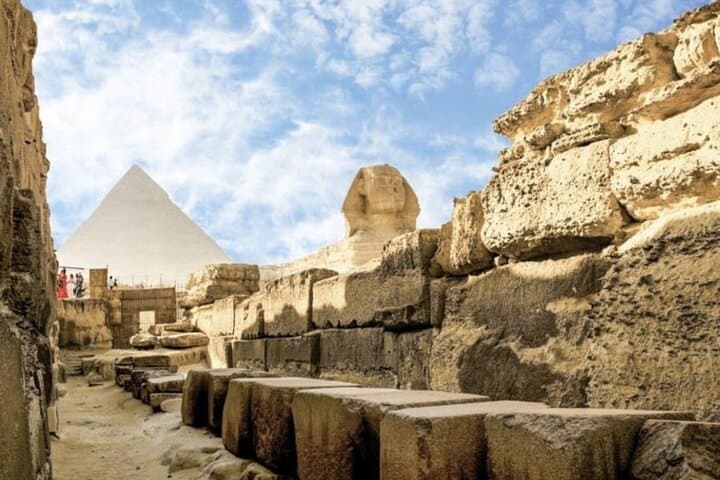
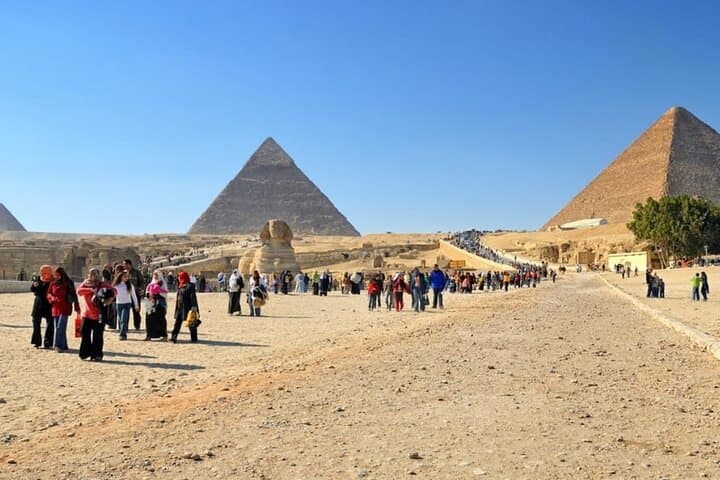
This full-day route pairs the raw geometry of the Giza necropolis with the curated corridors of the Egyptian Museum in downtown Cairo. The pyramids date to the Fourth Dynasty (c. 2600 BCE) and were engineered from local limestone and granite; the plateau’s geology tells a story of ancient sea beds now fossilized into monumental blocks. The Sphinx, carved of a single limestone ridge, watches the horizon with a half-ruined grace.
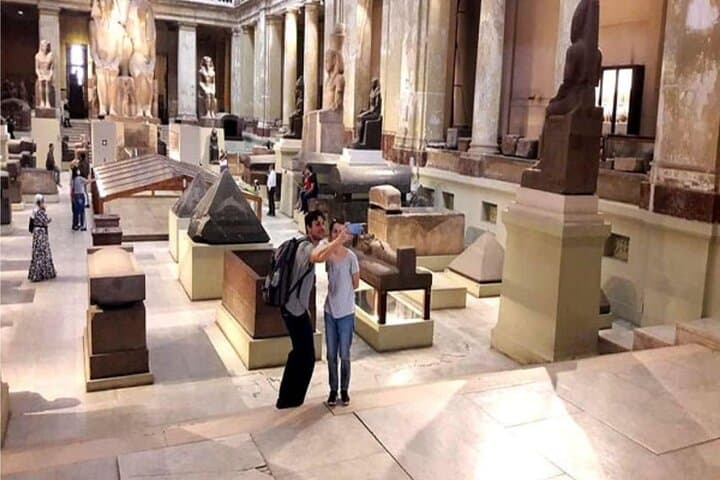
Culturally, the day moves between lived Cairo — vendors, taxis, and modern neighborhoods — and millennia of royal ritual. Guides illuminate burial practices, the evolution of hieroglyphic script, and the later rediscovery of Tutankhamun’s tomb, whose treasures remain a draw at the museum.
Practical planning is straightforward: expect 8–9 hours with private transport, museum entry fees included, and a restaurant lunch. Walks are mostly on hard-packed sand or museum floors; bring sun protection, comfortable shoes, and a reusable water bottle. Photography is welcomed on the plateau but guarded in some museum halls; follow your guide’s instructions.
Timing matters — mornings on the plateau are cooler and less crowded, while late afternoons offer the best low-angle light for photos. Respect signage: climbing the pyramids is both illegal and damaging. With a sensible pace, this is a day that balances vivid outdoor moments with deep historical context.
easy.
8–9 hours.
Able to walk and stand for several hours on uneven ground; minimal climbs required.
Yes — the tour includes entrance fees to the Giza Pyramids, Sphinx viewpoint, and the Egyptian Museum as listed.
Yes — private transportation to and from your Cairo hotel is included; confirm your pickup point when booking.
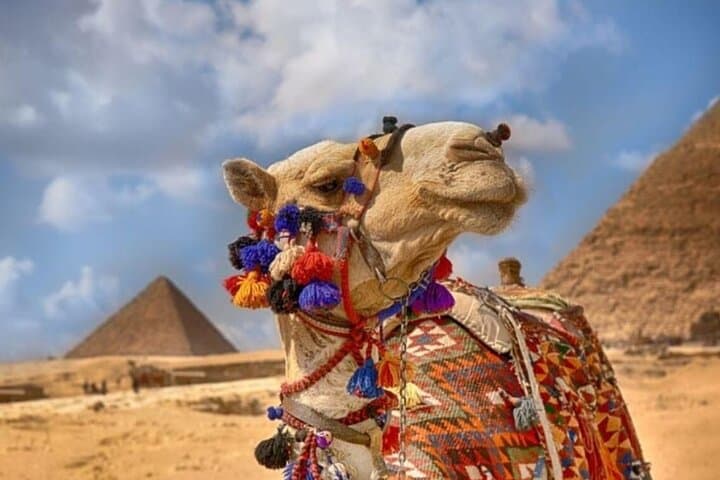
No — camel rides are typically optional, pay-on-site activities and are not included in the base price.
Mobile or paper tickets are accepted; follow your guide’s instructions for entry and any camera restrictions inside exhibit halls.
The Great Pyramid of Khufu was built c. 2580–2560 BCE and exemplifies precise stone-cutting and alignment techniques of ancient Egypt.
Air pollution, tourism pressure, and erosion threaten limestone facades; follow guidance, stay on marked paths, and avoid touching exposed stone.
Gate Egypt operates guided outdoor trips and adventures with an emphasis on safety, stewardship, and memorable experiences.
You arrive at dawn on the Giza Plateau and the light slides down the faces of the Great Pyramid like an unveiling. Sand crunches underfoot, the air has a dry clarity, and the stone seems to hold its own temperature — older than the city and stubbornly present.
You arrive at dawn on the Giza Plateau and the light slides down the faces of the Great Pyramid like an unveiling. Sand crunches underfoot, the air has a dry clarity, and the stone seems to hold its own temperature — older than the city and stubbornly present.
This full-day route pairs the raw geometry of the Giza necropolis with the curated corridors of the Egyptian Museum in downtown Cairo. The pyramids date to the Fourth Dynasty (c. 2600 BCE) and were engineered from local limestone and granite; the plateau’s geology tells a story of ancient sea beds now fossilized into monumental blocks. The Sphinx, carved of a single limestone ridge, watches the horizon with a half-ruined grace.
Culturally, the day moves between lived Cairo — vendors, taxis, and modern neighborhoods — and millennia of royal ritual. Guides illuminate burial practices, the evolution of hieroglyphic script, and the later rediscovery of Tutankhamun’s tomb, whose treasures remain a draw at the museum.
Practical planning is straightforward: expect 8–9 hours with private transport, museum entry fees included, and a restaurant lunch. Walks are mostly on hard-packed sand or museum floors; bring sun protection, comfortable shoes, and a reusable water bottle. Photography is welcomed on the plateau but guarded in some museum halls; follow your guide’s instructions.
Timing matters — mornings on the plateau are cooler and less crowded, while late afternoons offer the best low-angle light for photos. Respect signage: climbing the pyramids is both illegal and damaging. With a sensible pace, this is a day that balances vivid outdoor moments with deep historical context.