THE ADVENTURE COLLECTIVE® · Independent discovery and booking for outdoor travel

Pair ancient engineering with modern adrenaline: a guided visit to the Giza Plateau followed by optional camel rides and an ATV quad-bike circuit across the surrounding desert—plus an optional local lunch. Perfect for travelers who want history and a little speed in one day.
Pair ancient engineering with modern adrenaline: a guided visit to the Giza Plateau followed by optional camel rides and an ATV quad-bike circuit across the surrounding desert—plus an optional local lunch. Perfect for travelers who want history and a little speed in one day.
You arrive on the Giza Plateau as sunlight slides across limestone faces, sand whispering underfoot while the Great Pyramid looms like a silent organizer of the horizon. The visitor centre eases you into the scale—maps, models and shaded viewpoints—before you step onto the open desert where the Sphinx keeps its eternal watch.
Verified experiences and guided adventures in the surrounding area.
Operated by Travel Gate Tours · Giza, Giza Governorate
You arrive on the Giza Plateau as sunlight slides across limestone faces, sand whispering underfoot while the Great Pyramid looms like a silent organizer of the horizon. The visitor centre eases you into the scale—maps, models and shaded viewpoints—before you step onto the open desert where the Sphinx keeps its eternal watch.
These stone giants are more than monuments; they are the products of 4,500 years of human labour and local geology. The plateau’s limestone beds and wind-scoured sandstone explain both the pyramids’ pale facades and the Sphinx’s weathered profile. Nearby villages and Cairo’s bazaars echo millennia of culture: artisans, guide traditions and shared midday meals that link past and present.
Expect an itinerary that balances interpretation with action: a guided station at Panorama Point for photographs, close approaches to Menkaure, Khafre and Khufu, and a sober moment before the Sphinx. Then the scene shifts—revs, throttle and dust—as you swap footprints for quad-bike tracks. The desert here dares you forward; dunes push back playfully, offering short climbs and fast flats framed by pyramid silhouettes.
Practicalities matter. Plan for full sun, loose sand underfoot and limited shade—bring sun protection, closed shoes suitable for loose terrain, and a water bottle. Choose morning departures to avoid the hottest hours and check if pyramid entry or camel and ATV options are included in your chosen package. A licensed guide helps with logistics, safety briefings and context—so the day reads as both discovery and responsibly run adventure.
moderate.
5–6 hours.
Suitable for most fitness levels; requires comfortable walking on uneven ground and ability to mount a camel or handle an ATV for short bursts.
Some packages include pyramid entry; others offer it as an add-on—confirm at booking and bring ID, as tickets are sometimes issued on site.
Operators provide a safety briefing and basic instruction; the tracks are suited to novices but you must follow the guide and wear provided protective gear.
Yes—many tours offer both as optional experiences, but each may be priced separately; check your selected package details before departure.
Light, breathable layers, closed shoes, a hat and a scarf for wind/sand are recommended; modest dress is advised for cultural sites.
The Giza pyramids were built during Egypt’s Old Kingdom (c. 2600–2500 BCE) as part of larger funerary complexes including temples and subsidiary pyramids.
Heavy visitation stresses the fragile plateau and sandstone; stick to marked paths, avoid climbing on monuments and support guides who follow site regulations.
Travel Gate Tours operates guided outdoor trips and adventures with an emphasis on safety, stewardship, and memorable experiences.
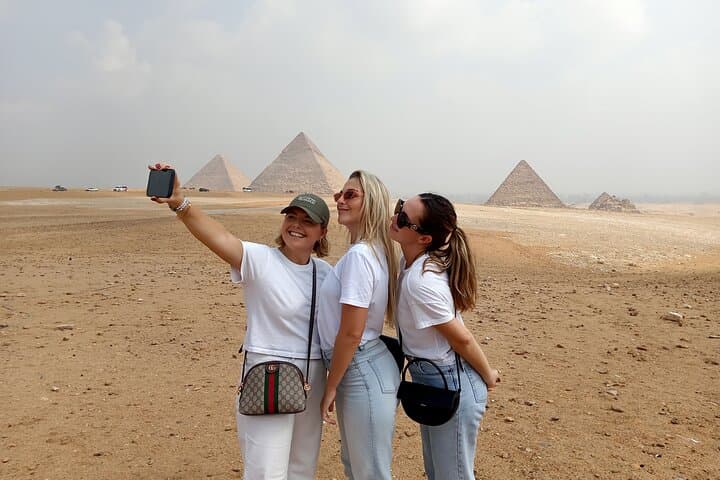


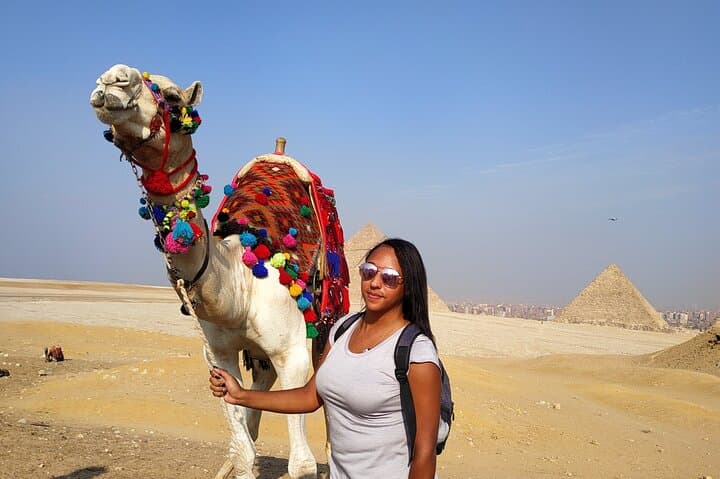
You arrive on the Giza Plateau as sunlight slides across limestone faces, sand whispering underfoot while the Great Pyramid looms like a silent organizer of the horizon. The visitor centre eases you into the scale—maps, models and shaded viewpoints—before you step onto the open desert where the Sphinx keeps its eternal watch.
You arrive on the Giza Plateau as sunlight slides across limestone faces, sand whispering underfoot while the Great Pyramid looms like a silent organizer of the horizon. The visitor centre eases you into the scale—maps, models and shaded viewpoints—before you step onto the open desert where the Sphinx keeps its eternal watch.
These stone giants are more than monuments; they are the products of 4,500 years of human labour and local geology. The plateau’s limestone beds and wind-scoured sandstone explain both the pyramids’ pale facades and the Sphinx’s weathered profile. Nearby villages and Cairo’s bazaars echo millennia of culture: artisans, guide traditions and shared midday meals that link past and present.
Expect an itinerary that balances interpretation with action: a guided station at Panorama Point for photographs, close approaches to Menkaure, Khafre and Khufu, and a sober moment before the Sphinx. Then the scene shifts—revs, throttle and dust—as you swap footprints for quad-bike tracks. The desert here dares you forward; dunes push back playfully, offering short climbs and fast flats framed by pyramid silhouettes.
Practicalities matter. Plan for full sun, loose sand underfoot and limited shade—bring sun protection, closed shoes suitable for loose terrain, and a water bottle. Choose morning departures to avoid the hottest hours and check if pyramid entry or camel and ATV options are included in your chosen package. A licensed guide helps with logistics, safety briefings and context—so the day reads as both discovery and responsibly run adventure.