THE ADVENTURE COLLECTIVE® · Independent discovery and booking for outdoor travel

Stand on the Giza Plateau where sunlit limestone blocks meet endless desert air. This private half-day tour pairs expert interpretation of the pyramids and Sphinx with a short camel ride and practical tips for seeing the site well.
Stand on the Giza Plateau where sunlit limestone blocks meet endless desert air. This private half-day tour pairs expert interpretation of the pyramids and Sphinx with a short camel ride and practical tips for seeing the site well.
You step from the car onto ochre sand and the plateau opens: three massive steps of stone catch the sun while a lone camel chews cud and the wind pushes loose grit against ancient faces. The Great Pyramid looms nearest, its blockwork and shadowed joints revealing geology and human ambition in equal measure. Nearby, the Sphinx watches with a worn but unmistakable profile.
Verified experiences and guided adventures in the surrounding area.
Operated by Unlock Egypt tours by Tamer · Cairo, Cairo Governorate
You step from the car onto ochre sand and the plateau opens: three massive steps of stone catch the sun while a lone camel chews cud and the wind pushes loose grit against ancient faces. The Great Pyramid looms nearest, its blockwork and shadowed joints revealing geology and human ambition in equal measure. Nearby, the Sphinx watches with a worn but unmistakable profile.
This stretch of the Giza Plateau is geological limestone capped by wind-blown saharan deposits; the pyramids—built during Egypt's Old Kingdom around 2600–2500 BCE—are funerary monuments of Khufu, Khafre and Menkaure. The Sphinx, carved from a natural limestone outcrop, anchors the Valley Temple and offers a tangible link to ceremonial practice and craft production that supported the necropolis. Around the modern edges, vendors and camel handlers keep a centuries-old livelihood alive; papyrus sellers and small workshops offer local color if approached respectfully.
Practical guidance: plan early morning or late-afternoon departures to avoid peak heat and harsh light. Wear sturdy closed-toe shoes for uneven limestone and compacted sand, a wide-brim hat, and bring at least 1–1.5 liters of water per person for the half-day. Photography is excellent from the southwestern panoramic overlook; interior access to the Great Pyramid is sometimes restricted and may require a separate ticket—confirm with your guide. Expect short camel rides on the plateau rather than long treks; negotiate price and tip handlers through your guide.
Respect site rules: do not climb monuments, avoid littering, and follow your Egyptologist’s directions to minimize impact while making the most of this concentrated encounter with deep history.
easy.
4 hours.
Light walking on uneven, sandy and rocky surfaces—suitable for most fitness levels but not recommended for those with serious mobility issues.
This tour lists admission as included for the plateau and Sphinx; interior access to specific pyramids (like Khufu's burial chamber) may require an additional ticket—confirm with the operator.
Camel rides on this tour are typically short (10–20 minutes) across the plateau for photo opportunities rather than lengthy desert treks.
Yes—this private tour is family-friendly, though infants must sit on an adult's lap and the terrain can be tiring for very young children.
Pickup point information is requested at booking; many operators offer hotel pickup in Cairo—confirm your pickup location and time when you book.
The Great Pyramid of Khufu dates to roughly 2560 BCE and was built as a royal tomb; the Sphinx, carved from the plateau's limestone, served as a guardian figure tied to funerary rites.
Visitor pressure, erosion and souvenir trade affect the plateau—avoid climbing monuments, carry out waste, and support certified guides and local conservation initiatives.
Unlock Egypt tours by Tamer operates guided outdoor trips and adventures with an emphasis on safety, stewardship, and memorable experiences.
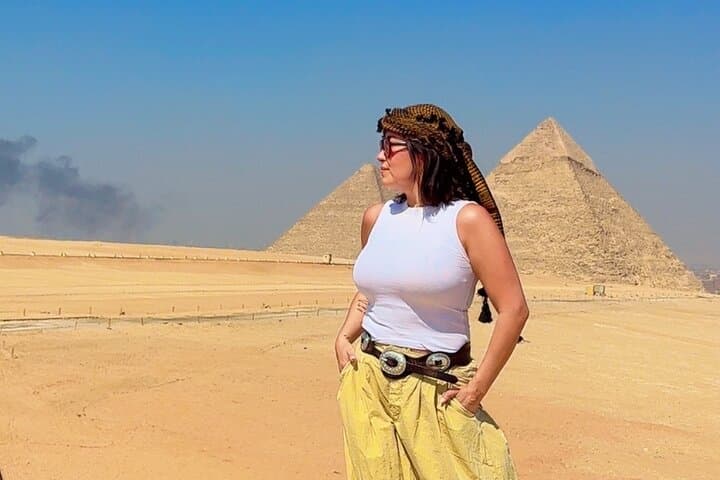
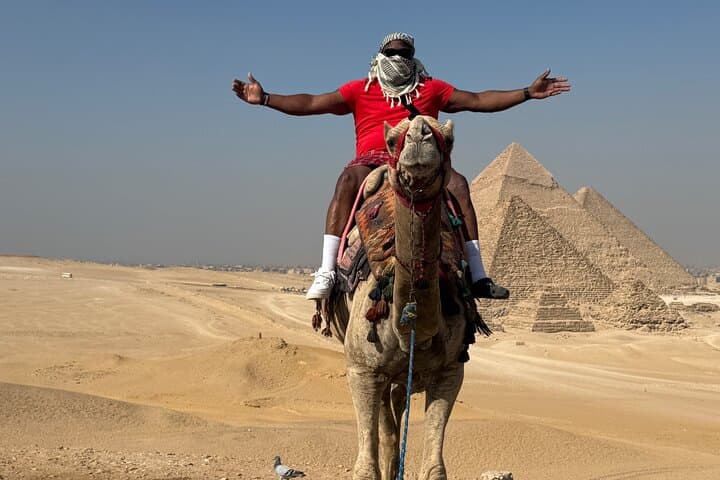
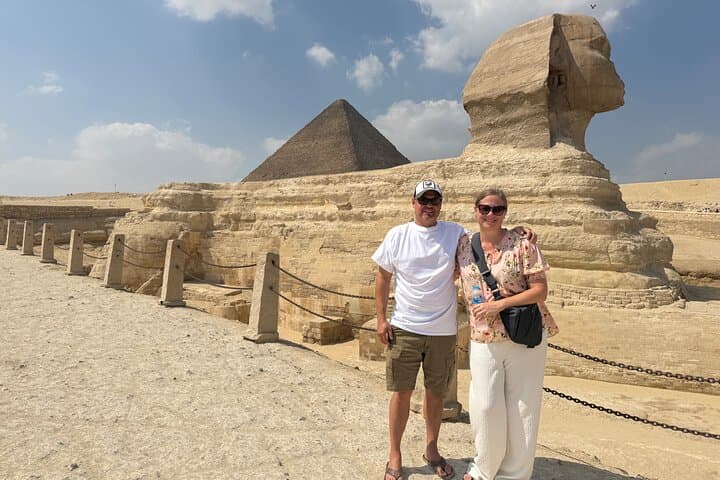
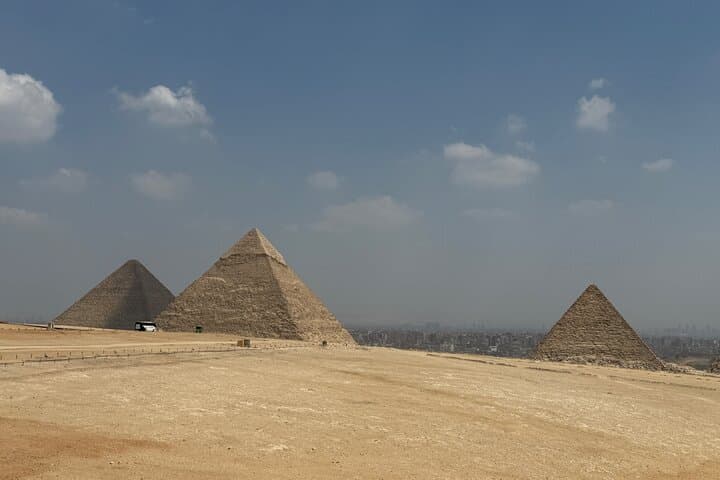
You step from the car onto ochre sand and the plateau opens: three massive steps of stone catch the sun while a lone camel chews cud and the wind pushes loose grit against ancient faces. The Great Pyramid looms nearest, its blockwork and shadowed joints revealing geology and human ambition in equal measure. Nearby, the Sphinx watches with a worn but unmistakable profile.
You step from the car onto ochre sand and the plateau opens: three massive steps of stone catch the sun while a lone camel chews cud and the wind pushes loose grit against ancient faces. The Great Pyramid looms nearest, its blockwork and shadowed joints revealing geology and human ambition in equal measure. Nearby, the Sphinx watches with a worn but unmistakable profile.
This stretch of the Giza Plateau is geological limestone capped by wind-blown saharan deposits; the pyramids—built during Egypt's Old Kingdom around 2600–2500 BCE—are funerary monuments of Khufu, Khafre and Menkaure. The Sphinx, carved from a natural limestone outcrop, anchors the Valley Temple and offers a tangible link to ceremonial practice and craft production that supported the necropolis. Around the modern edges, vendors and camel handlers keep a centuries-old livelihood alive; papyrus sellers and small workshops offer local color if approached respectfully.
Practical guidance: plan early morning or late-afternoon departures to avoid peak heat and harsh light. Wear sturdy closed-toe shoes for uneven limestone and compacted sand, a wide-brim hat, and bring at least 1–1.5 liters of water per person for the half-day. Photography is excellent from the southwestern panoramic overlook; interior access to the Great Pyramid is sometimes restricted and may require a separate ticket—confirm with your guide. Expect short camel rides on the plateau rather than long treks; negotiate price and tip handlers through your guide.
Respect site rules: do not climb monuments, avoid littering, and follow your Egyptologist’s directions to minimize impact while making the most of this concentrated encounter with deep history.