THE ADVENTURE COLLECTIVE® · Independent discovery and booking for outdoor travel

Experience the Giza Plateau up close: explore mastabas and the Sphinx, ride a camel into the desert, and drive a guided quad-bike loop beneath the pyramids. Ideal as a full-day combo of culture and adventure from Cairo.
Experience the Giza Plateau up close: explore mastabas and the Sphinx, ride a camel into the desert, and drive a guided quad-bike loop beneath the pyramids. Ideal as a full-day combo of culture and adventure from Cairo.
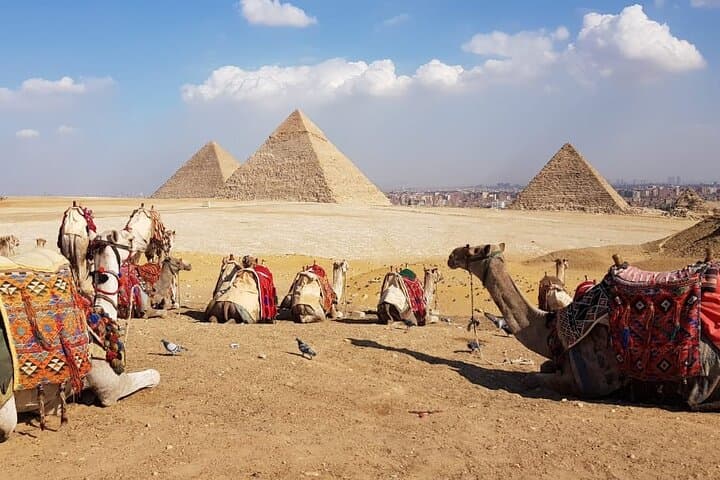
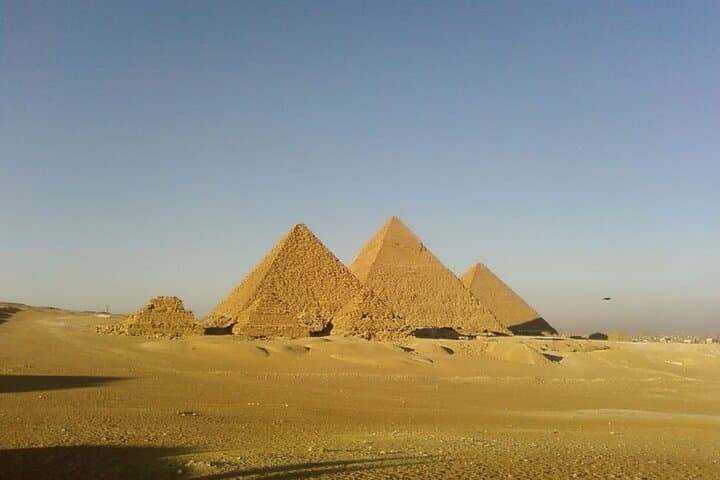
First light on the Giza Plateau throws hard edges across limestone and sand—the pyramids rise like folded stone maps, the Sphinx lifting its carved face toward a pale sun. You meet your guide in an air-conditioned vehicle, cross the city’s hum and slide into wide, wind-swept desert where camels wait and quad bikes sit with a fine dusting of sand.
Verified experiences and guided adventures in the surrounding area.
Operated by Travel all Egypt · Giza, Giza Governorate
First light on the Giza Plateau throws hard edges across limestone and sand—the pyramids rise like folded stone maps, the Sphinx lifting its carved face toward a pale sun. You meet your guide in an air-conditioned vehicle, cross the city’s hum and slide into wide, wind-swept desert where camels wait and quad bikes sit with a fine dusting of sand.
The plateau is a 4,500-year-old landscape of funerary architecture: the Great Pyramid, smaller pyramids, and mastabas that reveal burial practices of the Old Kingdom. Geologically the area is Cretaceous and Eocene limestone; wind and human traffic slowly abrade soft surfaces, which is why access is managed. Culturally, the site has been inhabited and venerated for millennia and today supports local Bedouin-led experiences, camel handlers, and licensed guides.
On this full-day excursion you’ll enter selected mastaba interiors, cross desert tracks on a guided ATV loop, and spend thirty minutes on a camel—each moment alternating between quiet antiquity and kinetic fun. Expect short walks on uneven, dusty ground, sudden sun, and close encounters with stonework that still holds inscriptions and tool marks.
Practical notes: go early for cooler light and thinner crowds; bring sun protection, at least 1–2 liters of water, and closed-toe shoes. Follow your guide’s directions when mounting camels or riding quads—helmets and basic instruction are part of a safe ride. Respect marked areas, avoid touching fragile carvings, and plan for a few stops for photos and shade. This mix of history and horsepower delivers a compact, surface-level immersion into one of the world’s oldest urban landscapes.
moderate.
5–7 hours.
Moderate fitness; should be comfortable with short hikes on uneven ground, mounting a camel, and one hour of light ATV riding.
Interior access to the Great Pyramid is tightly controlled and often requires a separate ticket; this tour includes entry to select mastaba interiors rather than guaranteed Great Pyramid access.
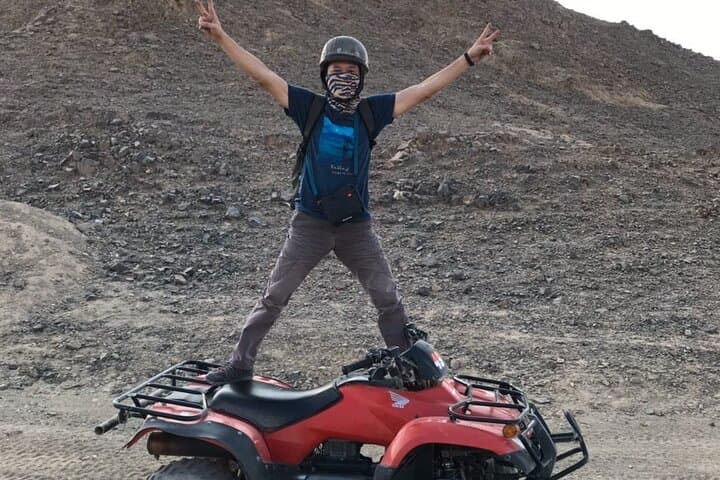
Yes—ATVs are operated on a guided loop with basic instruction; guests should be comfortable on an automatic ATV and follow the guide at all times.
Yes—a 30-minute camel ride is included; handlers will assist mounting and dismounting and advise on appropriate behavior to keep the animal calm.
The provider advises caution: the activity is physically easy overall but not recommended for pregnant travelers; children should be supervised and able to follow safety instructions.
The Giza complex dates to Egypt’s Fourth Dynasty, roughly 2600–2500 BCE, and contains the only remaining wonder of the ancient world—the Great Pyramid—alongside smaller royal tombs and the Sphinx.
Visitor impact and wind erosion put pressure on fragile stonework; stick to marked paths, avoid touching reliefs, and support licensed operators who follow site rules.
Travel all Egypt operates guided outdoor trips and adventures with an emphasis on safety, stewardship, and memorable experiences.
First light on the Giza Plateau throws hard edges across limestone and sand—the pyramids rise like folded stone maps, the Sphinx lifting its carved face toward a pale sun. You meet your guide in an air-conditioned vehicle, cross the city’s hum and slide into wide, wind-swept desert where camels wait and quad bikes sit with a fine dusting of sand.
First light on the Giza Plateau throws hard edges across limestone and sand—the pyramids rise like folded stone maps, the Sphinx lifting its carved face toward a pale sun. You meet your guide in an air-conditioned vehicle, cross the city’s hum and slide into wide, wind-swept desert where camels wait and quad bikes sit with a fine dusting of sand.
The plateau is a 4,500-year-old landscape of funerary architecture: the Great Pyramid, smaller pyramids, and mastabas that reveal burial practices of the Old Kingdom. Geologically the area is Cretaceous and Eocene limestone; wind and human traffic slowly abrade soft surfaces, which is why access is managed. Culturally, the site has been inhabited and venerated for millennia and today supports local Bedouin-led experiences, camel handlers, and licensed guides.
On this full-day excursion you’ll enter selected mastaba interiors, cross desert tracks on a guided ATV loop, and spend thirty minutes on a camel—each moment alternating between quiet antiquity and kinetic fun. Expect short walks on uneven, dusty ground, sudden sun, and close encounters with stonework that still holds inscriptions and tool marks.
Practical notes: go early for cooler light and thinner crowds; bring sun protection, at least 1–2 liters of water, and closed-toe shoes. Follow your guide’s directions when mounting camels or riding quads—helmets and basic instruction are part of a safe ride. Respect marked areas, avoid touching fragile carvings, and plan for a few stops for photos and shade. This mix of history and horsepower delivers a compact, surface-level immersion into one of the world’s oldest urban landscapes.