THE ADVENTURE COLLECTIVE® · Independent discovery and booking for outdoor travel

Race quads across sand, ride a camel with the pyramids framing the horizon, and browse curated bazaars—this private two‑day experience pairs high‑energy desert time with close encounters of ancient Egypt. Practical tips cover timing, admissions, and what to pack.
Race quads across sand, ride a camel with the pyramids framing the horizon, and browse curated bazaars—this private two‑day experience pairs high‑energy desert time with close encounters of ancient Egypt. Practical tips cover timing, admissions, and what to pack.
The morning wind off the desert pushes warm grit across the plateau as you step from an air‑conditioned vehicle into broad light. The three pyramids rise like engineered mountains—stone faces that have weathered millennia—while the Sphinx stares eastward, unblinking. A guide leads the way, alternating between historical context and practical direction as the group fans out for photos, then trades the paved edges for a high‑powered quad that throws up sand in quick arcs.
Verified experiences and guided adventures in the surrounding area.
Operated by CGT Egypt Tours · Giza, Giza Governorate
The morning wind off the desert pushes warm grit across the plateau as you step from an air‑conditioned vehicle into broad light. The three pyramids rise like engineered mountains—stone faces that have weathered millennia—while the Sphinx stares eastward, unblinking. A guide leads the way, alternating between historical context and practical direction as the group fans out for photos, then trades the paved edges for a high‑powered quad that throws up sand in quick arcs.
This stretch of the Giza Plateau holds layers of human history: the Fourth‑Dynasty tombs of Khufu, Khafre and Menkaure (c. 2600–2500 BCE), quarried limestone beds, and the sculpted guardians carved from a single chunk of limestone. Geologically, the plateau is Eocene limestone sitting above desert sand; the contrast between white stone and ochre dunes shapes the site's character. Culturally, vendors and camel handlers make this a working landscape as much as an archaeological one—expect lively negotiation and curated bazaars in nearby neighborhoods.
Practical guidance is straightforward: interior pyramid access requires separate tickets and has narrow, steep passages; the public plateau and Sphinx esplanade are best visited early or late for light and lower temperatures. ATV handling is taught on site; wear closed‑toe shoes, bring sunscreen, and keep a reusable water bottle handy. Plan shopping time into the afternoon and allow transfer windows—traffic in Greater Cairo can add 30–60 minutes. Respect posted signs: climbing or touching ancient masonry can damage fragile surfaces and is prohibited. With basic preparation, the tour pairs adrenaline on open sand with a direct encounter with one of the world’s most studied, and still imposing, ancient sites.
moderate.
2 days (approx. 8–10 hours per day including transfers).
Suitable for travelers in average physical condition comfortable with short walks on uneven sand and supervising a quad for up to an hour.
Interior access to individual pyramids is typically not included; the tour covers the plateau and Sphinx, and may include access to certain sites—confirm with the operator before booking.
Yes—operators provide helmets and a safety briefing; quads used for tourist loops are tuned for stability, but follow all instructions and avoid high speeds if you’re inexperienced.
This private tour includes round‑trip transfers from central Cairo and Giza hotels; some outskirts and new developments may incur an extra charge—check pickup details when you book.
Prices are per booking or per person as specified by the vendor; shopping stops are included as visits but purchases and tips are extra.
The Giza pyramids date to Egypt’s Fourth Dynasty (c. 2600–2500 BCE); Khufu’s Great Pyramid was originally ~146 m tall and built from millions of limestone blocks.
Ongoing conservation emphasizes limiting foot traffic on fragile masonry and prohibiting climbing; use marked routes and follow guide directions to reduce wear on the site.
CGT Egypt Tours operates guided outdoor trips and adventures with an emphasis on safety, stewardship, and memorable experiences.
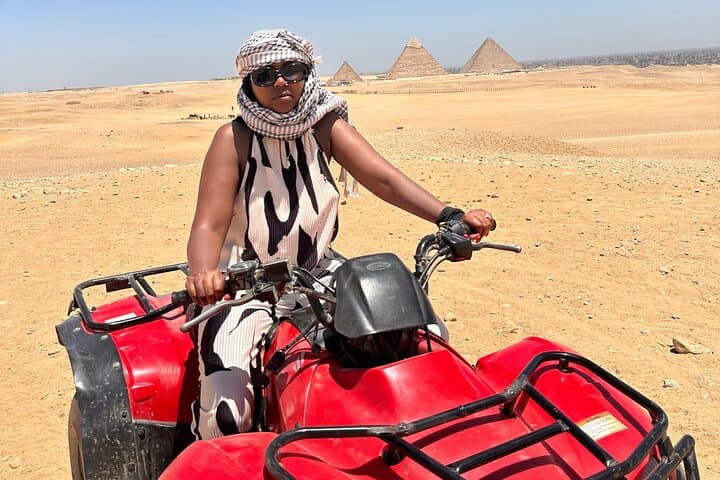
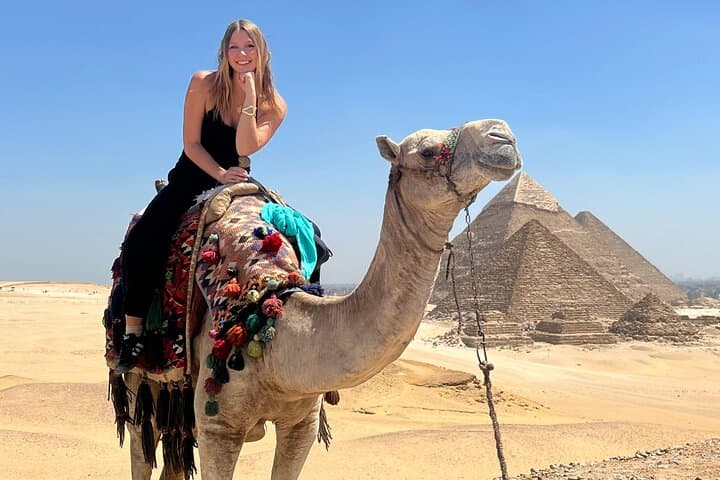
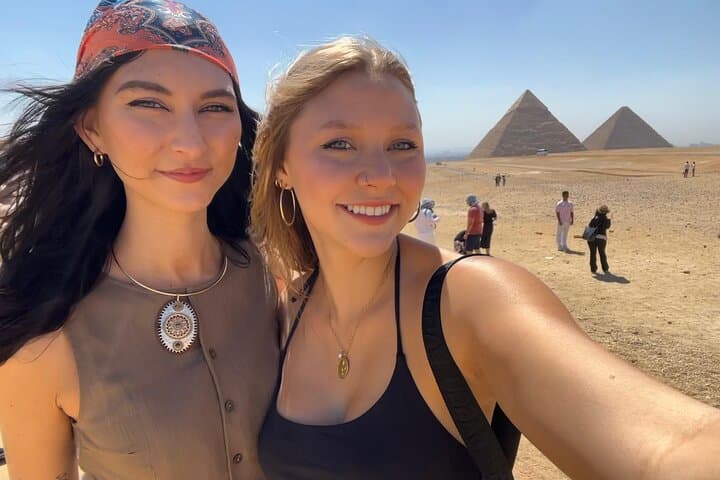
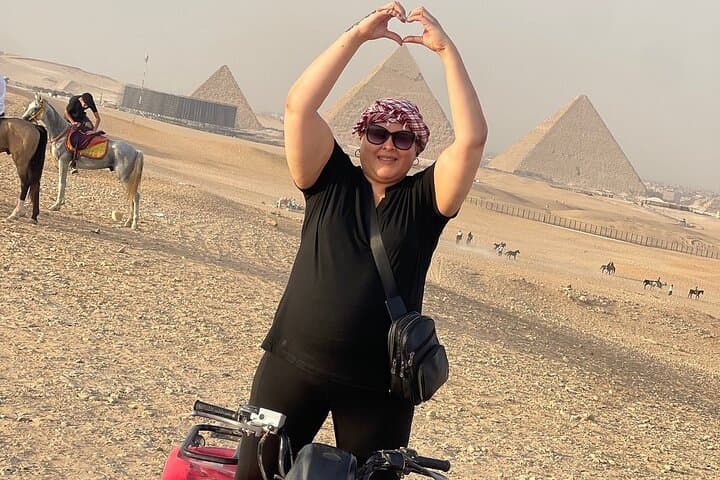
The morning wind off the desert pushes warm grit across the plateau as you step from an air‑conditioned vehicle into broad light. The three pyramids rise like engineered mountains—stone faces that have weathered millennia—while the Sphinx stares eastward, unblinking. A guide leads the way, alternating between historical context and practical direction as the group fans out for photos, then trades the paved edges for a high‑powered quad that throws up sand in quick arcs.
The morning wind off the desert pushes warm grit across the plateau as you step from an air‑conditioned vehicle into broad light. The three pyramids rise like engineered mountains—stone faces that have weathered millennia—while the Sphinx stares eastward, unblinking. A guide leads the way, alternating between historical context and practical direction as the group fans out for photos, then trades the paved edges for a high‑powered quad that throws up sand in quick arcs.
This stretch of the Giza Plateau holds layers of human history: the Fourth‑Dynasty tombs of Khufu, Khafre and Menkaure (c. 2600–2500 BCE), quarried limestone beds, and the sculpted guardians carved from a single chunk of limestone. Geologically, the plateau is Eocene limestone sitting above desert sand; the contrast between white stone and ochre dunes shapes the site's character. Culturally, vendors and camel handlers make this a working landscape as much as an archaeological one—expect lively negotiation and curated bazaars in nearby neighborhoods.
Practical guidance is straightforward: interior pyramid access requires separate tickets and has narrow, steep passages; the public plateau and Sphinx esplanade are best visited early or late for light and lower temperatures. ATV handling is taught on site; wear closed‑toe shoes, bring sunscreen, and keep a reusable water bottle handy. Plan shopping time into the afternoon and allow transfer windows—traffic in Greater Cairo can add 30–60 minutes. Respect posted signs: climbing or touching ancient masonry can damage fragile surfaces and is prohibited. With basic preparation, the tour pairs adrenaline on open sand with a direct encounter with one of the world’s most studied, and still imposing, ancient sites.