THE ADVENTURE COLLECTIVE® · Independent discovery and booking for outdoor travel

Watch spotlights and narration bring the pharaohs to life on the Giza Plateau. This two-hour evening show pairs accessible storytelling with dramatic views of the pyramids and Sphinx under the stars.
Watch spotlights and narration bring the pharaohs to life on the Giza Plateau. This two-hour evening show pairs accessible storytelling with dramatic views of the pyramids and Sphinx under the stars.
The desert light softens and the pyramids emerge as silhouettes; then a sweep of color and recorded narration pulls the past into the present. You sit on tiered stone seating on the Giza Plateau while spotlights paint the faces of Khufu, Khafre and Menkaure and a narrator traces the pharaohs’ rise and rituals.
Verified experiences and guided adventures in the surrounding area.
Operated by ToBadaa · Giza, Giza Governorate
The desert light softens and the pyramids emerge as silhouettes; then a sweep of color and recorded narration pulls the past into the present. You sit on tiered stone seating on the Giza Plateau while spotlights paint the faces of Khufu, Khafre and Menkaure and a narrator traces the pharaohs’ rise and rituals.
The performance compresses millennia into chapters: limestone quarries and the Nile’s seasonal floods that fed labor camps, the engineering logic of the Great Pyramid and the funerary purpose of the solar boats. Geologically, the plateau is largely Eocene limestone—hard bedrock that allowed these monuments to endure. Culturally, the show is a modern interpretation created to make pharaonic history accessible; it’s entertainment with an educational spine.
Practically, expect a two-hour evening program with hotel pick-up and drop-off, bottled water and a local guide. Seating is fixed and the site can be windy—bring a jacket. The production is wheelchair accessible but the plateau’s approach paths include uneven surfaces. Photography is allowed; long-exposure tripods may be restricted during the performance. Shows can be canceled for bad weather; confirm pickup time the day before. This event is low-effort physically but high on atmosphere: it’s ideal for travelers who want an outdoor, time-compressed tour of ancient Egypt after dark without a daytime crowd.
If you prefer quiet observation, arrive slightly early to claim a seat with a clear sightline to the Sphinx and the Khufu pyramid. Respect roped areas and the monument surfaces—these stones have already weathered enough.
easy.
2 hours.
Suitable for all fitness levels; requires basic mobility to navigate steps and short uneven paths
Yes—transportation and public areas are listed as wheelchair accessible, but some approach paths on the plateau are uneven; contact the operator if you need assistance.
The full program runs about two hours, including transfer time for pickup and drop-off as arranged with your hotel.
Children can attend; content is educational and the production is family-oriented, though very young children may struggle with the length and nighttime setting.
Shows may be canceled for bad weather; the operator offers a full refund if you cancel at least 24 hours prior, and typically reschedules or refunds if the vendor cancels.
The pyramids on Giza Plateau date from the Fourth Dynasty (around 2600–2500 BCE); the light show is a modern cultural presentation designed to narrate that ancient history.
Stay on designated paths and avoid touching the stonework; light and sound productions aim to minimize direct impact but visitor behavior remains the primary conservation concern.
ToBadaa operates guided outdoor trips and adventures with an emphasis on safety, stewardship, and memorable experiences.
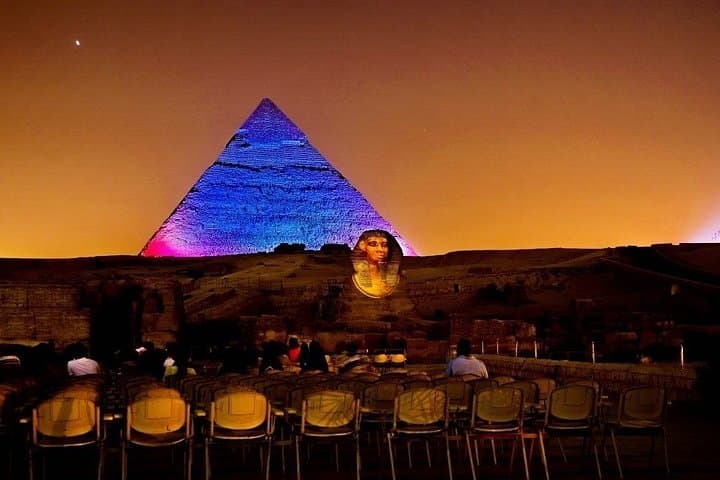
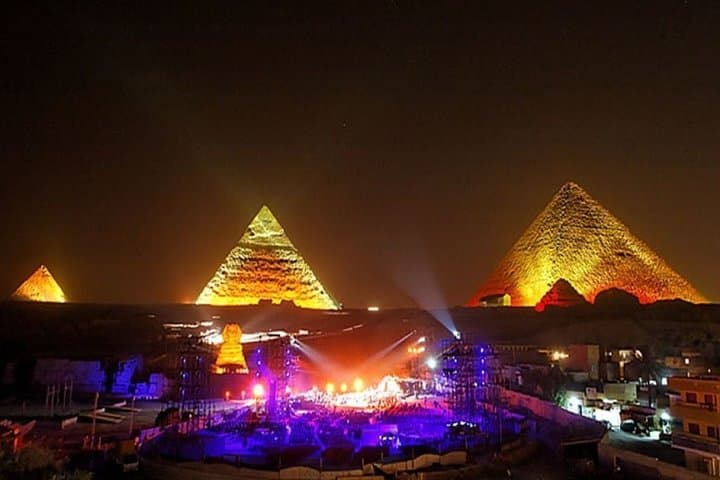
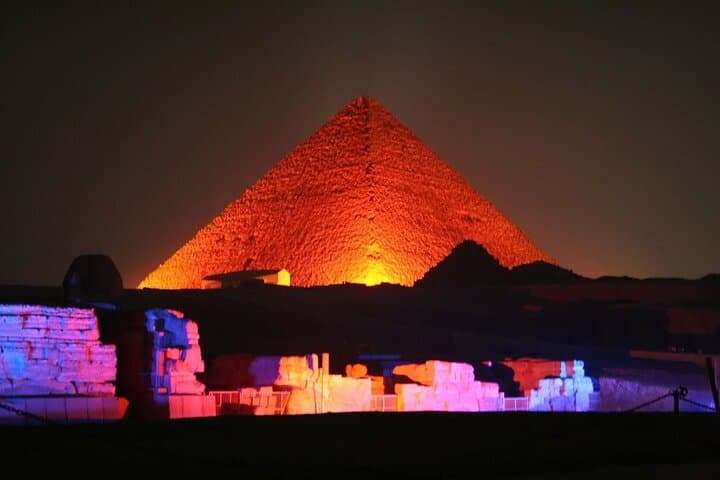
The desert light softens and the pyramids emerge as silhouettes; then a sweep of color and recorded narration pulls the past into the present. You sit on tiered stone seating on the Giza Plateau while spotlights paint the faces of Khufu, Khafre and Menkaure and a narrator traces the pharaohs’ rise and rituals.
The desert light softens and the pyramids emerge as silhouettes; then a sweep of color and recorded narration pulls the past into the present. You sit on tiered stone seating on the Giza Plateau while spotlights paint the faces of Khufu, Khafre and Menkaure and a narrator traces the pharaohs’ rise and rituals.
The performance compresses millennia into chapters: limestone quarries and the Nile’s seasonal floods that fed labor camps, the engineering logic of the Great Pyramid and the funerary purpose of the solar boats. Geologically, the plateau is largely Eocene limestone—hard bedrock that allowed these monuments to endure. Culturally, the show is a modern interpretation created to make pharaonic history accessible; it’s entertainment with an educational spine.
Practically, expect a two-hour evening program with hotel pick-up and drop-off, bottled water and a local guide. Seating is fixed and the site can be windy—bring a jacket. The production is wheelchair accessible but the plateau’s approach paths include uneven surfaces. Photography is allowed; long-exposure tripods may be restricted during the performance. Shows can be canceled for bad weather; confirm pickup time the day before. This event is low-effort physically but high on atmosphere: it’s ideal for travelers who want an outdoor, time-compressed tour of ancient Egypt after dark without a daytime crowd.
If you prefer quiet observation, arrive slightly early to claim a seat with a clear sightline to the Sphinx and the Khufu pyramid. Respect roped areas and the monument surfaces—these stones have already weathered enough.