THE ADVENTURE COLLECTIVE® · Independent discovery and booking for outdoor travel

Experience the Giza plateau under lights: a 50-minute sound-and-light production that animates the pyramids and Sphinx at night. This guided evening tour from Cairo includes hotel pickup, translation headsets and a front-row view of ancient history in dramatic illumination.
Experience the Giza plateau under lights: a 50-minute sound-and-light production that animates the pyramids and Sphinx at night. This guided evening tour from Cairo includes hotel pickup, translation headsets and a front-row view of ancient history in dramatic illumination.
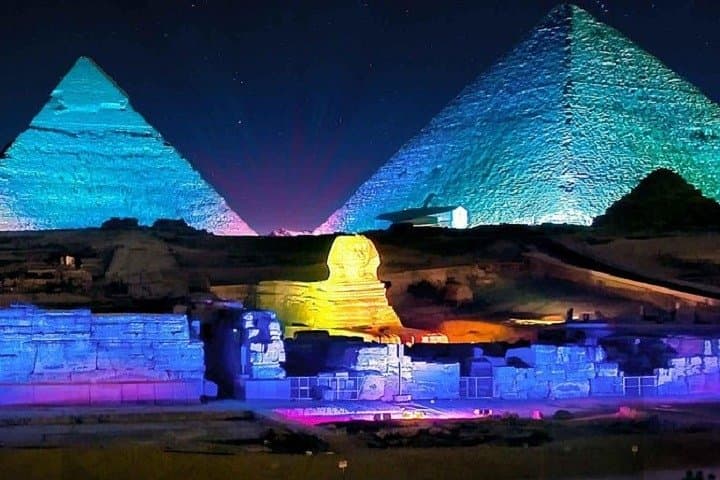
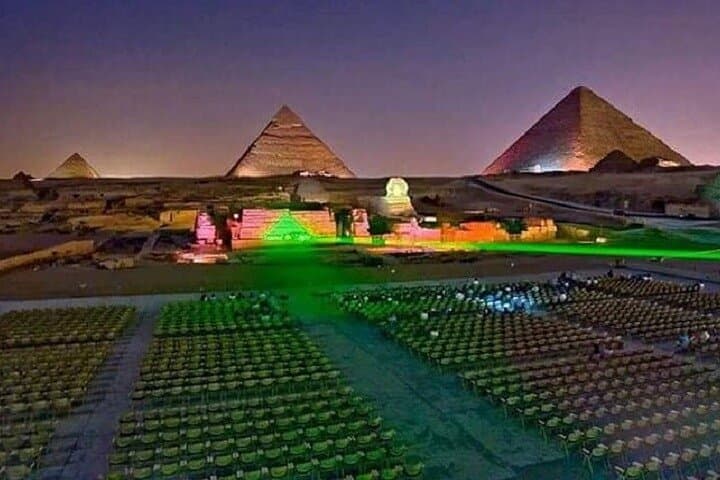
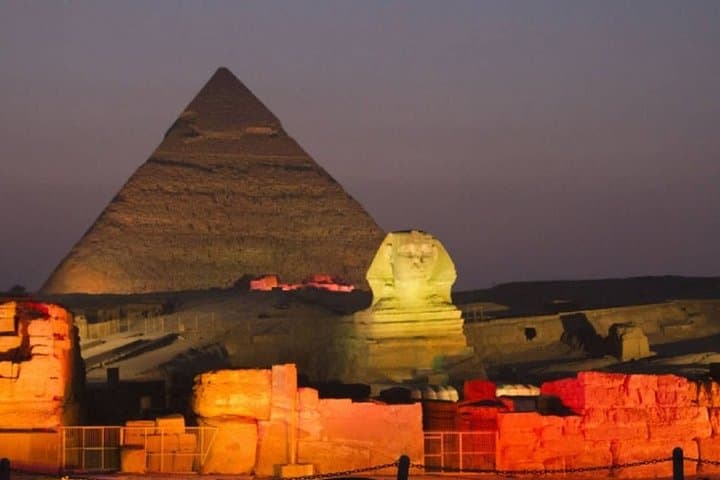
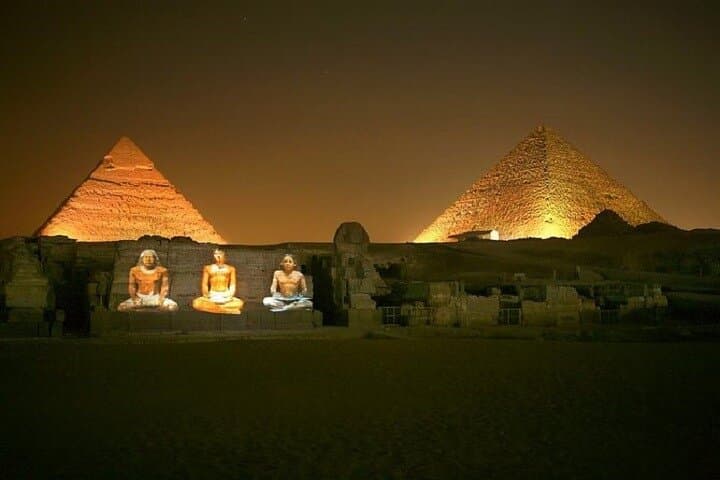
The limestone plateau cools as the sun dips below the western horizon and the Great Pyramid waits in a halo of floodlight. You arrive by air-conditioned car from Cairo, stepping out onto sand-swept stone while spotlights carve the silhouettes of Khufu, Khafre and Menkaure into the night. The Sphinx watches, its profile picked out in amber and blue, and the sound-and-light narrator begins to speak—ancient stories delivered with modern projection.
Verified experiences and guided adventures in the surrounding area.
Operated by Egypt Gift Tours · Giza, Giza Governorate
The limestone plateau cools as the sun dips below the western horizon and the Great Pyramid waits in a halo of floodlight. You arrive by air-conditioned car from Cairo, stepping out onto sand-swept stone while spotlights carve the silhouettes of Khufu, Khafre and Menkaure into the night. The Sphinx watches, its profile picked out in amber and blue, and the sound-and-light narrator begins to speak—ancient stories delivered with modern projection.
The presentation traces 4,500–5,000 years of history: Old Kingdom pharaohs building funerary monuments from quarried limestone and granite, the Sphinx hewn from the bedrock to guard the necropolis, and royal names like Khufu and Tutankhamen placed back into human scale by dramatic lighting. Geologically, the plateau is hard limestone overlying the Nile’s river sediments—sturdy, weathered and scarred by millennia of wind and time.
Culturally the show is a staged primer: expect a mix of factual narration, theatrical timing and patriotic interpretation common to national site presentations. Translation headsets are typically provided on organized tours, making the arc of Egyptian history easy to follow.
Practical guidance: the show runs about 50 minutes within a roughly 3-hour round trip; pickup and drop-off from central Cairo hotels are standard. Dress in layers—desert nights chill quickly—and bring a charged camera and spare batteries for long-exposure shots. Photography is allowed from staging areas but climbing or touching monuments is prohibited. Arrive early to find a good viewing spot and respect local signage; the light and voiceover move quickly, so settle in and let the plateau tell its story.
easy.
3 hours (including transport).
Minimal fitness required—mostly standing and short walks on uneven ground
Yes—most organized evening tours include round-trip pickup and drop-off from central Cairo and Giza hotels by air-conditioned vehicle.
Photography is permitted from designated viewing areas; tripods may be restricted and climbing monuments is prohibited.
Many tours provide translation headsets or specify an English-language show—confirm with your operator if you need another language.
Accessibility varies; there are paved areas near viewing points but terrain can be uneven—check with your operator about wheelchair-accessible pickup and viewing arrangements.
The Giza complex dates to Egypt’s Old Kingdom (c. 2600–2500 BCE); the Sphinx is carved directly from the bedrock and has guarded the necropolis for millennia.
Visitor pressure and light pollution affect the site—stay on designated paths, avoid flash photography near restoration work, and follow local guidance to minimize impact.
Egypt Gift Tours operates guided outdoor trips and adventures with an emphasis on safety, stewardship, and memorable experiences.
The limestone plateau cools as the sun dips below the western horizon and the Great Pyramid waits in a halo of floodlight. You arrive by air-conditioned car from Cairo, stepping out onto sand-swept stone while spotlights carve the silhouettes of Khufu, Khafre and Menkaure into the night. The Sphinx watches, its profile picked out in amber and blue, and the sound-and-light narrator begins to speak—ancient stories delivered with modern projection.
The limestone plateau cools as the sun dips below the western horizon and the Great Pyramid waits in a halo of floodlight. You arrive by air-conditioned car from Cairo, stepping out onto sand-swept stone while spotlights carve the silhouettes of Khufu, Khafre and Menkaure into the night. The Sphinx watches, its profile picked out in amber and blue, and the sound-and-light narrator begins to speak—ancient stories delivered with modern projection.
The presentation traces 4,500–5,000 years of history: Old Kingdom pharaohs building funerary monuments from quarried limestone and granite, the Sphinx hewn from the bedrock to guard the necropolis, and royal names like Khufu and Tutankhamen placed back into human scale by dramatic lighting. Geologically, the plateau is hard limestone overlying the Nile’s river sediments—sturdy, weathered and scarred by millennia of wind and time.
Culturally the show is a staged primer: expect a mix of factual narration, theatrical timing and patriotic interpretation common to national site presentations. Translation headsets are typically provided on organized tours, making the arc of Egyptian history easy to follow.
Practical guidance: the show runs about 50 minutes within a roughly 3-hour round trip; pickup and drop-off from central Cairo hotels are standard. Dress in layers—desert nights chill quickly—and bring a charged camera and spare batteries for long-exposure shots. Photography is allowed from staging areas but climbing or touching monuments is prohibited. Arrive early to find a good viewing spot and respect local signage; the light and voiceover move quickly, so settle in and let the plateau tell its story.