THE ADVENTURE COLLECTIVE® · Independent discovery and booking for outdoor travel

Spend a full day exploring Giza’s pyramids, the Step Pyramid of Saqqara, and ancient Memphis with a private guide. This practical guide covers what to expect—terrain, timing, and tips to make the most of the monuments.
Spend a full day exploring Giza’s pyramids, the Step Pyramid of Saqqara, and ancient Memphis with a private guide. This practical guide covers what to expect—terrain, timing, and tips to make the most of the monuments.
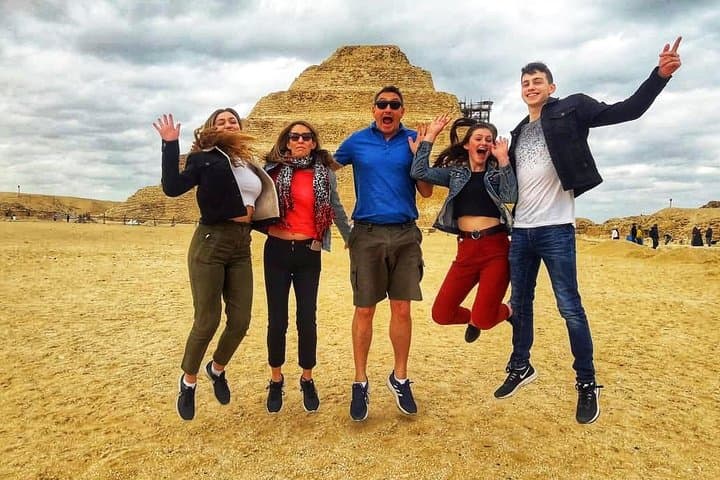
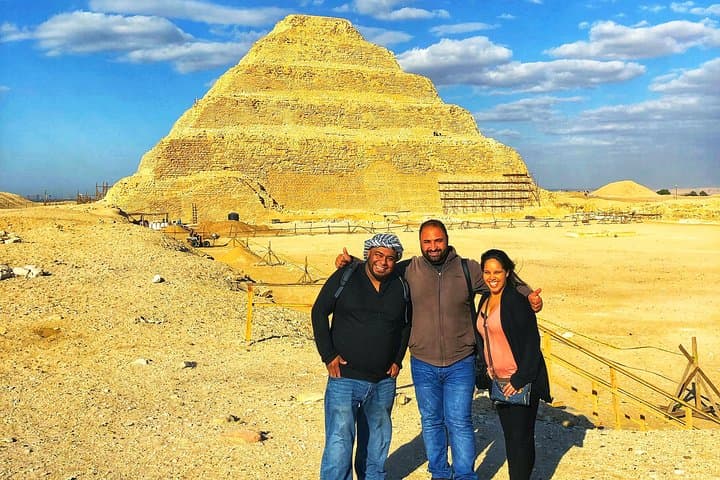
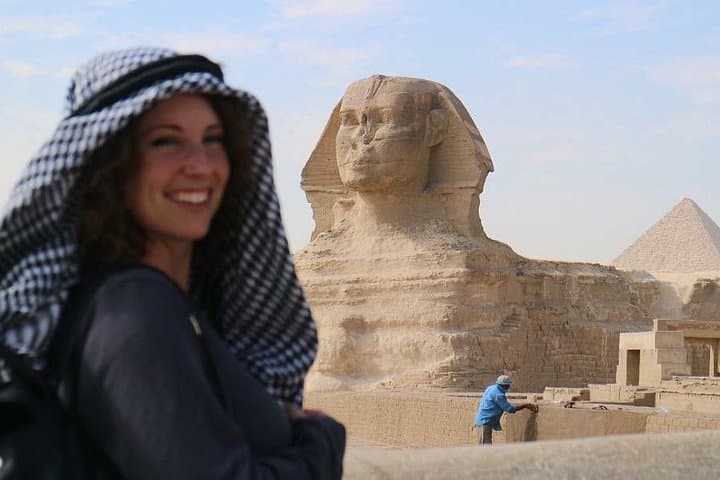
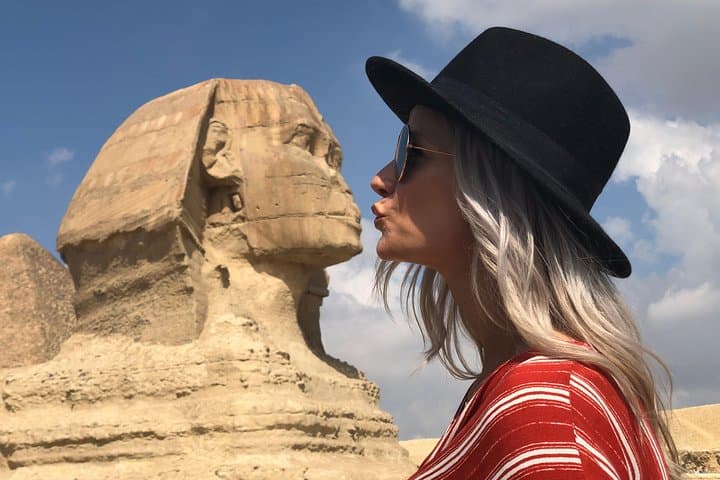
You step off the minivan onto sun-baked limestone and the horizon rearranges itself into geometry—three pyramids rise like deliberately placed stones against Cairo’s sky. A private guide sorts the day: first the Giza Plateau with the Great Pyramid and the Sphinx, then the older step pyramid at Saqqara, and finally the open-air museum at Memphis where a massive Ramses II statue lies supine.
Verified experiences and guided adventures in the surrounding area.
Operated by Egypt Tours Planner · Cairo, Cairo Governorate
You step off the minivan onto sun-baked limestone and the horizon rearranges itself into geometry—three pyramids rise like deliberately placed stones against Cairo’s sky. A private guide sorts the day: first the Giza Plateau with the Great Pyramid and the Sphinx, then the older step pyramid at Saqqara, and finally the open-air museum at Memphis where a massive Ramses II statue lies supine.
This route traces Egypt’s early civilization: Memphis served as the first dynastic capital and Saqqara hosts Imhotep’s Step Pyramid—often considered the world’s first large-scale stone building. Geologically the plateau is Eocene limestone, quarried by successive pharaohs; wind and urban dust have softened fine carving, so details survive best in sheltered tombs. Culturally, the sites are active touchpoints: local guides narrate funerary rites, mastaba reliefs, and the evolution from stepped masonry to smooth-sided pyramids.
Practicalities shape the day. Expect 8–9 hours with substantial time on foot across uneven, dusty surfaces and short climbs into tomb passages if you choose to enter. Admissions and optional extras (camel rides, pyramid interior tickets) are often extra; confirm what’s included when booking. Dress smart-casual and conservatively—light, breathable fabrics, a brimmed hat, and sturdy walking shoes. Carry sunscreen, a refillable water bottle, and a copy of your ID for site entry. Aim for an early start to avoid midday heat and peak crowds—late afternoon light also sharpens reliefs for photos. The tour pairs sensory detail with clear logistics: history, stone, and route planning, delivered in a single, full-day loop around Egypt’s earliest monumental landscape.
easy.
8–9 hours.
Light walking ability required: multiple short walks on uneven ground, occasional steps; suitable for most fitness levels.
Interior access is often available but costs extra and has limited slots; check with the operator in advance and bring your ID.
Standard tour pricing commonly excludes some special-entry tickets (pyramid interiors, camel rides); review the booking inclusions before you go.
Yes—this private tour typically includes hotel pickup and drop-off within Cairo; confirm pickup area and time on booking.
Smart-casual and modest attire is requested—cover shoulders and knees in sensitive cultural sites and wear breathable fabrics for heat.
Memphis was the Old Kingdom capital and administrative center; Saqqara’s Step Pyramid, designed by Imhotep, marks the transition from mudbrick to monumental stone architecture.
Visitor pressure and urban dust accelerate erosion of limestone surfaces—stick to marked paths, avoid touching reliefs, and support licensed guides who promote responsible visits.
Egypt Tours Planner operates guided outdoor trips and adventures with an emphasis on safety, stewardship, and memorable experiences.
You step off the minivan onto sun-baked limestone and the horizon rearranges itself into geometry—three pyramids rise like deliberately placed stones against Cairo’s sky. A private guide sorts the day: first the Giza Plateau with the Great Pyramid and the Sphinx, then the older step pyramid at Saqqara, and finally the open-air museum at Memphis where a massive Ramses II statue lies supine.
You step off the minivan onto sun-baked limestone and the horizon rearranges itself into geometry—three pyramids rise like deliberately placed stones against Cairo’s sky. A private guide sorts the day: first the Giza Plateau with the Great Pyramid and the Sphinx, then the older step pyramid at Saqqara, and finally the open-air museum at Memphis where a massive Ramses II statue lies supine.
This route traces Egypt’s early civilization: Memphis served as the first dynastic capital and Saqqara hosts Imhotep’s Step Pyramid—often considered the world’s first large-scale stone building. Geologically the plateau is Eocene limestone, quarried by successive pharaohs; wind and urban dust have softened fine carving, so details survive best in sheltered tombs. Culturally, the sites are active touchpoints: local guides narrate funerary rites, mastaba reliefs, and the evolution from stepped masonry to smooth-sided pyramids.
Practicalities shape the day. Expect 8–9 hours with substantial time on foot across uneven, dusty surfaces and short climbs into tomb passages if you choose to enter. Admissions and optional extras (camel rides, pyramid interior tickets) are often extra; confirm what’s included when booking. Dress smart-casual and conservatively—light, breathable fabrics, a brimmed hat, and sturdy walking shoes. Carry sunscreen, a refillable water bottle, and a copy of your ID for site entry. Aim for an early start to avoid midday heat and peak crowds—late afternoon light also sharpens reliefs for photos. The tour pairs sensory detail with clear logistics: history, stone, and route planning, delivered in a single, full-day loop around Egypt’s earliest monumental landscape.