THE ADVENTURE COLLECTIVE® · Independent discovery and booking for outdoor travel

Spend a full day tracing Egypt’s foundational sites: the Giza plateau’s pyramids, Saqqara’s Step Pyramid, and the ruins of ancient Memphis. This private tour pairs expert interpretation with flexible pacing—ideal for travelers who want history, context, and manageable logistics in one day.
Spend a full day tracing Egypt’s foundational sites: the Giza plateau’s pyramids, Saqqara’s Step Pyramid, and the ruins of ancient Memphis. This private tour pairs expert interpretation with flexible pacing—ideal for travelers who want history, context, and manageable logistics in one day.
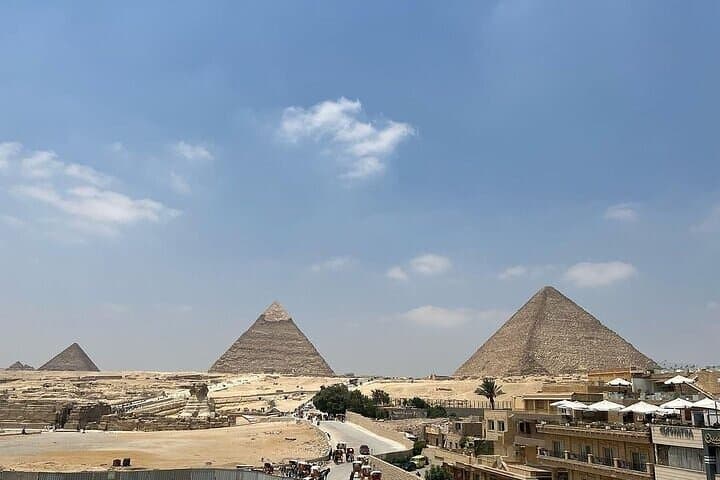
You step out of an air-conditioned vehicle into a wind that has moved across the Nile floodplain for millennia; the silhouette of the Great Pyramid pins the sky, and the stone underfoot carries a faint powder of ancient mortar.
Verified experiences and guided adventures in the surrounding area.
Operated by Pyramids Gate Adventure · Giza, Giza Governorate
You step out of an air-conditioned vehicle into a wind that has moved across the Nile floodplain for millennia; the silhouette of the Great Pyramid pins the sky, and the stone underfoot carries a faint powder of ancient mortar.
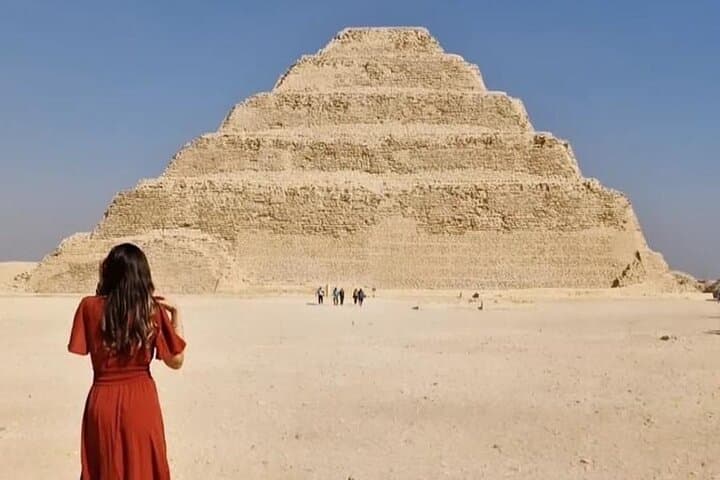
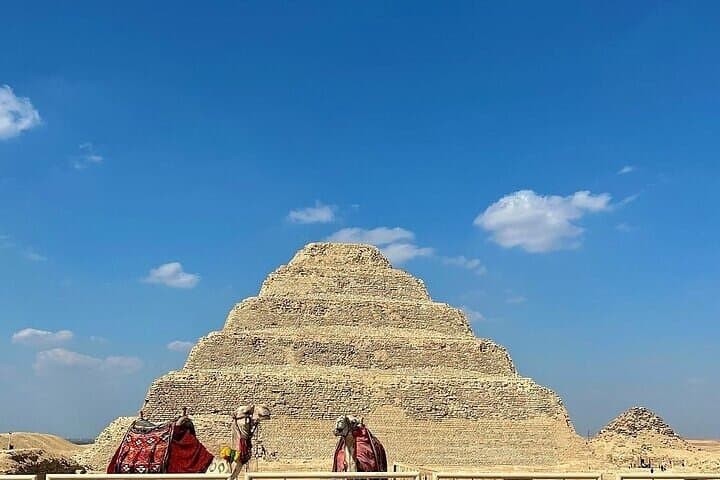
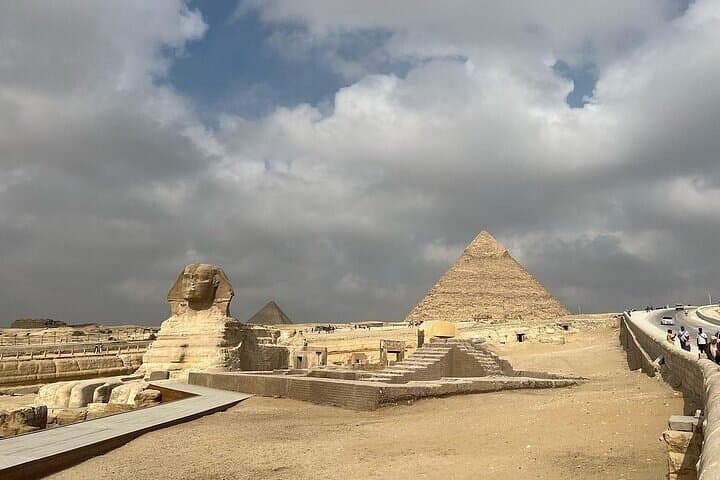
This private full-day circuit pairs Giza’s 4th‑Dynasty giants with Saqqara’s earlier funerary experiments and the ruined sprawl of ancient Memphis. The Great Pyramid (Khufu) and its smaller companions date to c. 2600 BC; Saqqara holds Djoser’s Step Pyramid, one of the earliest large stone constructions, and a ring of mastabas that record evolving burial practices. Memphis, once Egypt’s administrative heart, survives as scattered blocks and the fallen colossus of Ramses II.
Geology here is simple and stark: Pleistocene limestone bedrock sculpted into blocks, wind-polished sand, and occasional baked-clay brick. Local guides—often Egyptologists—read the stones like pages, pointing out builders’ marks, reused blocks, and the geometry behind pyramid faces. Culture and craft coexist: modern Cairo’s noise sits a short drive away, while village vendors and museum curators keep older skills alive.
Practicalities: expect eight hours on tour with periods of standing and walking on uneven ground; bring sun protection, a full water bottle, and comfortable shoes. Photography is permitted in public areas but rules vary inside museums and temple thresholds. The private format lets you set pace: linger at a tomb relief, skip a museum, or ask for a deeper archaeological explanation. Conservation is visible—fenced zones and supervised pathways—so follow your guide and avoid touching carved surfaces.
easy.
8 hours.
Basic fitness for walking and standing for several hours; able to negotiate uneven ground and short stair sections.
Yes—main entrance fees for Giza, Saqqara and Memphis are typically included with this private tour.
The itinerary is suitable for children, but sites have uneven terrain and limited wheelchair access; notify the operator about mobility needs.
Photography is generally allowed outdoors; some museum interiors or specific exhibits may restrict flash or photos—follow posted rules and your guide’s instructions.
Expect several short to moderate walks at each site—standing and walking for up to eight hours with breaks for lunch and rest.
Giza’s major pyramids date to the 4th Dynasty (c. 2600 BC); Saqqara’s Step Pyramid of Djoser marks a key evolution from mudbrick to monumental stone construction.
High visitor numbers and wind-blown sand stress ancient masonry; follow marked paths, avoid touching carvings, and support licensed guides who work with preservation efforts.
Pyramids Gate Adventure operates guided outdoor trips and adventures with an emphasis on safety, stewardship, and memorable experiences.
You step out of an air-conditioned vehicle into a wind that has moved across the Nile floodplain for millennia; the silhouette of the Great Pyramid pins the sky, and the stone underfoot carries a faint powder of ancient mortar.
You step out of an air-conditioned vehicle into a wind that has moved across the Nile floodplain for millennia; the silhouette of the Great Pyramid pins the sky, and the stone underfoot carries a faint powder of ancient mortar.
This private full-day circuit pairs Giza’s 4th‑Dynasty giants with Saqqara’s earlier funerary experiments and the ruined sprawl of ancient Memphis. The Great Pyramid (Khufu) and its smaller companions date to c. 2600 BC; Saqqara holds Djoser’s Step Pyramid, one of the earliest large stone constructions, and a ring of mastabas that record evolving burial practices. Memphis, once Egypt’s administrative heart, survives as scattered blocks and the fallen colossus of Ramses II.
Geology here is simple and stark: Pleistocene limestone bedrock sculpted into blocks, wind-polished sand, and occasional baked-clay brick. Local guides—often Egyptologists—read the stones like pages, pointing out builders’ marks, reused blocks, and the geometry behind pyramid faces. Culture and craft coexist: modern Cairo’s noise sits a short drive away, while village vendors and museum curators keep older skills alive.
Practicalities: expect eight hours on tour with periods of standing and walking on uneven ground; bring sun protection, a full water bottle, and comfortable shoes. Photography is permitted in public areas but rules vary inside museums and temple thresholds. The private format lets you set pace: linger at a tomb relief, skip a museum, or ask for a deeper archaeological explanation. Conservation is visible—fenced zones and supervised pathways—so follow your guide and avoid touching carved surfaces.