THE ADVENTURE COLLECTIVE® · Independent discovery and booking for outdoor travel

Spend a day moving through Egypt’s oldest stone monuments: the towering pyramids at Giza, the Step Pyramid at Saqqara and the ruins of Memphis. This full-day private tour blends sweeping vistas with archaeological context and practical advice for an eight-hour outing.
Spend a day moving through Egypt’s oldest stone monuments: the towering pyramids at Giza, the Step Pyramid at Saqqara and the ruins of Memphis. This full-day private tour blends sweeping vistas with archaeological context and practical advice for an eight-hour outing.
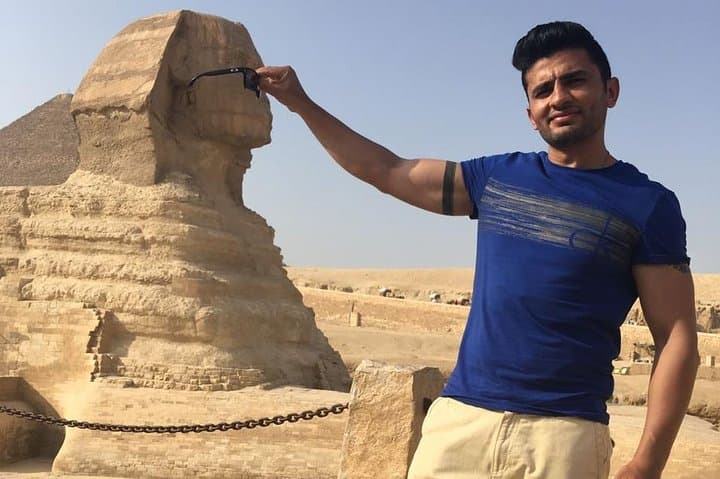
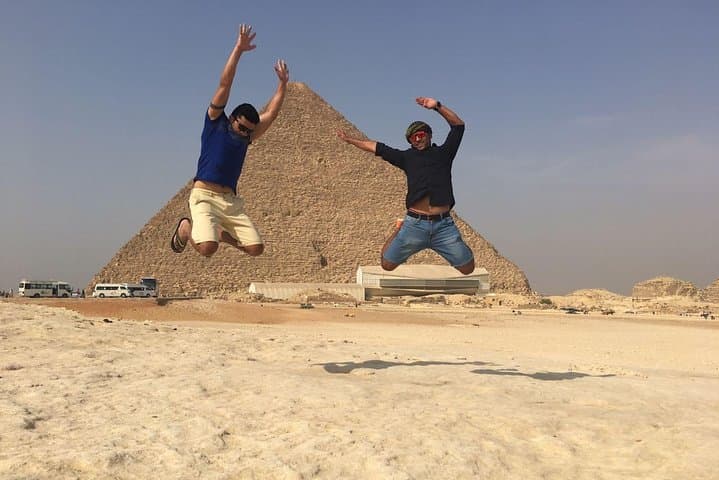
The morning sun slides over a hard, ochre skyline and the three great pyramids of Giza appear like geometric ships cutting through the desert. Wind teases grit against the stone, and the profile of the Great Pyramid of Khufu towers, unchanged in intention for more than four millennia. Your private guide sets a brisk, steady pace through the open plateau, where tourists, vendors and the occasional camel press around rituals of photography and commerce.
Verified experiences and guided adventures in the surrounding area.
Operated by EgyExcursions · Giza, Giza Governorate
The morning sun slides over a hard, ochre skyline and the three great pyramids of Giza appear like geometric ships cutting through the desert. Wind teases grit against the stone, and the profile of the Great Pyramid of Khufu towers, unchanged in intention for more than four millennia. Your private guide sets a brisk, steady pace through the open plateau, where tourists, vendors and the occasional camel press around rituals of photography and commerce.
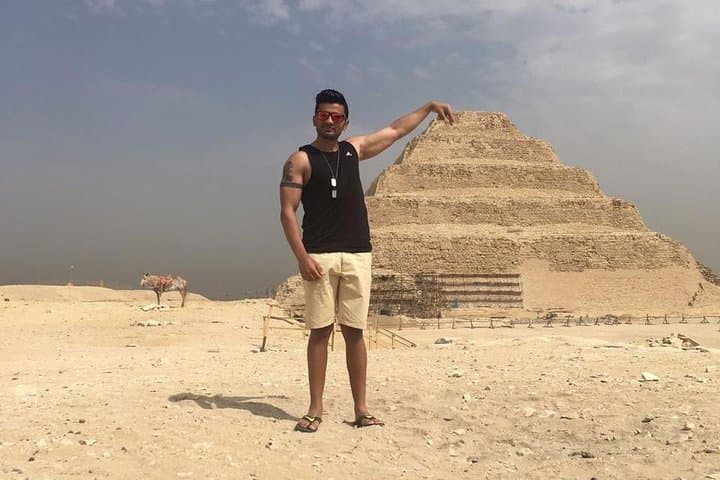
This route stitches together Egypt’s long arc: the Great Pyramid and adjacent tomb complexes at Giza, the Step Pyramid of Djoser at Saqqara—the earliest large-scale stone monument—and the open-air remains of ancient Memphis, once the administrative heart of pharaonic Egypt. Geologically the plateau is limestone and wind-polished sand; archaeologists have quarried, reset and preserved faces of tombs and causeways for centuries. Culturally, the sites remain active places—locals run small kafés, artisans sell papyrus prints, and museum displays show colossi and statuary salvaged from millennia of change.
Practical guidance: this is an eight-hour day with mostly flat walking on packed sand and some uneven flagstone. Start early to avoid peak heat, carry 2–3 liters of water, wear closed-toe shoes and sun protection, and budget time for security lines. Interior tomb spaces are tight and low-ceilinged; climbing pyramids is illegal and enforced. Bring small cash for tips and optional photos; your guide can arrange museum entries and explain restoration work as you move between sites.
moderate.
8 hours.
Suitable for most people who can walk several kilometers on uneven ground; moderate stamina recommended for a full-day outing.
Many full-day private tours include standard admission to Giza, Saqqara and the Memphis open-air museum, but verify with your operator—some optional areas or museum displays may cost extra.
Sites are family-friendly and the operator notes stroller access, but expect uneven terrain and stepped areas—infants often need to be carried over short sections.
Access to interior chambers is restricted and often limited; if included it may require an additional ticket and involves steep, narrow passages not suitable for all visitors.
Polite but firm bargaining is common; expect to pay for posed photos and clarify prices upfront to avoid surprise charges.
The Great Pyramid of Khufu dates to around 2560 BCE and was the tallest man-made structure for millennia; Saqqara’s Step Pyramid of Djoser is the earliest large stone monument in Egypt.
High visitor numbers and wind erosion threaten exposed surfaces; stay on marked paths, avoid touching masonry, and support site preservation by following guide instructions and paying official fees.
EgyExcursions operates guided outdoor trips and adventures with an emphasis on safety, stewardship, and memorable experiences.
The morning sun slides over a hard, ochre skyline and the three great pyramids of Giza appear like geometric ships cutting through the desert. Wind teases grit against the stone, and the profile of the Great Pyramid of Khufu towers, unchanged in intention for more than four millennia. Your private guide sets a brisk, steady pace through the open plateau, where tourists, vendors and the occasional camel press around rituals of photography and commerce.
The morning sun slides over a hard, ochre skyline and the three great pyramids of Giza appear like geometric ships cutting through the desert. Wind teases grit against the stone, and the profile of the Great Pyramid of Khufu towers, unchanged in intention for more than four millennia. Your private guide sets a brisk, steady pace through the open plateau, where tourists, vendors and the occasional camel press around rituals of photography and commerce.
This route stitches together Egypt’s long arc: the Great Pyramid and adjacent tomb complexes at Giza, the Step Pyramid of Djoser at Saqqara—the earliest large-scale stone monument—and the open-air remains of ancient Memphis, once the administrative heart of pharaonic Egypt. Geologically the plateau is limestone and wind-polished sand; archaeologists have quarried, reset and preserved faces of tombs and causeways for centuries. Culturally, the sites remain active places—locals run small kafés, artisans sell papyrus prints, and museum displays show colossi and statuary salvaged from millennia of change.
Practical guidance: this is an eight-hour day with mostly flat walking on packed sand and some uneven flagstone. Start early to avoid peak heat, carry 2–3 liters of water, wear closed-toe shoes and sun protection, and budget time for security lines. Interior tomb spaces are tight and low-ceilinged; climbing pyramids is illegal and enforced. Bring small cash for tips and optional photos; your guide can arrange museum entries and explain restoration work as you move between sites.