THE ADVENTURE COLLECTIVE® · Independent discovery and booking for outdoor travel

Spend a full day exploring Egypt’s oldest monuments: the Giza Plateau, Saqqara’s Step Pyramid and the open-air museum of Memphis. This private itinerary blends concentrated walking with immersive history and practical advice for touring in desert conditions.
Spend a full day exploring Egypt’s oldest monuments: the Giza Plateau, Saqqara’s Step Pyramid and the open-air museum of Memphis. This private itinerary blends concentrated walking with immersive history and practical advice for touring in desert conditions.
A low, hot sun picks out edges on stone—three pyramids cutting clean angles against a Cairo sky while the Sphinx stares ahead as if timing the city.
Verified experiences and guided adventures in the surrounding area.
Operated by Karnak Tours · Giza, Giza Governorate
A low, hot sun picks out edges on stone—three pyramids cutting clean angles against a Cairo sky while the Sphinx stares ahead as if timing the city.
This full-day private circuit moves from the Giza Plateau to the Step Pyramid at Saqqara, on to the open-air remains of ancient Memphis and finishes among Dahshour’s bent and Red Pyramids. Geology is obvious: layers of Tura limestone and Nubian sandstone that builders quarried and stacked, and a Nile floodplain that once fed the settlements clustered at its edge.
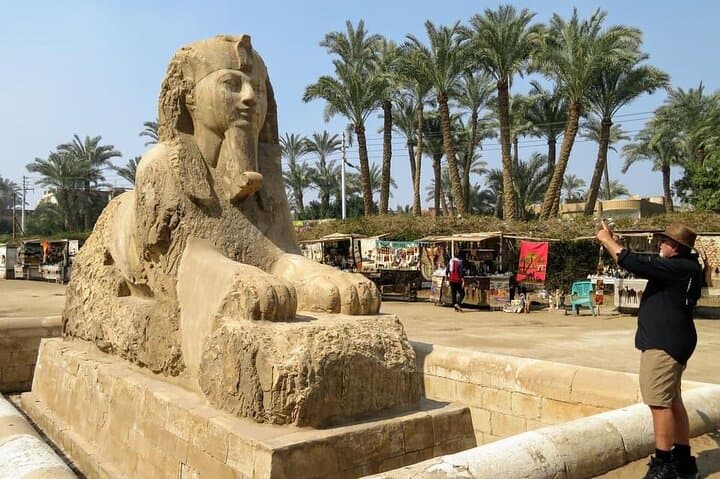
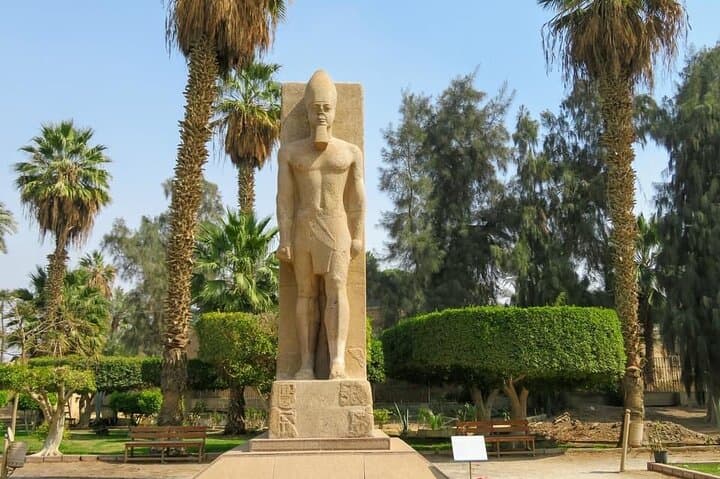
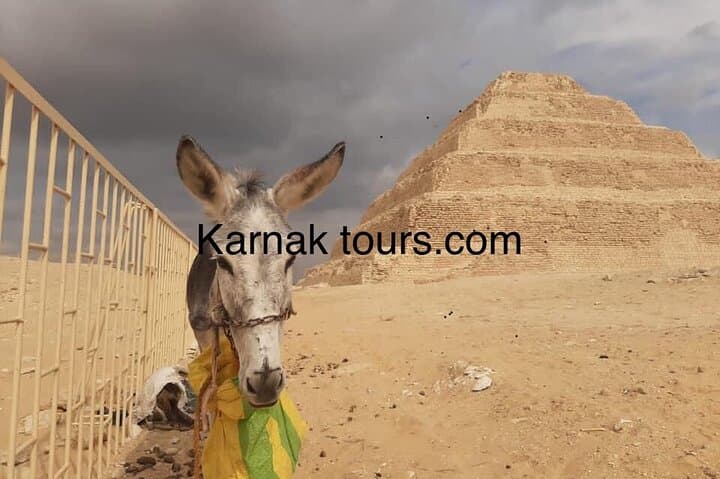
History here is immediate and sequential—Djoser’s step pyramid (c. 2700 BCE) marks the move from mastaba tombs to stone monuments; the Great Pyramid of Khufu is the last surviving Wonder and a feat of precise geometry and manpower; Memphis preserves colossal statuary that once symbolized royal power projected along the river.
Expect a lot of walking on mixed terrain—compacted sand, flagged paths and uneven ruins—and long stretches under the sun. The tour is private with pickup and drop-off, but entrance fees are typically not included, so plan cash or card for tickets. Bring at least 2 liters of water, sun protection, sturdy shoes and a small pack; restrooms and shade are intermittent. Mornings and late afternoons offer cooler light and softer temperatures; peak midday is hot and intense.
Practicalities: the route moves deliberately between sites, so allow 7–9 hours door-to-door, wear respectful clothing for cultural sites, and budget time for photography and short walks to viewpoint terraces.
challenging.
7–9 hours.
Good aerobic fitness and the ability to handle several hours of walking in heat; not suitable for people with serious spinal, heart, or pregnancy-related restrictions.
No, admission fees are generally not included; the tour provides transport and a private guide but visitors typically pay site entry on arrival.
Yes — the tour includes private pickup and drop-off; you’ll provide pickup details when booking.
Access to interior chambers is limited and sometimes restricted for conservation; check current rules and purchase individual tickets where available.
Basic facilities and small vendors exist at main sites, but choices are limited—carry snacks, water and small change for purchases.
These sites trace Egypt’s Old Kingdom power centers—Saqqara’s step tombs predate the smooth-sided pyramids by centuries, and Memphis served as a capital and ritual hub along the Nile.
High visitor numbers stress fragile stone and archaeological deposits; stick to marked paths, avoid touching bas-reliefs, and use local guides to support responsible site management.
Karnak Tours operates guided outdoor trips and adventures with an emphasis on safety, stewardship, and memorable experiences.
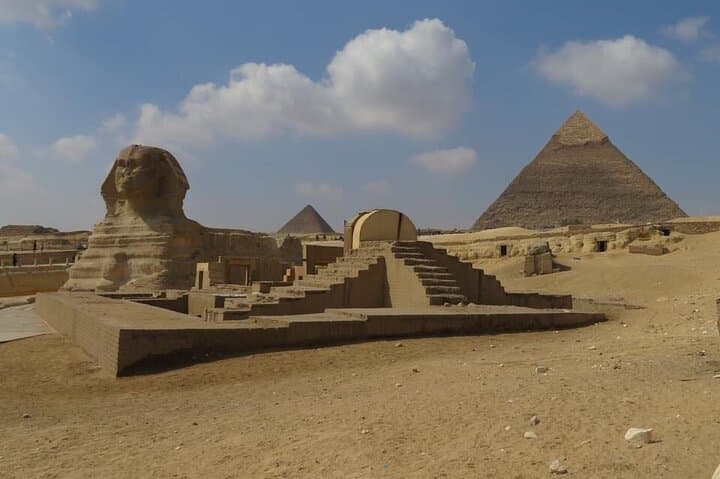
A low, hot sun picks out edges on stone—three pyramids cutting clean angles against a Cairo sky while the Sphinx stares ahead as if timing the city.
A low, hot sun picks out edges on stone—three pyramids cutting clean angles against a Cairo sky while the Sphinx stares ahead as if timing the city.
This full-day private circuit moves from the Giza Plateau to the Step Pyramid at Saqqara, on to the open-air remains of ancient Memphis and finishes among Dahshour’s bent and Red Pyramids. Geology is obvious: layers of Tura limestone and Nubian sandstone that builders quarried and stacked, and a Nile floodplain that once fed the settlements clustered at its edge.
History here is immediate and sequential—Djoser’s step pyramid (c. 2700 BCE) marks the move from mastaba tombs to stone monuments; the Great Pyramid of Khufu is the last surviving Wonder and a feat of precise geometry and manpower; Memphis preserves colossal statuary that once symbolized royal power projected along the river.
Expect a lot of walking on mixed terrain—compacted sand, flagged paths and uneven ruins—and long stretches under the sun. The tour is private with pickup and drop-off, but entrance fees are typically not included, so plan cash or card for tickets. Bring at least 2 liters of water, sun protection, sturdy shoes and a small pack; restrooms and shade are intermittent. Mornings and late afternoons offer cooler light and softer temperatures; peak midday is hot and intense.
Practicalities: the route moves deliberately between sites, so allow 7–9 hours door-to-door, wear respectful clothing for cultural sites, and budget time for photography and short walks to viewpoint terraces.