THE ADVENTURE COLLECTIVE® · Independent discovery and booking for outdoor travel

Walk among 4,500-year-old monuments, explore the Solar Boat Museum and ride a camel around the plateau on a private half- to full-day tour from Cairo. Learn when to go, what to pack, and how to make the most of the site.
Walk among 4,500-year-old monuments, explore the Solar Boat Museum and ride a camel around the plateau on a private half- to full-day tour from Cairo. Learn when to go, what to pack, and how to make the most of the site.
The sun rises over the Giza Plateau and the three great pyramids throw long, geometric shadows across wind-scoured sand. You step from a shaded vehicle into a scene that has shaped human imagination for millennia: the Great Pyramid’s weathered limestone faces, Khafre’s still-imposing profile, and the Sphinx silently watching the approach.
Verified experiences and guided adventures in the surrounding area.
The sun rises over the Giza Plateau and the three great pyramids throw long, geometric shadows across wind-scoured sand. You step from a shaded vehicle into a scene that has shaped human imagination for millennia: the Great Pyramid’s weathered limestone faces, Khafre’s still-imposing profile, and the Sphinx silently watching the approach.
This compact private tour threads history, geology and living culture. The pyramids date to the Fourth Dynasty (around 4,500 years old) and sit on a limestone ridge whose blocks were quarried locally and hauled into place with remarkable precision. The Solar Boat Museum preserves a ceremonial vessel meant to carry a pharaoh into the afterlife; nearby, camel handlers and local vendors keep centuries-old desert traditions visible to visitors.
Practically, expect 4–6 hours on a full-day schedule: plateau viewpoints, close-up walks around pyramid bases, an optional inside-pyramid visit where allowed, lunch at a nearby restaurant, then a guided camel ride that circles the monuments for photos. Bring sun protection, plenty of water and comfortable shoes for uneven sandstone and loose sand. Early morning or late afternoon visits minimize heat and crowds; mid-day is harsh in summer.
Respect site rules—do not climb the pyramids—and hire licensed guides to deepen the experience and support local stewards. Bargain courteously with camel operators and set clear prices before mounting. With a private guide and a measured pace, the Giza experience combines tactile history with the tactile rhythm of working camels, making an ancient landscape feel immediate and navigable.
easy.
4–6 hours.
Light walking on uneven ground; ability to mount a camel recommended
Interior access is sometimes allowed but limited; it may require a separate ticket and is subject to rotation and conservation rules—check with your guide beforehand.
Children can ride but should be secured and accompanied; confirm that the handler provides a safe, well-maintained saddle and agrees to a gentle route.
Tipping guides, drivers and camel handlers is customary—budget modest local tips and agree on any extra fees in advance.
Light, breathable clothing that covers shoulders and knees is appropriate for cultural respect and sun protection; closed-toe shoes are recommended.
The main pyramids were built during Egypt’s Fourth Dynasty as royal tombs; the plateau’s monuments date to about 2600–2500 BCE and reflect monumental stone engineering.
Visitor pressure and erosion affect the site—stay on permitted paths, avoid touching fragile masonry, and support licensed local guides to contribute to sustainable tourism.
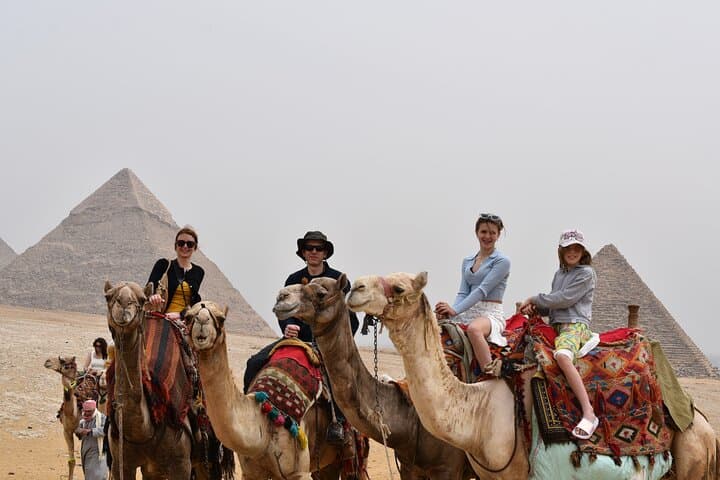
The sun rises over the Giza Plateau and the three great pyramids throw long, geometric shadows across wind-scoured sand. You step from a shaded vehicle into a scene that has shaped human imagination for millennia: the Great Pyramid’s weathered limestone faces, Khafre’s still-imposing profile, and the Sphinx silently watching the approach.
The sun rises over the Giza Plateau and the three great pyramids throw long, geometric shadows across wind-scoured sand. You step from a shaded vehicle into a scene that has shaped human imagination for millennia: the Great Pyramid’s weathered limestone faces, Khafre’s still-imposing profile, and the Sphinx silently watching the approach.
This compact private tour threads history, geology and living culture. The pyramids date to the Fourth Dynasty (around 4,500 years old) and sit on a limestone ridge whose blocks were quarried locally and hauled into place with remarkable precision. The Solar Boat Museum preserves a ceremonial vessel meant to carry a pharaoh into the afterlife; nearby, camel handlers and local vendors keep centuries-old desert traditions visible to visitors.
Practically, expect 4–6 hours on a full-day schedule: plateau viewpoints, close-up walks around pyramid bases, an optional inside-pyramid visit where allowed, lunch at a nearby restaurant, then a guided camel ride that circles the monuments for photos. Bring sun protection, plenty of water and comfortable shoes for uneven sandstone and loose sand. Early morning or late afternoon visits minimize heat and crowds; mid-day is harsh in summer.
Respect site rules—do not climb the pyramids—and hire licensed guides to deepen the experience and support local stewards. Bargain courteously with camel operators and set clear prices before mounting. With a private guide and a measured pace, the Giza experience combines tactile history with the tactile rhythm of working camels, making an ancient landscape feel immediate and navigable.