THE ADVENTURE COLLECTIVE® · Independent discovery and booking for outdoor travel

Experience the Giza Plateau beyond snapshots: private access to the Great Pyramids, the enigmatic Sphinx, optional camel rides and an hour on quad bikes, capped with a sunset dinner option. This practical guide helps you plan the full-day rhythm and what to expect on-site.
Experience the Giza Plateau beyond snapshots: private access to the Great Pyramids, the enigmatic Sphinx, optional camel rides and an hour on quad bikes, capped with a sunset dinner option. This practical guide helps you plan the full-day rhythm and what to expect on-site.
You arrive on the Giza Plateau as the light shifts—sand warms to gold while the three great pyramids throw long, precise shadows across a flat, wind-scoured plain. The Sphinx sits forward of that geometry, its weathered face watching caravans of tourists, camel handlers, and the occasional quad bike thread the low dunes.
Verified experiences and guided adventures in the surrounding area.
Operated by Kemet Tours · Giza, Giza Governorate
You arrive on the Giza Plateau as the light shifts—sand warms to gold while the three great pyramids throw long, precise shadows across a flat, wind-scoured plain. The Sphinx sits forward of that geometry, its weathered face watching caravans of tourists, camel handlers, and the occasional quad bike thread the low dunes.
This stretch of limestone and desert has been shaped by 4,500 years of human hands and the slow erosion of wind and sand. Khufu’s Pyramid remains the largest, an immense mass of quarried limestone once encasing a polished surface; nearby Khafre’s slightly smaller tomb still bears traces of its original casing near the summit. The Sphinx, carved from a single outcrop, anchors the plateau in myth and funerary practice.
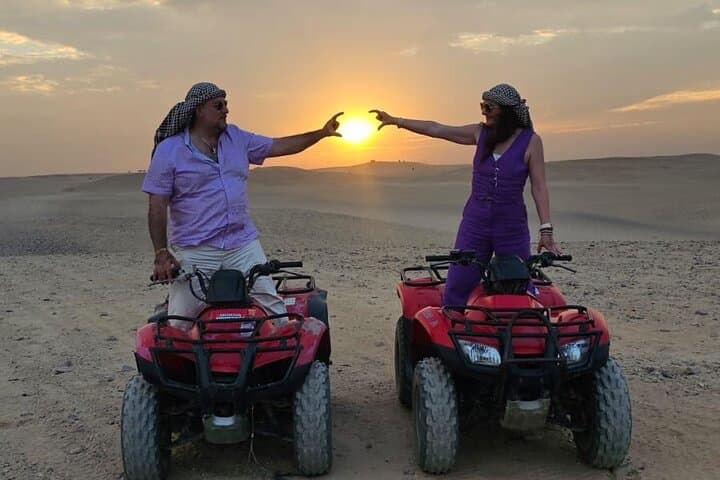
Culturally, the area is a crossroads: Bedouin traditions, modern Cairo commerce, and Egyptology converge in a compact, intense setting. Quad bikes and camel rides offer two very different ways to feel the plateau’s scale—speed and proximity—while sunset dinners aboard Nile-themed cruises downstream give a softer close to a muscular day.
Practical guidance: expect a long day—this private half-day option often stretches into evening when combined with extras. Bring sun protection, plenty of water, and sturdy shoes for uneven limestone and sandy tracks. If you plan to enter pyramids or ride camels/ATVs, confirm those options are included when booking. Respect barriers and signage: climbing the pyramids is prohibited, and sticking to marked paths helps preserve fragile archaeological zones. Timing your visit for late afternoon reduces heat and enhances light for photos without sacrificing comfort.
moderate.
8–10 hours.
Suitable for travelers in average fitness—requires standing and walking on uneven ground for several hours plus short climbs and optional ATV/camel activity.
Many private tours offer both options—bookings often list entry to the pyramid interior, camel rides, or ATV sessions as add-ons; confirm at booking.
Yes—handlers and guides provide basic instructions; disclose any medical conditions beforehand and follow safety briefings for ATVs.
No—climbing pyramids is prohibited and touching monuments is discouraged to protect fragile surfaces; stay behind barriers and follow your guide’s directions.
Depending on traffic, expect 30–60 minutes from central Cairo hotels; tours usually include round-trip transfers from downtown and the Giza hotel zone.
The Giza monuments date to Egypt’s Fourth Dynasty (around 2600–2500 BCE), with Khufu’s Pyramid representing the most massive construction on the plateau.
Tourist pressure, pollution, and erosion threaten the site; stick to paths, avoid littering, and use licensed guides to minimize impact.
Kemet Tours operates guided outdoor trips and adventures with an emphasis on safety, stewardship, and memorable experiences.
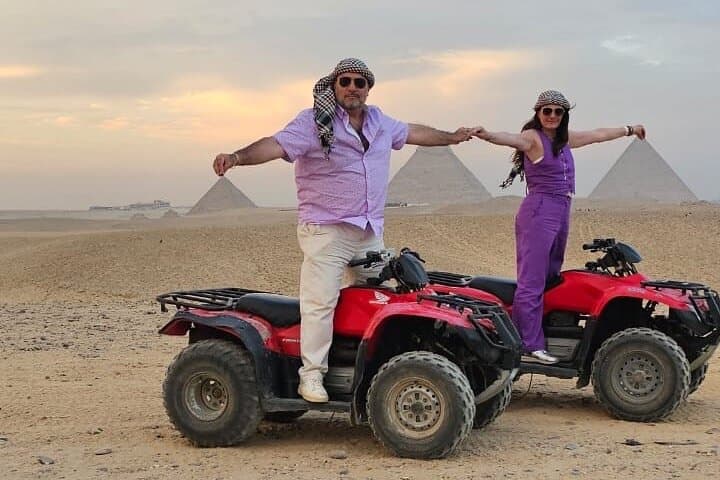
You arrive on the Giza Plateau as the light shifts—sand warms to gold while the three great pyramids throw long, precise shadows across a flat, wind-scoured plain. The Sphinx sits forward of that geometry, its weathered face watching caravans of tourists, camel handlers, and the occasional quad bike thread the low dunes.
You arrive on the Giza Plateau as the light shifts—sand warms to gold while the three great pyramids throw long, precise shadows across a flat, wind-scoured plain. The Sphinx sits forward of that geometry, its weathered face watching caravans of tourists, camel handlers, and the occasional quad bike thread the low dunes.
This stretch of limestone and desert has been shaped by 4,500 years of human hands and the slow erosion of wind and sand. Khufu’s Pyramid remains the largest, an immense mass of quarried limestone once encasing a polished surface; nearby Khafre’s slightly smaller tomb still bears traces of its original casing near the summit. The Sphinx, carved from a single outcrop, anchors the plateau in myth and funerary practice.
Culturally, the area is a crossroads: Bedouin traditions, modern Cairo commerce, and Egyptology converge in a compact, intense setting. Quad bikes and camel rides offer two very different ways to feel the plateau’s scale—speed and proximity—while sunset dinners aboard Nile-themed cruises downstream give a softer close to a muscular day.
Practical guidance: expect a long day—this private half-day option often stretches into evening when combined with extras. Bring sun protection, plenty of water, and sturdy shoes for uneven limestone and sandy tracks. If you plan to enter pyramids or ride camels/ATVs, confirm those options are included when booking. Respect barriers and signage: climbing the pyramids is prohibited, and sticking to marked paths helps preserve fragile archaeological zones. Timing your visit for late afternoon reduces heat and enhances light for photos without sacrificing comfort.