THE ADVENTURE COLLECTIVE® · Independent discovery and booking for outdoor travel

See the Great Pyramid and Sphinx on a private, four-hour excursion that pairs an Egyptologist-led walk with a camel ride and a supervised ATV loop in the desert. Ideal for travelers who want hands-on desert time without sacrificing context or comfort.
See the Great Pyramid and Sphinx on a private, four-hour excursion that pairs an Egyptologist-led walk with a camel ride and a supervised ATV loop in the desert. Ideal for travelers who want hands-on desert time without sacrificing context or comfort.
The wind off the Nile pushes sand across the plateau as you arrive; the Great Pyramid looms like a patient giant, its edges catching mid-morning sun. Your Egyptologist leads down worn stone paths while camel handlers wait nearby and ATVs idle on the hard-packed desert beyond the plateau’s fringe.
Verified experiences and guided adventures in the surrounding area.
Operated by Hesham Egypt tour guide · Giza, Cairo Governorate
The wind off the Nile pushes sand across the plateau as you arrive; the Great Pyramid looms like a patient giant, its edges catching mid-morning sun. Your Egyptologist leads down worn stone paths while camel handlers wait nearby and ATVs idle on the hard-packed desert beyond the plateau’s fringe.
This stretch of the Giza Plateau is Eocene limestone over Nile alluvium—easy to walk but sharp underfoot in places. The monuments date to the Fourth Dynasty (about 4,500 years ago): Khufu’s Great Pyramid, Khafre’s complex with the Sphinx, and the associated solar boat and satellite pyramids. Local culture threads through every moment: vendors, experienced camel riders, and guides whose knowledge shapes how you see carved corridors and burial pits.
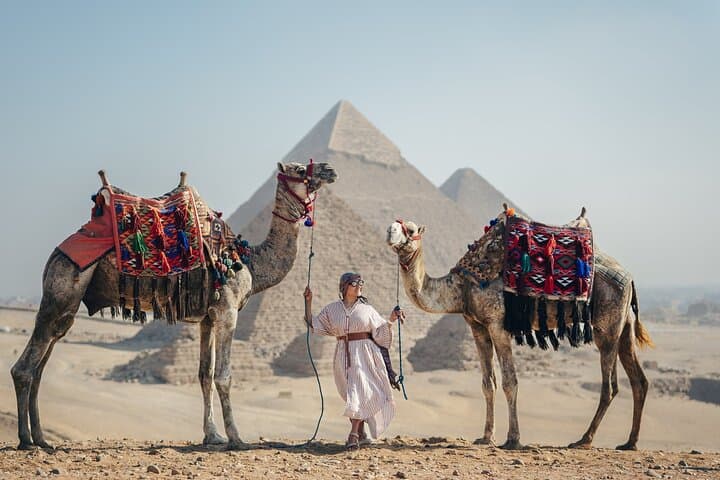
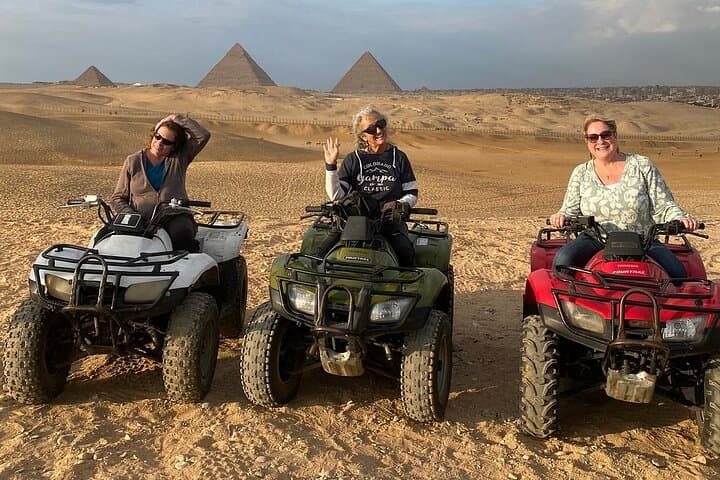
Expect a compact, layered day. The tour typically covers the Giza plateau by foot for the main monuments, offers a short canonical camel ride across the sandy west face, and finishes with a supervised quad-ride in the outer desert for panoramic photos. Photography, desert light and close-up views of weathered casing stones are highlights.
Practical edge: schedule early morning or late afternoon to avoid peak heat, wear sturdy closed-toe shoes, bring 1–2 liters of water, sun protection and small bills for gratuities. Respect posted restrictions (do not climb monuments), follow your guide’s route, and be ready for short transitions between walking, camel saddles, and a throttle-controlled ATV. The combination delivers history, hands-on desert travel, and a brisk dose of adventure in about four hours.
easy.
4 hours.
Suitable for general fitness; includes short walks, a camel ride and an ATV segment.
Yes — round-trip private transfer from most Cairo/Giza hotels is typically included; confirm your pickup point when booking.
Access to the interior of the Great Pyramid or other tombs depends on ticket options and openings; ask your operator in advance and be prepared for additional fees or limits.
Yes — camel rides are usually short (about 10–20 minutes) and guided; quad rides are supervised on marked desert tracks but require following the operator’s safety briefing.
Fall through spring (October–April) offers milder daytime temperatures and clearer skies; summer brings high heat and stronger sun exposure.
The Giza complexes were built in Egypt’s Old Kingdom (4th Dynasty); the Great Pyramid was constructed for Pharaoh Khufu around 2560 BCE as a monumental burial complex.
Heavy visitation stresses fragile stone and desert soils; stay on designated paths, avoid littering, and use licensed guides to support local stewardship.
Hesham Egypt tour guide operates guided outdoor trips and adventures with an emphasis on safety, stewardship, and memorable experiences.
The wind off the Nile pushes sand across the plateau as you arrive; the Great Pyramid looms like a patient giant, its edges catching mid-morning sun. Your Egyptologist leads down worn stone paths while camel handlers wait nearby and ATVs idle on the hard-packed desert beyond the plateau’s fringe.
The wind off the Nile pushes sand across the plateau as you arrive; the Great Pyramid looms like a patient giant, its edges catching mid-morning sun. Your Egyptologist leads down worn stone paths while camel handlers wait nearby and ATVs idle on the hard-packed desert beyond the plateau’s fringe.
This stretch of the Giza Plateau is Eocene limestone over Nile alluvium—easy to walk but sharp underfoot in places. The monuments date to the Fourth Dynasty (about 4,500 years ago): Khufu’s Great Pyramid, Khafre’s complex with the Sphinx, and the associated solar boat and satellite pyramids. Local culture threads through every moment: vendors, experienced camel riders, and guides whose knowledge shapes how you see carved corridors and burial pits.
Expect a compact, layered day. The tour typically covers the Giza plateau by foot for the main monuments, offers a short canonical camel ride across the sandy west face, and finishes with a supervised quad-ride in the outer desert for panoramic photos. Photography, desert light and close-up views of weathered casing stones are highlights.
Practical edge: schedule early morning or late afternoon to avoid peak heat, wear sturdy closed-toe shoes, bring 1–2 liters of water, sun protection and small bills for gratuities. Respect posted restrictions (do not climb monuments), follow your guide’s route, and be ready for short transitions between walking, camel saddles, and a throttle-controlled ATV. The combination delivers history, hands-on desert travel, and a brisk dose of adventure in about four hours.