THE ADVENTURE COLLECTIVE® · Independent discovery and booking for outdoor travel

Experience the Giza Plateau with a private Egyptologist guide: enter select pyramids, photograph the three giants from a classic panorama, ride a camel and finish with an authentic Egyptian lunch. This 4–5 hour private tour combines close-up history with practical local knowledge.
Experience the Giza Plateau with a private Egyptologist guide: enter select pyramids, photograph the three giants from a classic panorama, ride a camel and finish with an authentic Egyptian lunch. This 4–5 hour private tour combines close-up history with practical local knowledge.
The wind off the Sahara tugs at your scarf as you step onto the sun-baked plateau, the three great pyramids rising like carved geometry against a pale-blue Cairo sky.
Verified experiences and guided adventures in the surrounding area.
Operated by Egypt Tours Destination · Giza, Giza Governorate
The wind off the Sahara tugs at your scarf as you step onto the sun-baked plateau, the three great pyramids rising like carved geometry against a pale-blue Cairo sky.
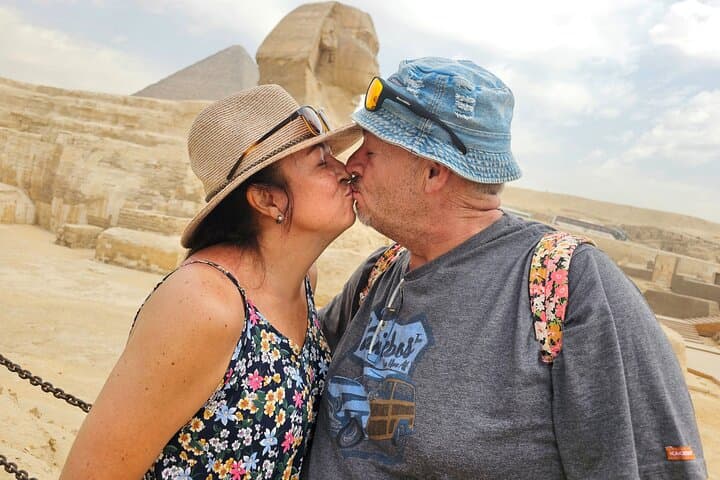
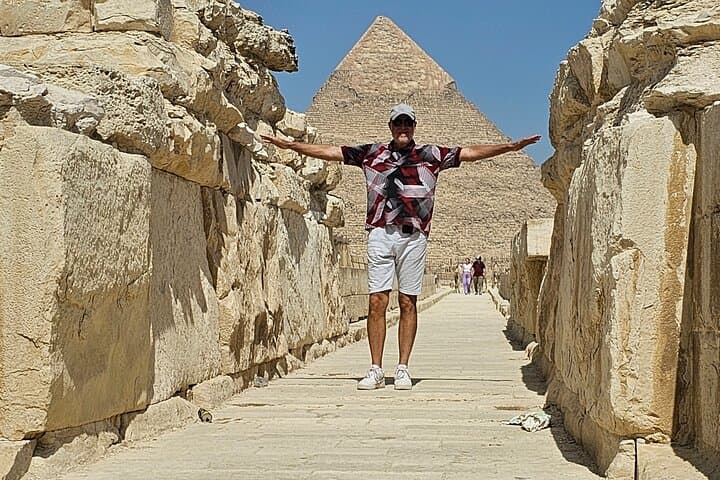
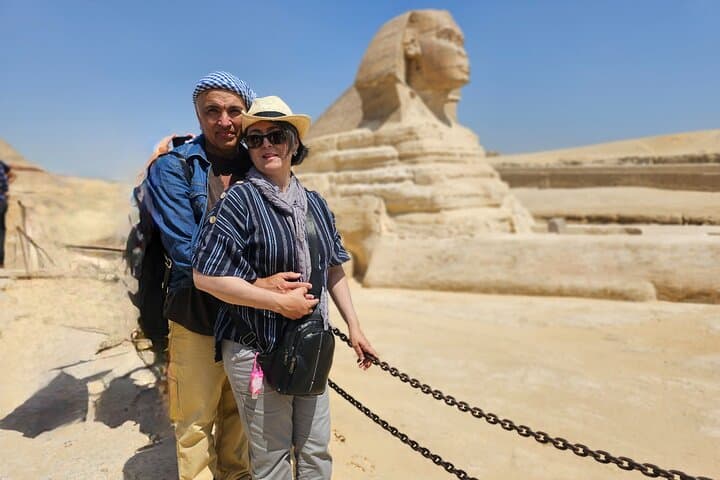
Begin with the drama of Khufu’s Great Pyramid—its scale humbling, the cut of its stone edges clear—and move through the layered history that reads across the plateau: Khafre’s smoother casing stones, the compact scale of Menkaure, and the watchful silhouette of the Sphinx guarding an ancient procession route.
This landscape is both human-made and geological: limestone beds hewn from the Mokattam formation support funerary temples while wind and sand continue to shape surfaces laid down millions of years ago. Cultural traces are fresh too—local vendors set up shade, camel handlers pace the edge of the panoramic zone, and Egyptologists translate hieroglyphs into living stories.
Practical guidance: the full private itinerary runs about 4–5 hours with mostly flat walking on uneven, sandy ground and short inclines at pyramid entrances. If you have the all-inclusive option expect inside access to a queen’s pyramid or Menkaure, a photo stop at the classic panorama, and a traditional Egyptian lunch option like koshary or shawarma.
Bring sun protection, pace yourself in the heat, and follow your guide’s instructions around sensitive areas—entrance policies change, and some pyramids are closed on certain days. The plateau rewards attention: pause at the panorama for light that sharpens silhouettes, and let the layered history sink in before the drive back to Cairo.
easy.
4–5 hours.
Light walking ability; able to handle short, uneven stretches and desert heat for several hours.
Access varies by conservation rules and ticket options; this tour often includes entry to a smaller queen’s pyramid or Menkaure, while Great Pyramid access is restricted and subject to change.
Camel rides are typically part of the all-inclusive option—confirm at booking and verify duration and photo stops with the operator.
The tour lists wheelchair-accessible transportation, but the plateau and pyramid interiors involve uneven terrain and steps; contact the operator to plan an accessible route and pickup point.
Tipping is customary—expect to tip your Egyptologist guide (10–15% of tour cost as a guideline) and give a small tip to camel handlers after a short ride.
The main pyramids at Giza were built during the Fourth Dynasty (c. 26th century BCE), with Khufu’s tomb the largest and the Sphinx carved from a single limestone ridge to guard ancient processional routes.
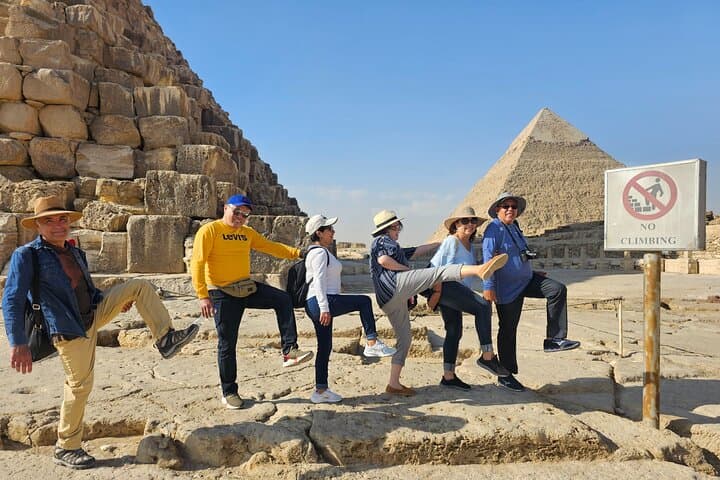
High visitor numbers require careful site management—stay on marked paths, avoid touching masonry, and follow guide instructions to minimize erosion and wear.
Egypt Tours Destination operates guided outdoor trips and adventures with an emphasis on safety, stewardship, and memorable experiences.
The wind off the Sahara tugs at your scarf as you step onto the sun-baked plateau, the three great pyramids rising like carved geometry against a pale-blue Cairo sky.
The wind off the Sahara tugs at your scarf as you step onto the sun-baked plateau, the three great pyramids rising like carved geometry against a pale-blue Cairo sky.
Begin with the drama of Khufu’s Great Pyramid—its scale humbling, the cut of its stone edges clear—and move through the layered history that reads across the plateau: Khafre’s smoother casing stones, the compact scale of Menkaure, and the watchful silhouette of the Sphinx guarding an ancient procession route.
This landscape is both human-made and geological: limestone beds hewn from the Mokattam formation support funerary temples while wind and sand continue to shape surfaces laid down millions of years ago. Cultural traces are fresh too—local vendors set up shade, camel handlers pace the edge of the panoramic zone, and Egyptologists translate hieroglyphs into living stories.
Practical guidance: the full private itinerary runs about 4–5 hours with mostly flat walking on uneven, sandy ground and short inclines at pyramid entrances. If you have the all-inclusive option expect inside access to a queen’s pyramid or Menkaure, a photo stop at the classic panorama, and a traditional Egyptian lunch option like koshary or shawarma.
Bring sun protection, pace yourself in the heat, and follow your guide’s instructions around sensitive areas—entrance policies change, and some pyramids are closed on certain days. The plateau rewards attention: pause at the panorama for light that sharpens silhouettes, and let the layered history sink in before the drive back to Cairo.