THE ADVENTURE COLLECTIVE® · Independent discovery and booking for outdoor travel

Stand beneath the Great Pyramid and hear the story of pharaohs, quarrymen and desert wind on a private 4–5 hour tour of Giza. This expert-led experience blends archaeology, geology and a short camel ride option—ideal for a single, well-paced visit.
Stand beneath the Great Pyramid and hear the story of pharaohs, quarrymen and desert wind on a private 4–5 hour tour of Giza. This expert-led experience blends archaeology, geology and a short camel ride option—ideal for a single, well-paced visit.
You step out of the vehicle into a wind-swept plateau where stone meets sky and the scale of human ambition becomes readable in angles and shadow.
Verified experiences and guided adventures in the surrounding area.
Operated by Upper Sky Tours · Cairo, Cairo Governorate
You step out of the vehicle into a wind-swept plateau where stone meets sky and the scale of human ambition becomes readable in angles and shadow.
An expert guide walks you through the three great pyramids—Khufu, Khafre and Menkaure—tracing construction techniques, funerary beliefs and the geopolitical power of Old Kingdom Egypt. The limestone bedrock underfoot records millennia of Nile cycles; the nearby Solar Boat Museum preserves a funerary vessel once buried beside the Great Pyramid.
The plateau’s geology is simple but dramatic: eroded limestone shelves punctuated by worked blocks and ancient quarry scars. Local culture today folds tourism, Bedouin family camel handlers and Cairo’s urban sprawl into a single, shifting frontier between past and present.
Practically, expect 4–5 hours of moderate walking across sand and paved surfaces, short uphill stretches and open exposure to sun and wind. Morning slots are cooler and less crowded; late afternoon softens light for photography but can be windy.
Bring sun protection, a filled water bottle and sturdy shoes; taxi or hotel pickup is common and usually included in private options. Entrance fees and camel rides are often optional extras; confirm what’s included when you book. Photography is welcomed, but climbing monuments is prohibited and enforced.
This private format balances close-up archaeology with logistical ease: a driver, local stories, and the option to ride a camel for a desert-plain perspective that places you within the long sweep of Egyptian history.
easy.
4–5 hours.
Suitable for most fitness levels; involves walking on sand and short uneven sections so basic mobility is required
Some private options include entrance fees; others list them as optional add-ons—confirm at booking to avoid on-site payments.
The 30-minute camel ride is usually optional and included only with an all-inclusive price; check your itinerary and price level before arrival.
Main viewing areas and some surfaces are wheelchair accessible, and many operators offer accessible transport, but access to certain uneven areas is limited.
Climbing is illegal and strictly enforced; touching weathered surfaces accelerates erosion and is strongly discouraged.
The Giza complex dates to the Fourth Dynasty (about 4,500 years ago) and reflects centralized state power, monumental engineering and funerary ritual.
High visitation stresses fragile stone and desert soils—follow paths, avoid touching carved surfaces and respect posted signage to minimize impact.
Upper Sky Tours operates guided outdoor trips and adventures with an emphasis on safety, stewardship, and memorable experiences.
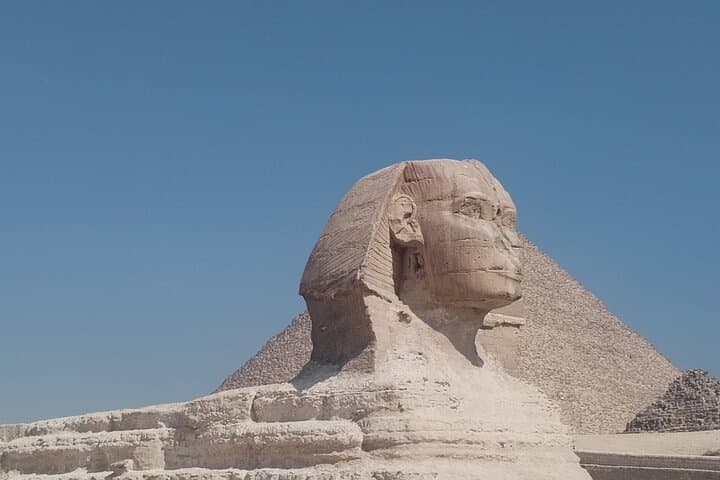
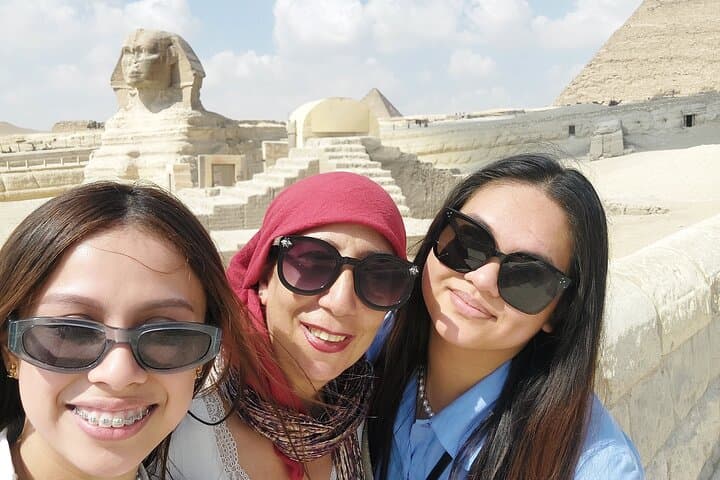
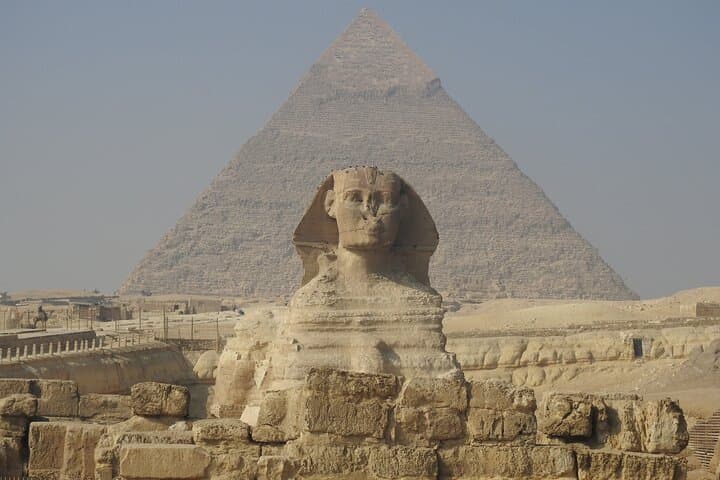
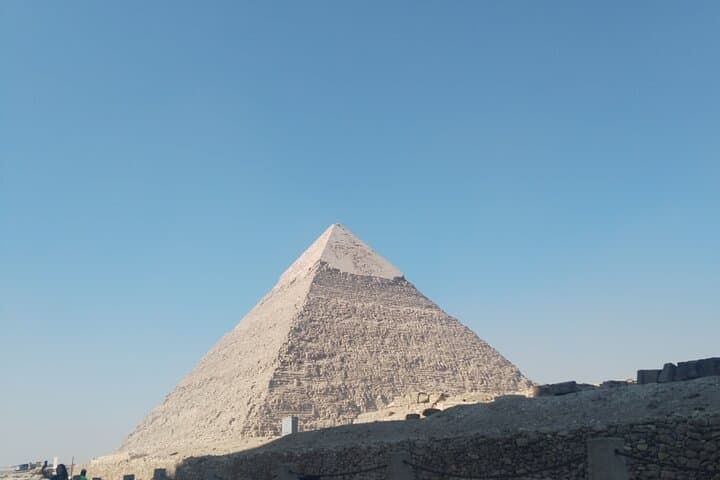
You step out of the vehicle into a wind-swept plateau where stone meets sky and the scale of human ambition becomes readable in angles and shadow.
You step out of the vehicle into a wind-swept plateau where stone meets sky and the scale of human ambition becomes readable in angles and shadow.
An expert guide walks you through the three great pyramids—Khufu, Khafre and Menkaure—tracing construction techniques, funerary beliefs and the geopolitical power of Old Kingdom Egypt. The limestone bedrock underfoot records millennia of Nile cycles; the nearby Solar Boat Museum preserves a funerary vessel once buried beside the Great Pyramid.
The plateau’s geology is simple but dramatic: eroded limestone shelves punctuated by worked blocks and ancient quarry scars. Local culture today folds tourism, Bedouin family camel handlers and Cairo’s urban sprawl into a single, shifting frontier between past and present.
Practically, expect 4–5 hours of moderate walking across sand and paved surfaces, short uphill stretches and open exposure to sun and wind. Morning slots are cooler and less crowded; late afternoon softens light for photography but can be windy.
Bring sun protection, a filled water bottle and sturdy shoes; taxi or hotel pickup is common and usually included in private options. Entrance fees and camel rides are often optional extras; confirm what’s included when you book. Photography is welcomed, but climbing monuments is prohibited and enforced.
This private format balances close-up archaeology with logistical ease: a driver, local stories, and the option to ride a camel for a desert-plain perspective that places you within the long sweep of Egyptian history.