THE ADVENTURE COLLECTIVE® · Independent discovery and booking for outdoor travel

Spend five focused hours on the Giza Plateau with a private Egyptologist: enter a pyramid, ride a camel around the three great tombs, and finish with lunch aboard a felucca on the Nile. Ideal for first-time visitors who want efficient access and local context.
Spend five focused hours on the Giza Plateau with a private Egyptologist: enter a pyramid, ride a camel around the three great tombs, and finish with lunch aboard a felucca on the Nile. Ideal for first-time visitors who want efficient access and local context.
The wind off the Nile shapes the dust into short-lived patterns as you step onto the wide, sun-baked sweep of the Giza Plateau. Granite blocks loom like the bones of an ancient city, and the Great Pyramid sits with slow, deliberate authority while camels shift and snort nearby. Your private guide leads you across sandy tracks toward the Sphinx, its limestone face pockmarked with millennia but still surprisingly immediate.
Verified experiences and guided adventures in the surrounding area.
Operated by Let`s Explore Egypt · Giza, Giza Governorate
The wind off the Nile shapes the dust into short-lived patterns as you step onto the wide, sun-baked sweep of the Giza Plateau. Granite blocks loom like the bones of an ancient city, and the Great Pyramid sits with slow, deliberate authority while camels shift and snort nearby. Your private guide leads you across sandy tracks toward the Sphinx, its limestone face pockmarked with millennia but still surprisingly immediate.
This compact, five-hour loop stitches together Egypt’s long arcs: the Old Kingdom engineering of Khufu’s 4,500-year-old Great Pyramid, the funerary complex geometry of the Valley Temple, and the Nile’s lifetime of sedimentary layering seen from a one‑hour felucca drift. Geologically the plateau is Eocene limestone bearing the quarried scars that made these monuments possible; culturally it’s the focus of millennia of pilgrimage, power, and modern tourism management.
Expect a mix of walking on packed sand, short climbs up graded ramps, and a 30-minute camel route that feels both tourist-friendly and elemental. Logistics are straightforward—private AC transfers, bottled water, lunch on the Nile, and entrance to at least one internal chamber—so plan around heat and crowds. Wear breathable layers, sturdy closed shoes for uneven surfaces, and sun protection; mornings or late afternoons are cooler and photographically better.
Practical notes: bring your passport for entry inside pyramids, budget small local currency for tips and optional photos, and follow your guide’s route to minimize impact on fragile archaeology. This itinerary compresses iconic Egypt into a single day with local knowledge smoothing the way.
easy.
5 hours.
Suitable for most fitness levels; involves moderate walking across sand and short climbs onto viewing platforms
The tour is approximately five hours and includes private transfers, an Egyptologist guide, entrance fees (including entry to a second or third pyramid), a 30-minute camel ride, one hour felucca sail, and lunch.
This itinerary typically includes entry into a second or third pyramid rather than the Great Pyramid; confirm with the operator if Great Pyramid access is essential.
Camel rides are generally gentle and limited to around 30 minutes; operators usually assess rider comfort and can offer alternatives for those with mobility concerns.
Light layers for breeze, sun protection, and any motion-sickness remedies; lunch and bottled water are provided on the felucca.
The Giza complex dates to Egypt’s Old Kingdom (c. 2600–2500 BCE); the Great Pyramid of Khufu is the only surviving Wonder of the Ancient World.
Visitor flow is managed to protect fragile masonry; favor guided routes, avoid touching painted or carved surfaces, and minimize plastic waste.
Let`s Explore Egypt operates guided outdoor trips and adventures with an emphasis on safety, stewardship, and memorable experiences.
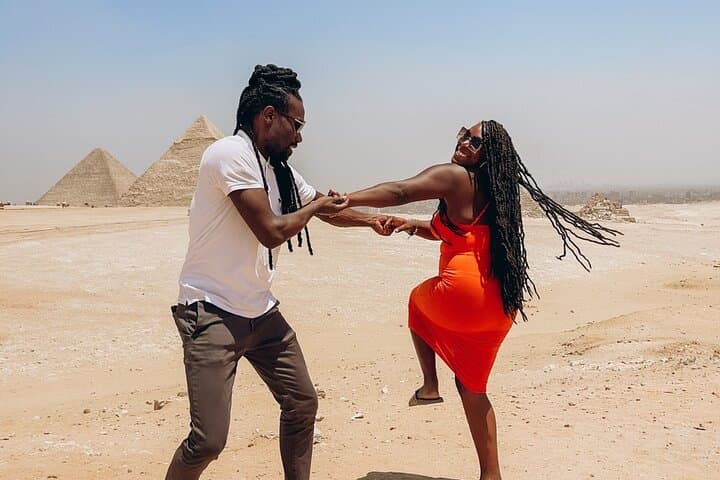
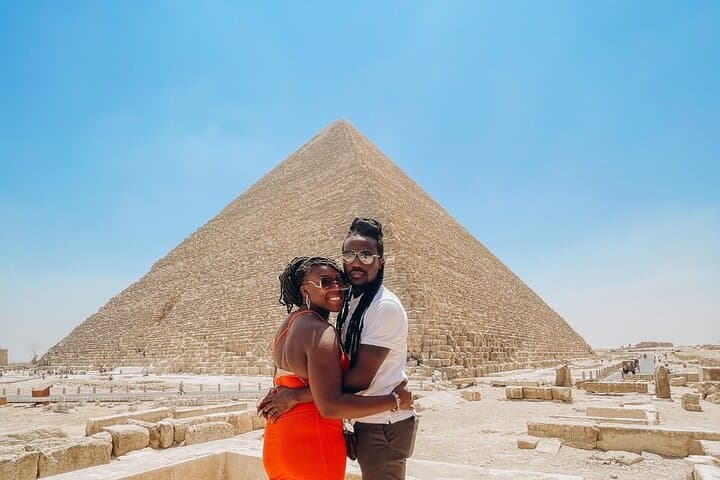
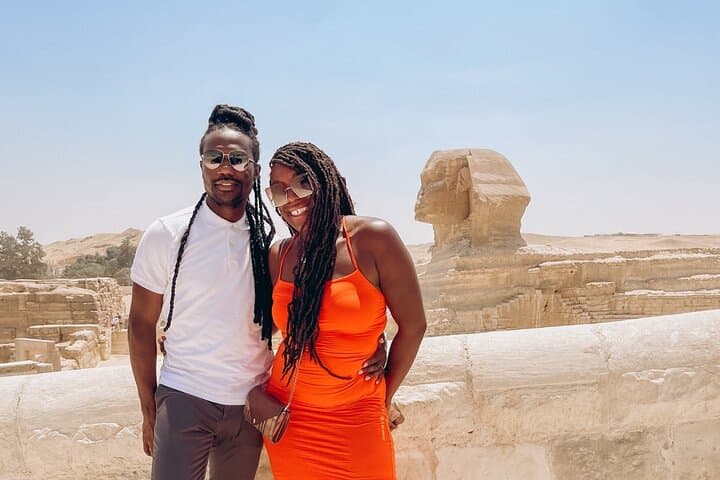
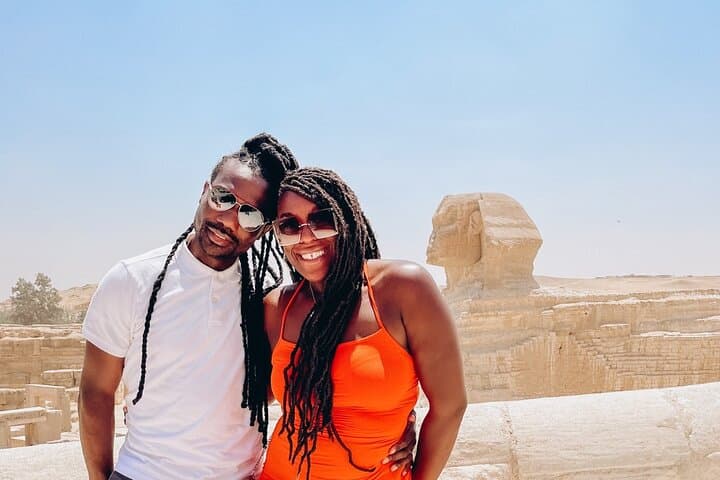
The wind off the Nile shapes the dust into short-lived patterns as you step onto the wide, sun-baked sweep of the Giza Plateau. Granite blocks loom like the bones of an ancient city, and the Great Pyramid sits with slow, deliberate authority while camels shift and snort nearby. Your private guide leads you across sandy tracks toward the Sphinx, its limestone face pockmarked with millennia but still surprisingly immediate.
The wind off the Nile shapes the dust into short-lived patterns as you step onto the wide, sun-baked sweep of the Giza Plateau. Granite blocks loom like the bones of an ancient city, and the Great Pyramid sits with slow, deliberate authority while camels shift and snort nearby. Your private guide leads you across sandy tracks toward the Sphinx, its limestone face pockmarked with millennia but still surprisingly immediate.
This compact, five-hour loop stitches together Egypt’s long arcs: the Old Kingdom engineering of Khufu’s 4,500-year-old Great Pyramid, the funerary complex geometry of the Valley Temple, and the Nile’s lifetime of sedimentary layering seen from a one‑hour felucca drift. Geologically the plateau is Eocene limestone bearing the quarried scars that made these monuments possible; culturally it’s the focus of millennia of pilgrimage, power, and modern tourism management.
Expect a mix of walking on packed sand, short climbs up graded ramps, and a 30-minute camel route that feels both tourist-friendly and elemental. Logistics are straightforward—private AC transfers, bottled water, lunch on the Nile, and entrance to at least one internal chamber—so plan around heat and crowds. Wear breathable layers, sturdy closed shoes for uneven surfaces, and sun protection; mornings or late afternoons are cooler and photographically better.
Practical notes: bring your passport for entry inside pyramids, budget small local currency for tips and optional photos, and follow your guide’s route to minimize impact on fragile archaeology. This itinerary compresses iconic Egypt into a single day with local knowledge smoothing the way.