THE ADVENTURE COLLECTIVE® · Independent discovery and booking for outdoor travel

Two hours on the Giza Plateau turns the pyramids into a personal stage. This guided photoshoot moves between Sphinx views and a sweeping panorama, delivering edited images and practical tips for timing and comfort.
Two hours on the Giza Plateau turns the pyramids into a personal stage. This guided photoshoot moves between Sphinx views and a sweeping panorama, delivering edited images and practical tips for timing and comfort.
You step off the paved approach and the plateau opens: hard limestone underfoot, wind shaping clouds of sand that briefly erase the horizon. The Great Pyramid looms like a quiet machine—angles sharp, shadowed faces shifting with the sun—as your photographer guides you through vantage points where the Sphinx and Khufu line up in a single frame.
Verified experiences and guided adventures in the surrounding area.
Operated by Egypt Photoshoot · Giza, Giza Governorate
You step off the paved approach and the plateau opens: hard limestone underfoot, wind shaping clouds of sand that briefly erase the horizon. The Great Pyramid looms like a quiet machine—angles sharp, shadowed faces shifting with the sun—as your photographer guides you through vantage points where the Sphinx and Khufu line up in a single frame.
This stretch of the Giza Plateau carries 4,500 years of human ambition; the pyramids are funerary monuments of the Old Kingdom and an index of ancient engineering. Geologically the plateau is a band of Eocene limestone capped by millennia of wind-scoured deposits, which gives shots a textured foreground often missing in studio work. Local culture is tactile here: camel handlers, vendors, and museum stewards form the human backdrop to any shoot, and the Solar Boat Museum nearby offers a quieter historical counterpoint.
Practically, expect two hours of walking between established viewpoints — the Sphinx line, the panoramic ridge with the smaller pyramids, and a few tucked angles the photographer favors. The operator delivers up to 15 edited images; you don’t need to bring a camera, but a charged phone is useful for backup shots. Aim for the golden hours—sunrise for cool light and fewer crowds, sunset for warmer tones and dramatic silhouettes. Stay hydrated, wear sun protection and comfortable shoes for uneven limestone. Respect site signage: no climbing and follow your guide’s directions. With planning, a short, focused session here turns a tour into a personal archive of one of the world’s oldest stages.
easy.
2 hours.
Suitable for most people who can walk short distances on uneven limestone; minimal exertion required.
No — the session includes professional shooting and editing; however, bringing a phone or small backup camera is useful for personal snaps.
Typically Giza Plateau admission is purchased separately; confirm with the operator when booking whether access is covered.
Up to 15 edited images per person are provided, delivered after the session as specified by the photographer.
The listing offers group sessions by default; private sessions are possible—contact the operator directly to request and confirm private bookings.
The Great Pyramid of Khufu dates to circa 2560 BCE and is the largest of the Giza monuments, representing Old Kingdom funerary architecture and labor organization.
High visitor numbers stress the plateau’s surface—respect barriers and no-climb rules to help preserve stonework and archaeological features.
Egypt Photoshoot operates guided outdoor trips and adventures with an emphasis on safety, stewardship, and memorable experiences.
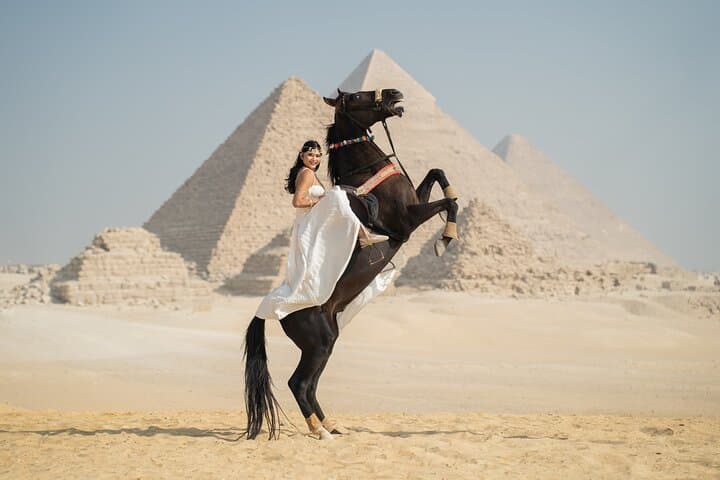


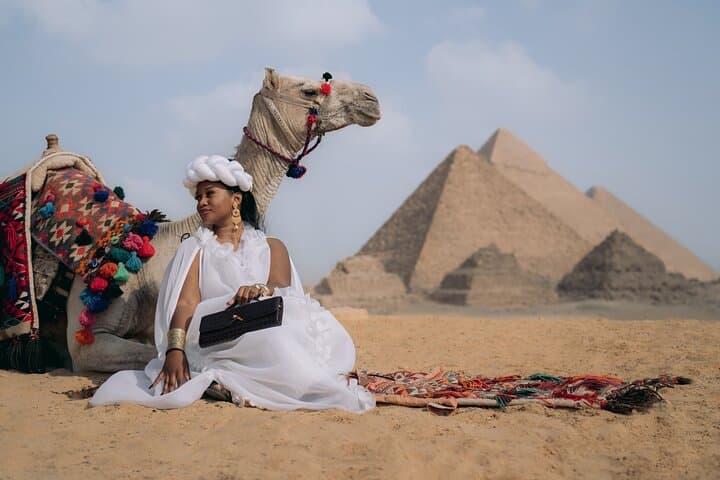
You step off the paved approach and the plateau opens: hard limestone underfoot, wind shaping clouds of sand that briefly erase the horizon. The Great Pyramid looms like a quiet machine—angles sharp, shadowed faces shifting with the sun—as your photographer guides you through vantage points where the Sphinx and Khufu line up in a single frame.
You step off the paved approach and the plateau opens: hard limestone underfoot, wind shaping clouds of sand that briefly erase the horizon. The Great Pyramid looms like a quiet machine—angles sharp, shadowed faces shifting with the sun—as your photographer guides you through vantage points where the Sphinx and Khufu line up in a single frame.
This stretch of the Giza Plateau carries 4,500 years of human ambition; the pyramids are funerary monuments of the Old Kingdom and an index of ancient engineering. Geologically the plateau is a band of Eocene limestone capped by millennia of wind-scoured deposits, which gives shots a textured foreground often missing in studio work. Local culture is tactile here: camel handlers, vendors, and museum stewards form the human backdrop to any shoot, and the Solar Boat Museum nearby offers a quieter historical counterpoint.
Practically, expect two hours of walking between established viewpoints — the Sphinx line, the panoramic ridge with the smaller pyramids, and a few tucked angles the photographer favors. The operator delivers up to 15 edited images; you don’t need to bring a camera, but a charged phone is useful for backup shots. Aim for the golden hours—sunrise for cool light and fewer crowds, sunset for warmer tones and dramatic silhouettes. Stay hydrated, wear sun protection and comfortable shoes for uneven limestone. Respect site signage: no climbing and follow your guide’s directions. With planning, a short, focused session here turns a tour into a personal archive of one of the world’s oldest stages.