THE ADVENTURE COLLECTIVE® · Independent discovery and booking for outdoor travel

Stand beneath one of humanity’s oldest monuments and then drift on a felucca along the Nile on a single half-day tour. This trip pairs short, uneven walks around the Giza Plateau with a calm river crossing, a camel ride and included lunch.
Stand beneath one of humanity’s oldest monuments and then drift on a felucca along the Nile on a single half-day tour. This trip pairs short, uneven walks around the Giza Plateau with a calm river crossing, a camel ride and included lunch.
You step out of the hotel shuttle onto the flat, sunbaked Giza Plateau and the air tastes of sand and diesel; the Great Pyramid looms ahead, its angular silhouette cutting a clean line against the sky. Small groups thread between stonecarvers and vendors while camels shift their weight and the Nile, a short drive away, waits like a slow, familiar companion.
Verified experiences and guided adventures in the surrounding area.
You step out of the hotel shuttle onto the flat, sunbaked Giza Plateau and the air tastes of sand and diesel; the Great Pyramid looms ahead, its angular silhouette cutting a clean line against the sky. Small groups thread between stonecarvers and vendors while camels shift their weight and the Nile, a short drive away, waits like a slow, familiar companion.
The Giza necropolis dates to Egypt’s Old Kingdom (c. 2600–2500 BCE). The three main pyramids—Khufu, Khafre and Menkaure—stand on a limestone shelf carved by ancient builders who used local bedrock and shipped in harder stone for interiors. Nearby, a felucca ride reconnects you with the Nile’s historic role as Egypt’s arterial highway, the river that once fed and made cities possible.
Expect short walks across compacted sand and gravel (routes of roughly 1–2 km between viewpoints), minimal elevation change but uneven footing and occasional loose stone. The camel ride lasts minutes and operates on the plateau’s edges; riders should expect basic saddles and a led-by handler.
Practical notes: arrive early to avoid heat and crowds; carry a refillable water bottle and sunscreen; shoes with good traction matter more than fashion. Ask your guide where photography is restricted (some interior tomb access varies) and confirm what "entrance fees" cover—some tours include museum or pyramid interior tickets, others only external access.
This half-day loop pairs towering, ancient architecture with a quiet river crossing—packed with history, sensory contrast, and a reminder that Egypt’s past still meets the present on very human terms.
moderate.
6 hours.
Basic to moderate fitness — comfortable walking on uneven ground for up to 2 km and tolerating heat
This tour description lists entrance fees, lunch and a camel ride as included; confirm specific pyramid interior access with the operator before booking.
Access to interior chambers varies and may require separate tickets and time; ask your guide in advance if interior access is a priority.
Short walks are manageable for many ages, but uneven ground and heat can be challenging; consider mobility limits and bring sun protection and water.
Felucca segments on half-day Giza-to-Nile combos are typically 30–60 minutes, offering a calm wind and river perspective rather than a long cruise.
The Giza plateau was built during Egypt’s Fourth Dynasty; the Great Pyramid (Khufu) was completed around 2560 BCE and remained the tallest man-made structure for millennia.
High visitor numbers and informal vendor zones strain the plateau; follow marked paths, avoid climbing unpermitted stones, and prioritize operators who treat camels and guides ethically.
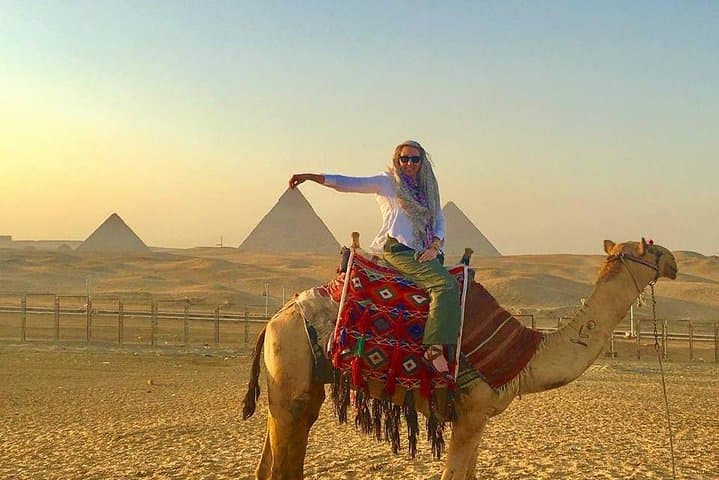
You step out of the hotel shuttle onto the flat, sunbaked Giza Plateau and the air tastes of sand and diesel; the Great Pyramid looms ahead, its angular silhouette cutting a clean line against the sky. Small groups thread between stonecarvers and vendors while camels shift their weight and the Nile, a short drive away, waits like a slow, familiar companion.
You step out of the hotel shuttle onto the flat, sunbaked Giza Plateau and the air tastes of sand and diesel; the Great Pyramid looms ahead, its angular silhouette cutting a clean line against the sky. Small groups thread between stonecarvers and vendors while camels shift their weight and the Nile, a short drive away, waits like a slow, familiar companion.
The Giza necropolis dates to Egypt’s Old Kingdom (c. 2600–2500 BCE). The three main pyramids—Khufu, Khafre and Menkaure—stand on a limestone shelf carved by ancient builders who used local bedrock and shipped in harder stone for interiors. Nearby, a felucca ride reconnects you with the Nile’s historic role as Egypt’s arterial highway, the river that once fed and made cities possible.
Expect short walks across compacted sand and gravel (routes of roughly 1–2 km between viewpoints), minimal elevation change but uneven footing and occasional loose stone. The camel ride lasts minutes and operates on the plateau’s edges; riders should expect basic saddles and a led-by handler.
Practical notes: arrive early to avoid heat and crowds; carry a refillable water bottle and sunscreen; shoes with good traction matter more than fashion. Ask your guide where photography is restricted (some interior tomb access varies) and confirm what "entrance fees" cover—some tours include museum or pyramid interior tickets, others only external access.
This half-day loop pairs towering, ancient architecture with a quiet river crossing—packed with history, sensory contrast, and a reminder that Egypt’s past still meets the present on very human terms.