THE ADVENTURE COLLECTIVE® · Independent discovery and booking for outdoor travel

Ride a horse carriage across the Giza Plateau to see the Great Pyramids, Sphinx, and Ancient Valley Temple with a private Egyptologist guide. This three-hour private tour includes entrance fees and a one-hour carriage ride—ideal for travelers wanting context without long hikes.
Ride a horse carriage across the Giza Plateau to see the Great Pyramids, Sphinx, and Ancient Valley Temple with a private Egyptologist guide. This three-hour private tour includes entrance fees and a one-hour carriage ride—ideal for travelers wanting context without long hikes.
Sunlight slants across baked limestone as a horse carriage rattles onto the plateau, hooves and wheels stirring the dust that has settled for millennia.
Verified experiences and guided adventures in the surrounding area.
Operated by This Is Egypt Aswan · Giza, Cairo Governorate
Sunlight slants across baked limestone as a horse carriage rattles onto the plateau, hooves and wheels stirring the dust that has settled for millennia.
You arrive at the Great Pyramids and the Sphinx with a private Egyptologist guide who lays out their hard-edged history: quarried limestone blocks, precise alignments, and funerary complexes meant to shepherd pharaohs into the afterlife. The plateau’s geology—layers of Eocene limestone atop Miocene formations—gives the monuments their pale, wind-polished faces. Nearby, the Ancient Valley Temple pieces together rituals and daily life at the edge of empire: priests, offerings, and the river’s role in provisioning the site.
Culturally the visit blends spectacle and local rhythm: camel handlers, hawkers, and street-food vendors selling ful and koshari frame the stone giants. The carriage ride (about one hour) offers a low-impact way to move between viewpoints without farther walking—the sensory counterpoint of clopping hooves and the guide’s commentary.
Practicalities: the tour runs roughly three hours with hotel pickup in greater Cairo; entrance fees and the horse-carriage ticket are included. Best times are early morning or late afternoon for cooler light and fewer crowds. Bring sun protection, comfortable closed shoes for uneven ground, and a scarf or modest clothing for respect at the site. Expect straightforward pacing—plenty to photograph, limited time to linger—and a clear 24-hour cancellation policy. Tipping, sensible bargaining, and watching for added-cost pickups from distant suburbs will keep the visit smooth and respectful.
easy.
2–3 hours.
Suitable for most fitness levels; walking on uneven ground is limited but expect short steps and sand
Yes — the tour description indicates entrance fees and the horse carriage ticket are included in the booking price.
The carriage portion lasts about one hour as part of the approximately three-hour private tour.
Yes — private pickup from many Cairo-area hotels is included; extra charges may apply for some airport or distant pickup points.
No — climbing the pyramids is prohibited and heavily enforced; visitors may photograph and walk around approved areas only.
The Giza Plateau is a deliberate funerary landscape from Egypt’s Old Kingdom (c. 2600–2500 BCE); the Great Pyramid of Khufu was long the tallest man-made structure on Earth.
Visitor pressure and urban expansion challenge preservation; stick to marked paths, avoid touching masonry, and follow guide advice to reduce wear and litter.
This Is Egypt Aswan operates guided outdoor trips and adventures with an emphasis on safety, stewardship, and memorable experiences.


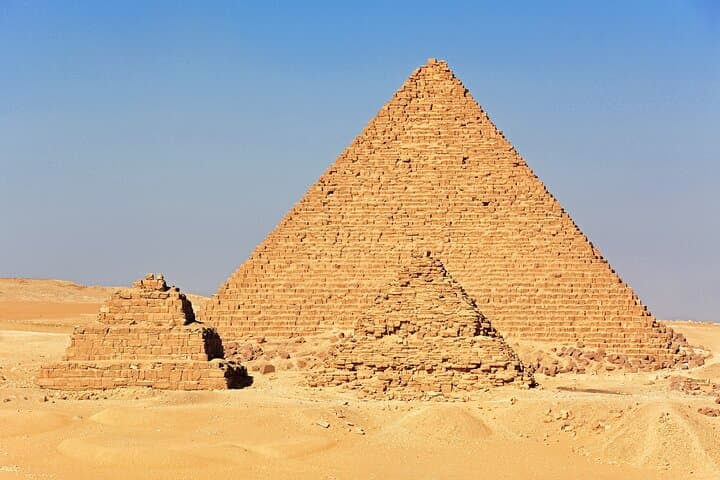
Sunlight slants across baked limestone as a horse carriage rattles onto the plateau, hooves and wheels stirring the dust that has settled for millennia.
Sunlight slants across baked limestone as a horse carriage rattles onto the plateau, hooves and wheels stirring the dust that has settled for millennia.
You arrive at the Great Pyramids and the Sphinx with a private Egyptologist guide who lays out their hard-edged history: quarried limestone blocks, precise alignments, and funerary complexes meant to shepherd pharaohs into the afterlife. The plateau’s geology—layers of Eocene limestone atop Miocene formations—gives the monuments their pale, wind-polished faces. Nearby, the Ancient Valley Temple pieces together rituals and daily life at the edge of empire: priests, offerings, and the river’s role in provisioning the site.
Culturally the visit blends spectacle and local rhythm: camel handlers, hawkers, and street-food vendors selling ful and koshari frame the stone giants. The carriage ride (about one hour) offers a low-impact way to move between viewpoints without farther walking—the sensory counterpoint of clopping hooves and the guide’s commentary.
Practicalities: the tour runs roughly three hours with hotel pickup in greater Cairo; entrance fees and the horse-carriage ticket are included. Best times are early morning or late afternoon for cooler light and fewer crowds. Bring sun protection, comfortable closed shoes for uneven ground, and a scarf or modest clothing for respect at the site. Expect straightforward pacing—plenty to photograph, limited time to linger—and a clear 24-hour cancellation policy. Tipping, sensible bargaining, and watching for added-cost pickups from distant suburbs will keep the visit smooth and respectful.