THE ADVENTURE COLLECTIVE® · Independent discovery and booking for outdoor travel

Experience the Giza Plateau in a focused, four-hour group tour: close views of the Great Pyramid, Khafre and Menkaure, plus a stop at the Sphinx. Practical tips on timing, terrain, and what’s included help you plan a smooth visit.
Experience the Giza Plateau in a focused, four-hour group tour: close views of the Great Pyramid, Khafre and Menkaure, plus a stop at the Sphinx. Practical tips on timing, terrain, and what’s included help you plan a smooth visit.
On the limestone shelf of the Giza Plateau the sun forces sharp shadows across ancient stone. A group disembarks and moves toward the Great Pyramid, its battered casing catching light like an old blade; nearby, the Sphinx stares east as if counting generations. The tour compresses millennia into a few measured hours: close-up views of massive blocks, the angled silhouette of Khafre’s pyramid, and the compact form of Menkaure.
Verified experiences and guided adventures in the surrounding area.
Operated by Virtue Day Tours · Giza, Giza Governorate
On the limestone shelf of the Giza Plateau the sun forces sharp shadows across ancient stone. A group disembarks and moves toward the Great Pyramid, its battered casing catching light like an old blade; nearby, the Sphinx stares east as if counting generations. The tour compresses millennia into a few measured hours: close-up views of massive blocks, the angled silhouette of Khafre’s pyramid, and the compact form of Menkaure.
Egypt’s Fourth Dynasty builders raised these tombs around 4,500 years ago—Khufu’s Great Pyramid once topped 146.6 m and dominated the horizon. Geologically, the plateau is bedrock limestone quarried on-site, the same rock that bears the marks of ancient toolwork and modern foot traffic. Culturally, the site anchors Cairo’s identity; vendors, guides, and camel handlers thread modern life through a landscape of funerary monuments.
Practically, the half-day group format keeps the route focused: curbside pickup, a guided walk among the pyramids, and a photo stop at the Sphinx. Admission inside the pyramids is typically separate—check inclusion before arrival. Expect uneven limestone surfaces, short scrambles up low steps, and sun exposure. Carry water, wear closed shoes, and plan for crowds and negotiating vendors.
Timing matters: early morning light softens the heat and reduces tourist density, while late afternoon brings long shadows for photos. This tour is a concentrated primer on Giza—ideal for travelers who want a direct, guided introduction without a full-day commitment.
easy.
4 hours.
Suitable for most fitness levels; involves moderate walking on uneven ground and short stair-like sections.
No—this group tour typically provides external visits to the pyramids and the Sphinx; pyramid interior tickets are usually separate and limited.
Walking routes on the plateau between the main pyramids and the Sphinx total roughly 1–2 kilometers, with intermittent stops for photos and explanations.
Basic facilities and vendor stalls are available at or near the plateau entrance; standards vary so plan accordingly.
The tour is labeled accessible in many cases, but the terrain around monuments includes uneven stone—wheelchair access may be limited beyond main walkways; confirm specifics with the operator.
Built during Egypt’s Old Kingdom, the three main pyramids belong to pharaohs Khufu (Cheops), Khafre (Kephren) and Menkaure (Mykerinos) and anchor a funerary complex that included temples and causeways.
Visitor pressure and modern pollution impact the limestone surfaces; operators urge staying on marked paths, avoiding climbing on monuments, and minimizing plastic waste.
Virtue Day Tours operates guided outdoor trips and adventures with an emphasis on safety, stewardship, and memorable experiences.
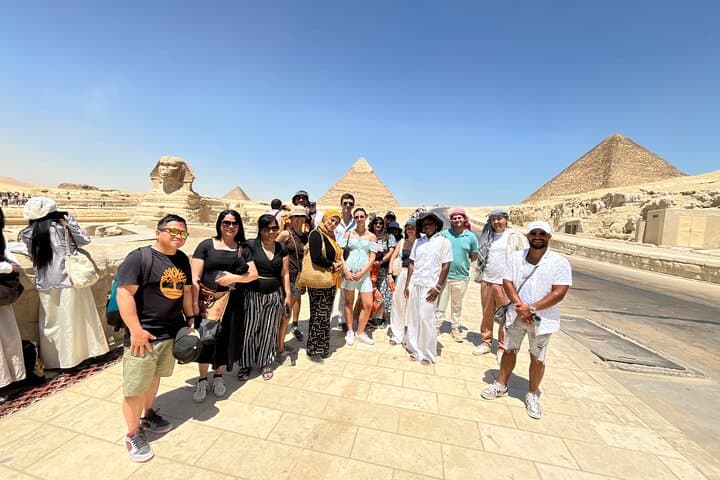
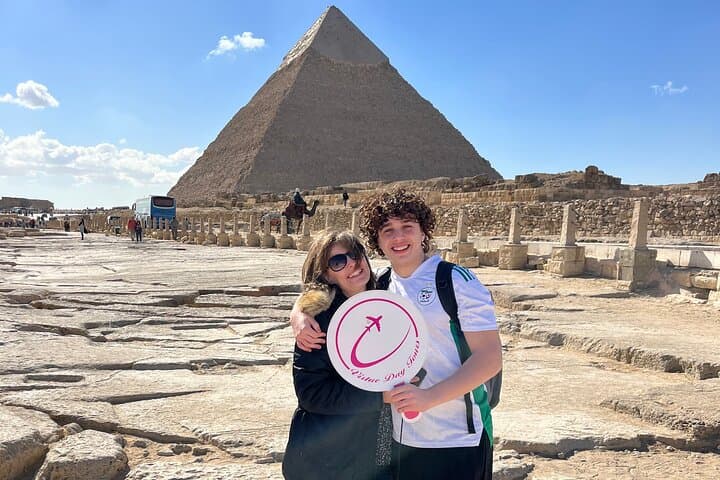
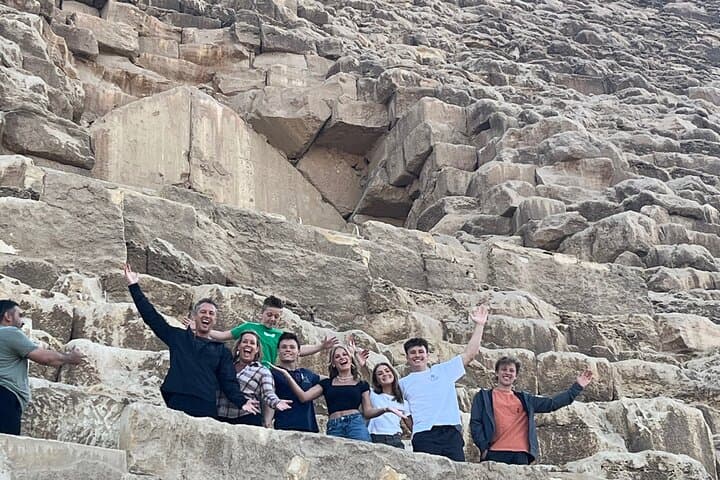
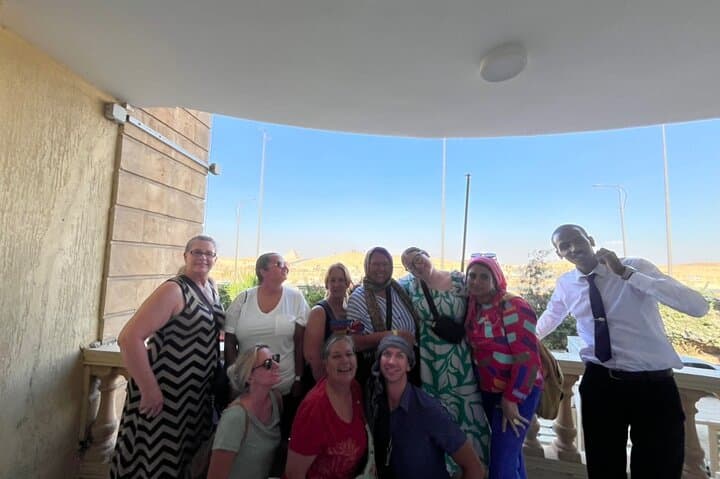
On the limestone shelf of the Giza Plateau the sun forces sharp shadows across ancient stone. A group disembarks and moves toward the Great Pyramid, its battered casing catching light like an old blade; nearby, the Sphinx stares east as if counting generations. The tour compresses millennia into a few measured hours: close-up views of massive blocks, the angled silhouette of Khafre’s pyramid, and the compact form of Menkaure.
On the limestone shelf of the Giza Plateau the sun forces sharp shadows across ancient stone. A group disembarks and moves toward the Great Pyramid, its battered casing catching light like an old blade; nearby, the Sphinx stares east as if counting generations. The tour compresses millennia into a few measured hours: close-up views of massive blocks, the angled silhouette of Khafre’s pyramid, and the compact form of Menkaure.
Egypt’s Fourth Dynasty builders raised these tombs around 4,500 years ago—Khufu’s Great Pyramid once topped 146.6 m and dominated the horizon. Geologically, the plateau is bedrock limestone quarried on-site, the same rock that bears the marks of ancient toolwork and modern foot traffic. Culturally, the site anchors Cairo’s identity; vendors, guides, and camel handlers thread modern life through a landscape of funerary monuments.
Practically, the half-day group format keeps the route focused: curbside pickup, a guided walk among the pyramids, and a photo stop at the Sphinx. Admission inside the pyramids is typically separate—check inclusion before arrival. Expect uneven limestone surfaces, short scrambles up low steps, and sun exposure. Carry water, wear closed shoes, and plan for crowds and negotiating vendors.
Timing matters: early morning light softens the heat and reduces tourist density, while late afternoon brings long shadows for photos. This tour is a concentrated primer on Giza—ideal for travelers who want a direct, guided introduction without a full-day commitment.